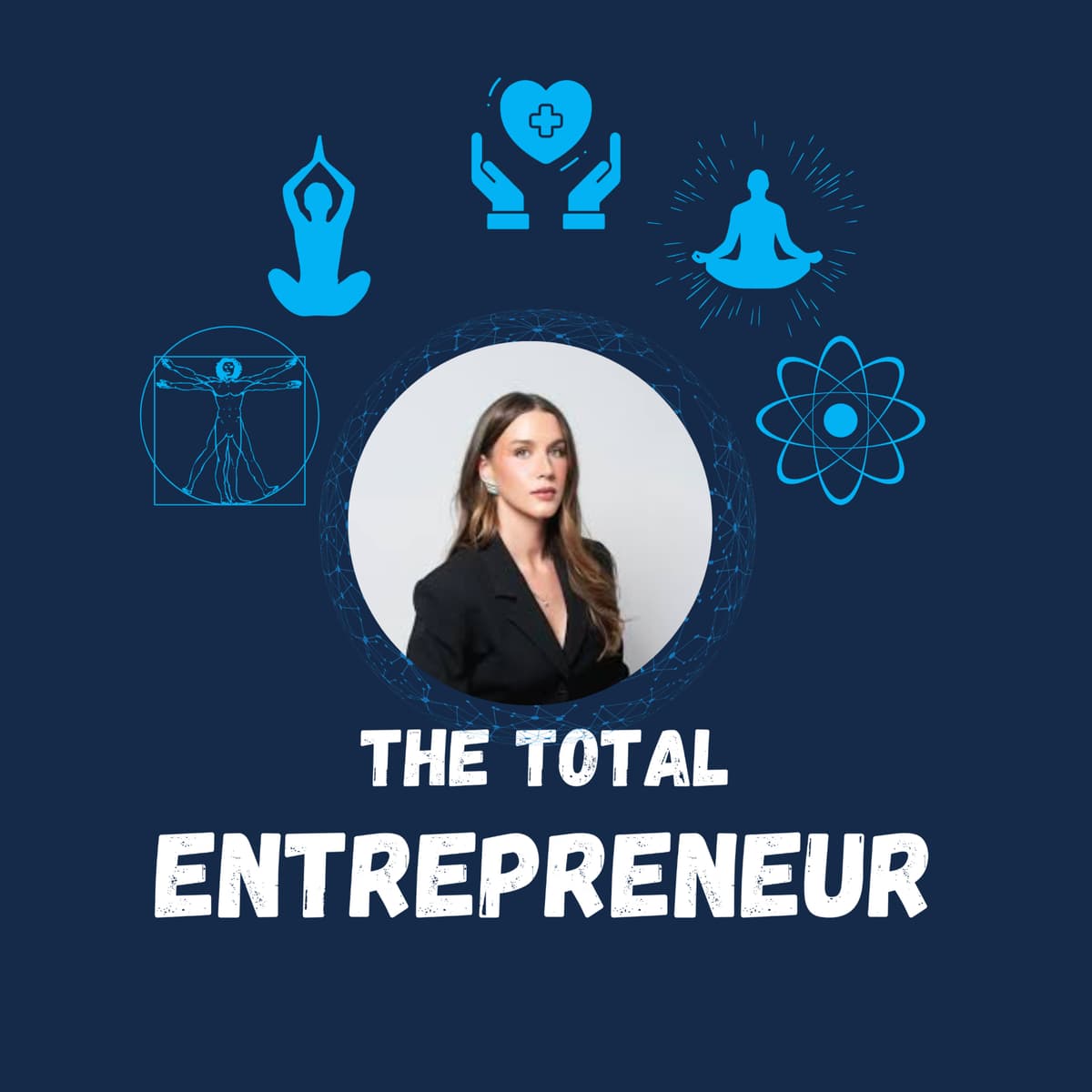
Building Community Without Burning Out: Leadership, Discipline & Self-Care with Alex Canavan
with Alex Canavan
Jan 15, 2026 · 00:40:57
Part of our conversations on
Hey, welcome back to the Total Entrepreneur Mind Body Spirit podcast. I'm really excited to have you here. If you like what you've been watching or listening, please don't forget to subscribe, like, or leave a comment. It really helps the podcast a lot. Today's guest is Alex Canavan. She is the founder and CEO of the CNY Women's Network, which is a Syracuse-based media, PR, and experiential events company. It's dedicated to advancing women's visibility and economic impact in Central New York. She promotes the region's CNY Women's Summit. She curates intimate supper club experiences and hosts the Cultivate CNY podcast, spotlighting entrepreneurs, executives, and changemakers. Alex was named a CNY 40 Under 40 in 2024, and she's also a board member of the YWCA. Welcome to The Total Entrepreneur Mind Body Spirit, where we turn cutting-edge science into practical strategies for entrepreneurs. I'm your host, Dr. John Torrance, Entrepreneur Inc. 5000 honoree and professor of entrepreneurial practice at Syracuse University's Whitman School of Management. Each episode, we dive into mental, physical, and spiritual health with expert guests offering actionable insights to help you thrive and perform at your highest level. Let's get started. Alex, welcome to the podcast. Really great to have you here today.
Thanks so much for having me. I'm excited.
So Alex, tell us a little bit about the things you're involved with, 'cause I know you're touching so many aspects of Central New York. So, I'd love to hear a little bit more about it.
Yeah. So, I'm the founder of the CNY Women's Network. And essentially, it is a media and PR company that operates out of the mission to connect, empower, and inspire women in Central New York. We really started out as a networking community and really built the audience off of hosting numerous live events here in Central New York. Our events have ranged from professional networking all the way to fitness pop-ups and a walking club. So we have a bunch of different initiatives that are all designed to just create more connection, more support, and hopefully more opportunities for women here in Central New York.
So how do you come up with, like, you know, it's not like you just roll out of bed one day and decide to start a community. So what was the process of getting this going? And how was it? Because I could imagine, just based on the the strength and the popularity of the community you've got, it took quite a bit of effort to get there.
It's definitely been a labor of love. You know, I've really been dedicated to building this for the last 2 years. So it wasn't an overnight thing. We are actually thinking of doing a giveaway soon on Instagram so we can hopefully hit 10,000 followers before the end of the year. We'll see if that happens. But I was just thinking back on when I first started the Instagram account and one of the giveaways that I did, getting a bunch of different women-owned businesses involved. And it was just like a big gift card giveaway. And that did super well, helped us grow our following right off the bat. But essentially, this community was really something that I needed a lot, especially at the point in time where I was when I started this. I was in a transition in my career. I was— I had just realized that I didn't want to continue the business that I had built at 19 as a makeup artist. I didn't want to do that for the rest of my life. But I did know that I wanted a very big career. I wanted to have access to a lot of opportunities here. And so, I knew I needed to network and get my face out there and meet the right people. So essentially, I was working for a company at the time. Actually, I was a part-time administrative assistant while I was working on a business degree, and I was working for a financial services company that was one of the largest. It is one of the largest employers here in Syracuse, and that actually that job—the reason why I got that job was my own strategy for networking at the time because. It was 2022, we were still in a pandemic, and there were no networking events happening. But I had just started this business degree, and I was really eager to just, you know, just start the process already of what that pivot was going to be for me in my career. So, getting a job sounded— at one of the, you know, most popular places to work here sounded like a great idea to get my face out there and get connected with a different kind of community here. So, while I was there, I pitched an idea to my boss for them to be the key sponsor of what would become the first annual CNY Women's Summit. And essentially, the CNY Women's Summit is the CNY Women's Network's flagship event. This coming year is going to be our 5th summit. We're so proud and so excited for this milestone event. And essentially, the CNY Women's Summit was the catalyst for the network because It was at that event that I realized there was definitely an opportunity there. There was a platform that had been built, and I wasn't the only woman in Central New York that was definitely looking for more experiences like that event.
So, do you find it's hard or difficult, or maybe tell us how you manage it, being looking for that kind of connection, looking for that networking, but also managing and running it? Because it's 2 completely different hats you wear there.
Yeah. And, you know what? I'm so glad you asked that because it wasn't until I was about a year into it where I realized that I was still not prioritizing my own community. I had shown up and fixed this exact problem I was having for so long here in Central New York, but I fixed it for everybody else. And, I was very much very much building, the founder of a startup company, and I was not prioritizing building a support system for myself and making sure that my own social-emotional needs were being met by the people around me. So, over the last year, I have made it my absolute mission to fill my life up with intentional relationships and people that I feel truly supported by. And, I will say that Where I am today, I am certainly there. I have a great group of people around me that I trust and that I know love me and support me, and I'm just super grateful for that. And honestly, all these people I met through the network, so it worked, I guess. Yeah.
So how do you? I guess how do you recalibrate yourself to to switch between those right from being Alex? part of the community who has relationships that nurture you to being the founder organizer of events, right? So, you've got to show up for other people as well. And, how do you manage that?
Well, first of all, I have a really great team around me and I made the very bold but wise decision this year to bring on a full-time event coordinator, which has been a dream. So now I don't have to plan everything, although I'm still very much involved in the creative direction of our events. And also just the delegation, I'm still very, very involved. But, you know, I will say, I take my— I have hobbies and interests outside of my business, which I think has allowed me to be able to switch gears and to wear all the hats that I do.
I'm very on.
I have to host events and be the host of an event and be the face of an event. And I also have to host a podcast. And I have to stay on top of my social media accounts and make sure I'm consistent there. So there's definitely a lot of output going on. And there's a lot of performing happening. So I do take my rest very seriously. I don't— that's just One of the things that I absolutely don't compromise on. I think rest is very important, especially for very extroverted and very social people like myself. And other than that, you know, I was just telling you, John, I had a very fun weekend, but it's the holiday season. It's been black tie event season. There's been a lot of events to go to, and it's really been so hard for me to stay on top of my social life, honestly, because our, you know, what I do for work is very social. So, I really don't— for the longest time, the only things I did socially were our events. And then, I would just stay home other than that. But, I have a little bit more balance now and I've also learned the art of delegation and asking for help and prioritizing building the support system so I can continue to be the founder and continue growing this and moving this in the direction that it needs to go. And I don't have to actually be at every single event we're hosting. I'm still very much at most of our events. We're hoping to bring on more ambassadors in 2026. So we can hopefully have other people that are hosting and can be the face of the CNY Women's Network at our events. So I can take a little bit more time to stay inside and work on some of the important projects that we have going on behind the scenes.
Imagine it takes a lot of discipline to keep it all together. So I want to bring it back to your experience as a pretty serious dancer when you were younger. So my guess is that the discipline you had to apply to dance and perform at that level probably carries over into business success. I hear this with a lot of my athletes at the university. So I'm wondering if you feel like you were able to translate some of that into what you're doing now.
Yeah, I certainly think that I, I can— I owe my, my dance background so much of why I'm able to do what I do. Yes, the discipline. Dancing is a very individualistic sport. So I learned how to be a self-starter. I learned how to hold myself extremely accountable and just take extreme ownership over my performance. And, I'm still a very— it all comes down to us, right? Especially when you are an entrepreneur, it's all on you. So, if you're full of excuses and you want to put the blame on other people for your problems in business or relationships, I'm very good at that and taking ownership. And, I think that that certainly has something to do with the discipline that I learned in dance. But, other than that, I also learned how to be unapologetically myself, how to accept myself, even though dancers are pretty known for being perfectionists, which I have certainly suffered from that. But I think I learned this ability to not care, honestly, and put myself out there and bare it all. Because that's what performance calls for, especially when you're a dancer and you're You know, you're telling a story on stage. It's not just a sport that's very physical, but it's an art too. So I learned how to perform and especially the art of performing on the days where you don't feel like performing. I learned how to improvise. That's something that they taught us. We used to, you know, part of our technical training had a lot to do with improvisation and we were— required to be able to freestyle and dance to whatever music they put on. And, and, you know, you also learn the art of faking it till you make it. So there would be moments on stage where you completely forget your dance. But hey, if it's a solo, if it's a solo dance, it's just you on stage, nobody knows your routine. And I think that kind of plays into events too, is, you know, the behind the scenes of planning an event is so chaotic. It's so scary. It's so risky. There's so many little details. And especially if you have a passion for putting on a show and you're an artist, you want it to be perfect, right? You want every little detail to be perfect. But the beauty of events is that if your guests didn't plan the event, they don't know what's wrong. So, if something goes wrong, just cover it up with a smile and ask for forgiveness if you have to. At that point, there's nothing you can do. So there's so many different lessons that I learned growing up dancing in the performing arts, being on stage. Definitely also, it certainly gave me the confidence and the boldness to take a chance on myself and put myself out there because I have to put myself out there a lot with what I do.
Yeah, there's this feeling of being exposed when you're on stage, right? You're just out there. And I think, yeah, when you're leading an event or starting a company, there's that level of exposure and it's, it's really scary. It can be frightening for people.
It's very vulnerable.
Yeah. Yeah. So, so let's switch gears and talk about just how you take care of yourself during all this. So I want to walk through some physical, mental, and then maybe spiritual practices or, or, um, you know, care routines that you have. So let's stick with physical now, because I think that goes along with just your dance background and that sort of thing. How do you, how do you keep You know, care of yourself in a physical sense? What are some of your go-to routines or practices?
Well, I have always loved working out. In the last year and a half or so, I've gotten really into strength training. So, I like to strength train at least 3 to 4 times a week. And, I also walk every day. I have a very strict steps goal. I like to hit usually at least 12,000 steps a day. And, I can do this because I have the luxury of working for myself, working from wherever. And so, usually, I do that by walking on my walking pad while I answer messages, emails, anything that I don't need to be sat at a computer for, I really try to get done on my walking pad. So, meetings, phone calls, especially on a phone call, I find that when I'm Talking on a sales call because there's so much energy inside while that's happening. If I'm not on my walking pad, I'll just be pacing around the house anyway or the office because there's nervous energy that you have to get out. But, I'm very much in my body. Movement is huge for me. And, if I don't move every day in one way or another, Things get bad, so I always make that a huge priority. Other than that, like I said, sleep huge. Usually aim for at least eight to nine hours a night. Take that very seriously. And then you know whenever I can, I really I really try to do the wellness things. If I can get to a sauna, I love a good sauna. I love to sweat. There's so many benefits with that. I have. A red light panel that I love to use daily if I remember. But the red, you know, there's benefits to that. I will say the thing that got me were the skin benefits. But there are so many other benefits that affect your nervous system for the better with red light therapy. And especially if it's like the middle of the day or the beginning of the day, and I'm feeling really anxious and overwhelmed, I will sit in front of my red light panel and do some breathing exercises and just soak in the light, which has been so nice because it's been really dark lately. So, those are a few of the things that I do to stay on top of my physical health.
Yeah, I can relate to the pacing around while you're on the phone. The age of Zoom during the pandemic was one of the worst things that could have happened to me because being tied to a camera frame is really hard. I feel like I'm just not very good on phone calls because I usually just wear a path on my floor walking back and forth. And, that just helps me, I guess, focus on the phone call. So, I can definitely relate to that. So, tell me about your weight routine. I'm interested in that because I'm trying to get back into it as well. I remember the first time going into a CrossFit gym and just seeing all these ripped guys dropping weights and grunting and feeling really intimidated. But then, And, it was a very welcoming community for me and I felt a lot of benefit from it. So, what's your weight routine? What kind of goals do you have? Do you ever feel like you're going to give it up or is it just so good that you keep doing it?
I think the reason that really pushed me to start weightlifting was just all of the benefits I was hearing about it on all the podcasts I was listening to. But, I specifically heard a woman in her 50s explain that if she could go back to her mid-20s, And make any sort of change, she would have started weightlifting then. And at the time, I was 26. So, I said, better start weightlifting, got to start now. I have never really loved going to gyms, at least just like a normal gym where you work out by yourself and usually lead yourself. I've always been a class person, probably because I grew up in dance and— I like, I just like the structure of that. I also have to lead myself in every other area of my life. So it's really nice to go to a class and just be told what to do, especially if you are looking for results and a great workout. I work out so much harder at the classes that I go to than I ever would if I were working out alone. So I think it's definitely, definitely helped to be going to a studio where I can really just take a class and turn my brain off for an hour, but also do something that feels really empowering and really energizing. I definitely don't think I'll be giving up weightlifting. I always feel so energized when I'm done. And I also love the way I look now, which doesn't matter as much, but I do feel really strong and I'm really proud of my arms because they're, they're insane.
That's amazing. Maybe later you'll have to, you know, give us a gun show or something.
Yeah. Yeah. I'm gonna have to flex for you.
Yeah. So, so last question on physical health is your sleep. A big thing for me. I was on a quest over 6 months to improve my REM sleep. I was deep sleeping really well, but not getting REM sleep and not even knowing why I was waking up feeling kind of tired, even though I spent a lot of time in bed. So do you have a sleep routine or Do you have certain things that you measure or watch? Or just tell us about that because I know that is the first pillar of health. And especially with entrepreneurship, if you're not sleeping well, you're not creating, you're not innovating, you're not nurturing relationships, you're not functioning at your peak. So, tell us about that.
Yes. So, I take sleep very seriously. I really— okay. So, there's a bunch of things I do honestly to get ready for good sleep. So, we typically That involves avoiding alcohol. We all know how bad alcohol is for our bodies, but it's really bad for our health. Last year for Christmas, I did get an Oura Ring. So I now am able to track how much sleep I get and how— what kind of sleep I'm getting. Still kind of learning about it and, and trying to understand what everything means. But I usually do check up on my sleep every day just to know how many hours I get, when exactly I fell asleep, when I got the deepest sleep. I think all that stuff is really interesting, but it also just gives me a little bit of insight into how I might be feeling today. I usually won't eat dinner past 6:30. I go to bed fairly early, honestly in bed by 8:30. So, at least 2 hours before bed, I am trying to be done eating for the day. And, that's another thing with my physical health. I eat the same thing every day. For the most part, like down to a T. And that might sound like a little much, but honestly, it's made my life significantly easier and less stressful. I use a meal subscription service too. I go to— I'm a client of Project Lean Nation, which has honestly improved the quality of my life because it's saved me so much time, energy, and stress. When you're running a business, time is money. So, it always frustrated me to be constantly grocery shopping, constantly cooking, constantly cleaning up after myself. So, doing the meal subscriptions has worked like a charm. And, another thing I do for sleep usually is I really try to use my blue light-blocking glasses after 5:00 p.m. now that the sun's setting at 5:00. Usually, as soon as it hits 5:00 p.m., got to put those babies on. You got it. And, you know what? I'll even put them on during the day if I'm feeling like my nervous system is out of whack because the blue light-blocking glasses, the red ones that I have, definitely calm my nervous system, helps reduce overstimulation. Your girl is very stimulated. So, those help. I love those. Other than that, I really You know, just like low lighting. I'm very— I've always been light sensitive. So, pretty strict about that. I love a good salt lamp in the bedroom. And, I love my humidifier. So, I mean, I'm doing so many things, but my sleep routine is sacred and I really enjoy it. So, it doesn't seem like too much for me.
Yeah, it's actually really refreshing to hear a, you know, an entrepreneur talk about getting to bed early, right? Because I'm, I'm one of those guys that I'm just in bed early because I'm up early. It's just my circadian rhythm, you know, but I do appreciate what you said about eating the same thing. I don't eat exactly the same thing every day, but it varies very little because shopping and meal prep and planning, it just is so much easier. And if it's working for you, like if you're testing your blood and you just are sleeping better, then, then why change it? Right. So I definitely can relate to that. Yeah, that's really good.
Same thing with wearing the same thing every day is that's something that we hear all of the most successful entrepreneurs do. But that's something I started doing probably a year and a half ago. And I've always loved to get dressed. I've always loved fashion, but I have a very timeless style and I've worked very hard over the last few years to build myself a wardrobe that is very functional. And, you know, just efficient. It feels like I don't wear a ton of color anymore. I really just wear black, white jeans. And like, just to have a formula that you follow to get yourself dressed in the morning and a wardrobe that you can really rely on has also helped a ton, especially if you want to avoid being overstimulated. If you want to avoid decision fatigue, I'm like all about that because As a leader, as an entrepreneur, you're constantly— you're having to make quick decisions all day long. You're having to solve everyone's problems. And it's just nice to have one less problem to solve.
Yeah. One less decision to make, one less problem to solve. Absolutely. Yeah. I'm totally into that too. Yeah. Yeah.
Yeah. Rocking the white tees today. The plain white tees. Can't go wrong.
Yeah. Well, this one's a little bit faded. It used to be kind of purplish, but I'm not, uh, I'm not that swift with the laundry sometimes. So it gets, uh, it gets faded. Yeah. Yeah. So, so let's talk about mental health. Uh, you talked about being stimulated a few times, so I'm guessing maybe you've got a touch of ADHD, whether or not it's ever been diagnosed. Um, you talked about nervous system regulation a few times. So just tell me a little bit about how you manage your, your mental health.
Yeah, well, I, I will say definitely have ADHD. Having a really solid routine and knowing your limits is huge. The knowing your limits part is something I'm still working on. But it's certainly an area that I've gotten a lot better at. And I've gotten a lot better at saying no and honoring My need for space and quiet. I think it's important to know where you're at and to know what you need when you need it too. So, to be able to understand yourself, take your own temperature, understand how you're feeling. And, I think a lot of that requires you to be able to pause and drop into the body. And, one of the ways that I do that is through breathwork. I use breathwork all the time. I'm a very high-energy person and it's really hard for me to be sat and to be present and to be still with people. And, I have to do that a lot when I'm recording my podcast. I have to do that a lot when I'm just having meetings with people. And, I'm the Energizer Bunny, so I have to use my breath a lot to kind of ground me and settle me down so I can stay present and not bounce all over the walls essentially. But other than that, for my mental health, I think I'm a spiritual person and I think having a spiritual life is really important, especially if you are an entrepreneur. You need to have faith. You need to have a lot of faith to be able to do some of the things you have to do, to have all the difficult conversations you want to have, to take all the risks you're going to want to take. And so, I think my faith and my spiritual life is something that I make sure to weave into my morning and my night routine. And, I think that that has given me a lot of confidence and definitely has grounded me as I've been navigating a fast-growing business.
Yeah. I'm glad you mentioned spiritual life and spiritual health because it's It's something not a lot of people talk to— talk about. And I think it's because it's often equated to religious dogma, maybe. Um, maybe, you know, it's something you don't talk about in polite company and that sort of thing, but I think it's really important. So, so tell us a little bit about your, your feelings on spirituality, how you interpret that, how you practice it. And yeah, give us a few of your, uh, go-to practices or how it affects your life?
Yeah, I think it's just really important to, to make— to be careful of what you're consuming. In general, you know, we're consuming things all day long, whether it's music, podcasts, social media content. So I think it starts there. I have done a sweep of my socials. And if I'm following someone who's posting content that just doesn't align with my values or with the vision that I have for my life, then I Don't, don't follow them. I don't consume that content. But, you know, one of my morning routines is I get a notification from the Holy Bible app, and it just says, take a moment to pray. And it's just something I open up on my phone and read the verse of the day, listen to it, understand it, interpret it, and just soak it in. You know, that's all you really have to do. And if I'm really needing a little extra help, I will listen to a spiritual podcast or some sort of a thought leader that I really like to listen to, that I really like their guidance from. So, one of them is Ed Mylett. I think he's fantastic. He has a great podcast. He's, I would say, a faith-based entrepreneur, but he doesn't make his faith the center of his work. He has these really wonderful ways of weaving it in and just reminding us that You know, it's, it's not all about us. There's something bigger out there, so much bigger than we can imagine. And it keeps you humble, and it keeps you grounded and kind of staying in alignment with where you want to go.
Yeah, I think I've heard you talk about a gratitude practice in the past as well. Do you, do you still do that?
I do. Yes. Yes, I try to do, I try to do it at least once a week. Sit down. I do journal every day. The journaling looks different every day.
Every day? Wow.
Yeah. It's not much. It's just a couple pages or journal as I need. Lately, it's been a lot more than usual because there's been a lot going on and I have a lot of thoughts that I need to get out of my head. And, journaling isn't something I started doing until this year. But it was something I said, I have to start doing it. I have to start doing it. Kept putting it off, never took it seriously, but really started to take it seriously this year. And I think that it has been a catalyst for so much of the change that's happened this year in me and the new perspectives that I have. There's just something so therapeutic about getting your thoughts out on paper and just Leaving them there, you know, and not letting yourself ruminate on anything. It's, it's been huge for me. So gratitude. Gratitude is something that, you know, I freely express gratitude whenever I get the chance. Do you know what I mean? It doesn't have to be me sitting down and writing everything I'm grateful for on a piece of paper. It's just simply being present enough to be aware and to also acknowledge freely to yourself or to whoever you're around that you're grateful. I think it's important to do that. And, I love doing that especially when I'm with other people because I think it reminds them to be grateful. I think it gives us an opportunity to connect with each other through gratitude. And, it's just You know, it's a great thing. Makes you feel great.
Yeah. And there's a lot of science behind it too. Like the spectrograph or the graph of emotion when it comes to your heart's electromagnetic field is very distinct. Like you can tell the feeling of gratitude. So yeah, it's pretty cool. I'm with you on that as well. Yeah.
Yeah. Gratitude allows you to get out of your head and drop into your heart. And I firmly believe that those who are heart-centered and lead with heart always, or as much as possible, are always the most, I think, attractive, successful, you know, people that just so happen to always have opportunities in their lives. But I think a lot of that has to do with love and gratitude and operating out of the heart center.
Yeah, high-vibe emotions for sure. Yeah. So let's switch our focus a little bit to just entrepreneurship and sustainable success, because I'm really interested in that and especially trying to teach the younger people that I work with how to achieve that. So I'm interested in what's a belief that you have about entrepreneurship that sounds motivating, right? You might see it on Instagram or on Reels or something, but it's actually harmful in the long run.
I feel like there's a lot of that out there. I think there might— there's some truth to this. People say success loves speed, and I know what they mean by that. But I also think it's important to really make intentional decisions and give yourself the time and space to really think about it because there is such thing as entrepreneurial ADHD. I mean, like last week, Was a bad one. Okay. I was, I can't tell you how many side quests I started when I should have been getting done work that was a priority. You know what I mean? So to think, oh, I have this really great idea and it's gonna, will probably make the business a good amount of money. Let me just act on that right now and just like go all in right now because success loves speed. And if I let this idea go, I'm shot. So I think that's, that's an area where I'm like, let's, let's be careful.
Yeah, I mean, there is probably an element of truth to it, right? And especially if you're wired with ADHD, like the hyperactive impulsive type. Yeah, you can pursue opportunities relatively quickly. But I think there's also wisdom in the slower approach too, right? I think, you know, Warren Buffett is a great example. of slow success. He wasn't an overnight success. And like you said, that, you know, if you're, if you're chasing an idea that you just had, something has to give, right? You can't do everything. So the idea that you were working on, which was at one point really important, uh, that has to take a backseat to something. So yeah, I think maybe it's just a degree of discernment that we need, right? To figure out what needs fast action and what needs to be nurtured. And it's okay to be slow.
Yeah. Yeah. And discernment just happens, I think, through experience. So that's, that's been something as a, as a young entrepreneur that I have struggled with is having that discernment to know what, what is, what is a priority for me right now.
So how has that definition of success changed between when you started and where you are now?
Well, I think For me, it's just success. My definition of success is just so much more well-rounded and has a lot less to do with what I can show for and a lot less to do with what I have done or accomplished or what people could say about me. It's really, you know, how good do my relationships feel? You know, am I living my life every day? And acting in a way that I'm proud of? You know, am I having— are the connections and the relationships and the conversations I'm having, you know, reflective of the woman that I want to be? I think that says a lot about people because we can work ourselves like dogs to get somewhere, to get to this most wealthy, most successful, most influential version of ourselves. But none of it matters if the relationships in our lives don't feel good. So that's, that's something that I'm very proud of, that I can say that, you know, I've made that a priority. And I just feel so much better for that. So yeah.
So well, tell us about what's next. What are you excited about coming up in the future, maybe like in the next 3 to 6 months, and then longer term?
Oh, yeah. So A lot happening. We're about to end 2025. It's been a heck of a year. It's been a year full of growth, full of, you know, new ideas, full of new opportunities. And I just think it's been a good one for CNY Women's Network and for me personally. So, the next— right now, we are working on planning the 5th Annual CNY Women's Summit, which is going to take place on March 27th at the On Center. And that is going to be the largest gathering of women professionals and entrepreneurs from across the region. And we're just super excited about that. It's a milestone year. It's a really big deal. So, we're trying to make it the best one yet. And other than that, you know, we are excited to move forward with a new event strategy in 2026 for the CNY Women's Network. We are looking to grow our membership community and expand beyond Central New York and find ways to to connect women all across the Center State region through our different events and offerings and initiatives. And, another thing I'm excited about is the Cultivate CNY podcast. We're hoping to grow that audience as well and bring on guests from outside of Central New York. And so, we're really excited to do that. We might have to rebrand eventually and not call it Cultivate CNY if it If, you know, we go too far outside of Central New York, but we'll see. We'll see where it goes. But it should be a year of more growth, expansion, and great conversations for sure.
Yeah, sounds like it. And what's the one thing that worries you most?
One thing that worries me most is, um, hmm.
Well, it's good that you have to think about it.
I'm like, I do have a lot of worries, but let me, let me pick one, John.
Okay.
I, I guess I think every entrepreneur has this worry of, of working so hard and for so long for something that falls apart, right? That's like a very vulnerable fear. But I guess, you know, I really hope that we hit our goals and this business is as successful as I want it to be. But also, you know, I think, I think, I think we'll be good. Like, you just got to show up every day and have faith, right? And if you have, if you have that, if you have faith and consistency, you'll be good.
Yeah, but it is a real worry, and I appreciate you sharing that. So one follow-up to that, you know, suppose it does all crumble. And it disappears tomorrow, right? Like your worst worry comes true. What part of who you are remains untouched?
I will say the person who has this extreme desire to constantly grow and learn and evolve, no matter whether it's in business, in her spiritual life, or in her fitness, Her physical life. I certainly wouldn't be done growing. I would just find the next thing to focus on.
And I think that is probably one of the more important lessons for any entrepreneur. So that's fantastic. So Alex, if people are interested in learning more about you and the work you're doing, where can they find you?
You can follow me on Instagram and LinkedIn. You can look me up on LinkedIn. It's Alex Canavan. Instagram is Alexandra.Canavan. Follow us on social, CNY Women's Network, Cultivate CNY, all of the things. Or if you just want everything in one place, go to cnywomensnetwork.com and I'm sure you'll find me and everything else we've got going on.
Alex, thank you so much for spending this time with me. This is a great conversation. I appreciate it.
Thanks, Jon. It was a pleasure.
Thank you so much for listening to the Total Entrepreneur Mind Body Spirit Podcast. If you liked what you heard or heard something interesting today, please give us a like, share a comment, or better yet, subscribe to the podcast. Thank you.
About This Episode
What if the secret to commanding a boardroom lies in the discipline, improvisation, and grit learned on a dance stage?
In this episode, John sits down with Alex Canavan, founder of the CNY Women's Network, to explore how she transitioned from a solo career as a makeup artist to building a massive media and PR platform that connects thousands of women in Central New York. Alex candidly shares the "labor of love" required to grow a community from scratch, revealing the moment she realized she had built a support system for everyone but herself.
Alex draws powerful parallels between her background as a serious dancer and the demands of entrepreneurship, discussing how the arts taught her to "fake it till you make it," improvise when plans fail, and perform even on the days she doesn't feel like it. She also breaks down the rigorous physical and spiritual routines that sustain her high-energy lifestyle, from strength training and strict sleep hygiene to managing ADHD through breathwork and a simplified decision-making wardrobe.
An empowering conversation for community builders, female founders, and high-performers who want to master the art of discipline while nurturing their mental and spiritual well-being.
Episode Chapters:
00:00 - Introduction to CNY Women's Network.
04:08 - The Isolation of Being a Founder.
06:00 - The Importance of Rest and Delegation.
08:50 - How Dance Training Prepares You for Business.
12:50 - Physical Health: Walking Pads and Strength Training.
18:00 - Sleep Hygiene and Eating the Same Thing Daily.
24:00 - Managing ADHD and Nervous System Regulation.
26:00 - Spirituality, Faith, and Gratitude Practices.
31:12 - Why "Success Loves Speed" Can Be Dangerous.
35:00 - Future Aspirations and Overcoming Fear.
Connect with Dr. John M. Torrens:
LinkedIn - https://www.linkedin.com/in/johnmtorrens/
Instagram - https://www.instagram.com/johnmtorrens/
TikTok - https://www.tiktok.com/@drjohntorrens
Website - Podcast.JohnMTorrens.com
Keep listening
More on Body
About the Host
Dr. John M. Torrens
5× Inc. 5000 entrepreneur, Professor at Syracuse University's Whitman School of Management, author of Lightning in a Bottle, and TEDx speaker on ADHD as an entrepreneur's superpower.
Browse all podcast guests →Book a strategy call →