
Unlearning Diet Culture: Healthy Fats, Blood Sugar Balance, and Gut Health with Katie Kirklin
with Katie Kirklin
Jan 22, 2026 · 00:49:25
Part of our conversations on
It's not just what you eat, but it's what your body can do with what you eat. So you could be eating this beautiful, by-the-book, whole foods, perfect diet, but if your body can't digest the food, then you're not able to take full advantage of all those nutrients and you might not be absorbing them.
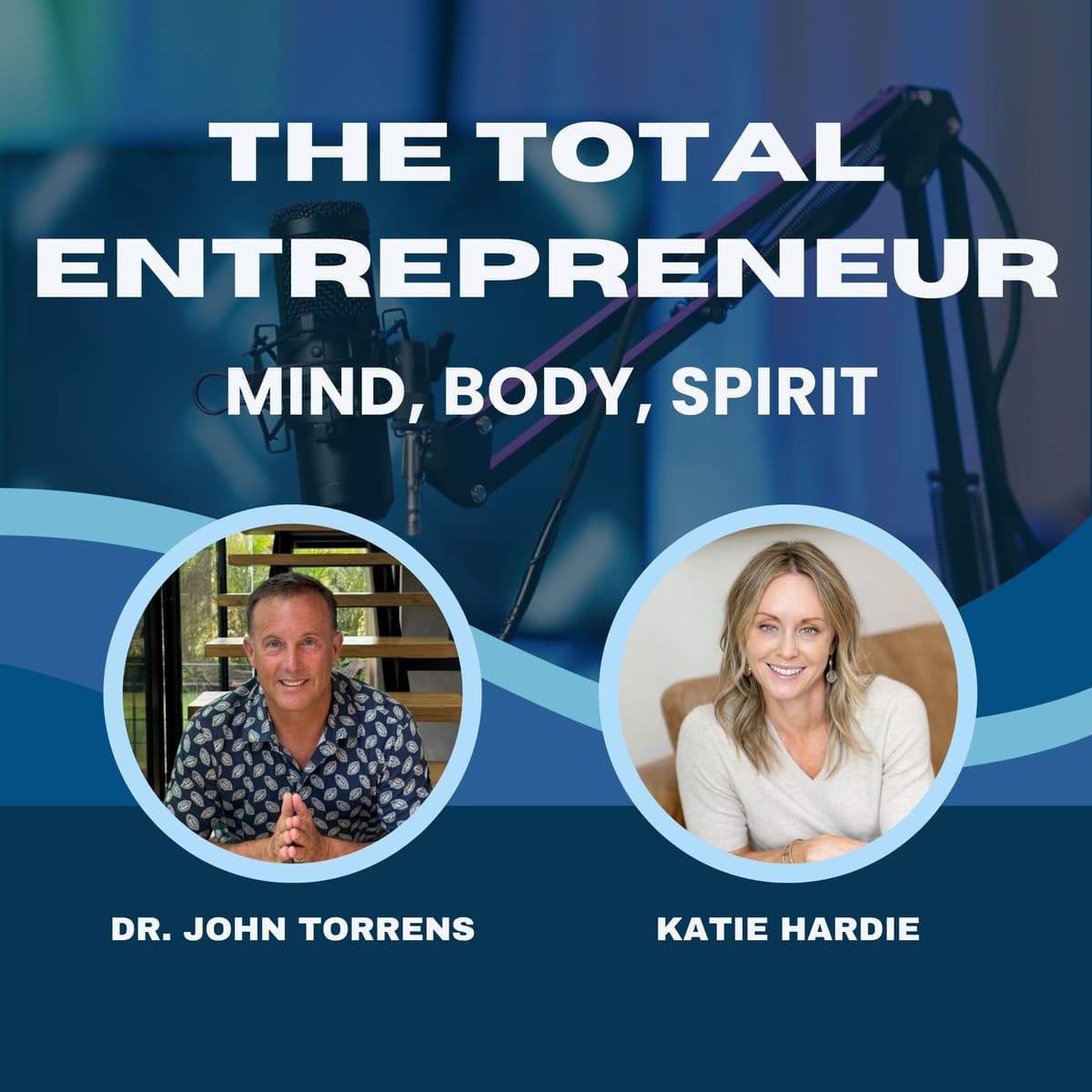
Welcome to the Total Entrepreneur Mind Body Spirit Podcast, where we help busy entrepreneurs and give them the tools to realize the ROI of prioritizing their mental, physical, and spiritual health. Today's guest is Katie Kirkland. Katie is a nutrition counselor and registered nurse, Master of Science of Nursing, and she helps individuals take control of their health using a personalized root cause approach to shift the internal terrain of the body to promote a state of lasting healing and wellbeing.
Katie, welcome to the podcast.
It's really great to have you here. Thanks for having me.
Hi, John. Thanks so much for having me. I'm excited to be here.
Yeah, I'm really excited for this conversation. Nutrition is one of those things that's just central to our wellbeing. So I'm excited to dive in. But before we get into the details of nutrition and nutritional counseling and functional nutrition, let's talk a little bit about your background. And I know you've worked as a nurse, I think all over the world, right? So what did those experiences teach you about what traditional healthcare does well and where it falls short?
Well, I initially became a nurse because I, I was passionate about health and wellness and nutrition from a young age. And at that, like when I was in college, I, I, you know, this was before kind of the time of like health coaching and I wasn't familiar with more of Eastern practices and things. And so nursing just seemed like a logical path into, okay, how can I help people improve their health? And so I got my first degree in kinesiology and health, which was a more health promotion degree. And then I went straight into a nursing degree from there. And my whole time in nursing school, I remember thinking like, okay, I wanna help people. And people would ask me, how do you, what do you, where do you wanna specialize? And I realized pretty quickly that what I truly wanted to do to help people more on a holistic level and really in a preventive way didn't exist in a job description in the world of nursing. So I kind of, for a little while, put that on hold and I ended up working in pediatric hematology and oncology for several years. And that was an incredibly rewarding experience and a really special population to work with. And then that ended up taking me on some adventures. I traveled, I lived and worked in California for a few years, and then I spent a few months volunteering on a hospital ship in West Africa, and then I moved to Australia for a year and a half because I was like, what's another 15-hour flight away from home? But ultimately, I just kept being drawn back into this more preventive, holistic health space. And my own health journey, which I think leads a lot of people into this space, played a big role in that. And one thing I you know, I found when I was in, in the medical world and in this conventional medical model was I noticed that a lot of the work that we do in that space is more reactive to health rather than preventive.
Yeah.
And my passion always really pulled me towards that, this preventive space. And that's what ultimately landed me in finding functional nutrition.
So you mentioned the hospital ship really quickly and that caught my attention. So just, just for fun, for anybody who's interested in that type of thing, what is that? How do you get that kind of job? And what did you think of that?
Yeah.
Yeah.
That was fully volunteer. It was with an organization called Mercy Ships. It's an absolutely incredible organization. They have volunteers from all over the world. I worked with I mean, while I lived on the ship for 3 months, there were people probably from 50 different countries. It's really incredible how people from all these countries come together and provide care for this region. We were in, in Guinea and West Africa at a port for 10 months at a time, just serving that, that country and nearby countries. And yeah, it's an incredible organization. I definitely, if people are interested in volunteer work, it's a, it's a really great organization and, and they are so thoughtful and intentional about how they serve that region and give back and also empower and provide education to that region so that they they can start, you know, expanding their own healthcare to their communities.
That's an amazing experience. So, you know, I've heard of Mercy Ships before. I started my professional life as a speech-language pathologist. So I did some volunteer work with Operation Smile and was able to go to Kenya and Vietnam. So yeah, I'm familiar with the concept. And man, I really enjoyed those experiences. So yeah, that's cool that we've got that in common.
Yeah, that is amazing. I'm familiar with Operation Smile too. That's awesome.
Have you done missions with Operation Smile? Is that what you said?
No, no, I haven't done missions with Operation Smile, but I am familiar with them.
So you mentioned your own health issues. So how did navigating your own health issues, you know, just kind of, I guess, get you to where you are today? Or how does it inform the work you do with your clients?
Yeah, yeah. Well, I, from a young age, I was really into nutrition. And I thought I was eating healthy. I grew up very much in the diet culture, you know, weight loss diet culture on Weight Watchers. My whole family was on Weight Watchers. I thought eating low fat, fat-free everything was how to be healthy. And In high school, I found myself with tons of health issues and I'm like, why am I sick? And all my peers around me are eating crap and they're not sick. And little did I know that I was eating a lot of junk in the food that I thought was healthy because it was highly processed, a lot of it. And then I probably just wasn't eating enough of the other food because in that diet culture, you're so afraid of calories.
Yeah.
But over time, And on my health journey, I realized that when you shift your mindset to one where rather than focusing on, okay, what do I eat for weight loss? And shift it to thinking more in terms of how do I nourish my body and what does my body really need? It made managing my health so much easier.
Yeah, we're, we're probably of a similar generation where, you know, I remember, you know, any, everything had to be low fat and fat was the enemy. And, you know, so you ended up like with pretzels instead of macadamia nuts or, you know, something like that. And you thought you were doing something good, but yeah, in fact, you really need those fats, especially healthy fats. And I think that's starting to come back around. Like there's a lot of influencers who are talking about this, but, you know, the problem is that a lot of doctors still don't really talk about that, right? So, Yeah. I guess that's, that's probably where functional nutrition comes in.
Yes, yes, we definitely still have a long way to go. Um, yeah, I remember trying to like, you know, calories were such like so the enemy. Um, and I remember I used to use butter spray, which is like zero calories.
Oh, I know.
Yeah. And I'm like, oh my gosh, butter. If I had just eaten butter, my body would have been so much more nourished and my blood sugar would have been more balanced. I would have been more satisfied. I wouldn't have experienced these extreme cravings and I just wouldn't have experienced what felt like a constant battle with my body. And now that I've changed my whole mindset and my approach to eating, it is so much simpler.
Yeah, so much simpler, right? I was wondering if you could share your perspective on, you know, big food, right? Because it's like the foods we're consuming. I mean, first of all, the more I read about, you know, what they, what we can eat in the US versus what they can eat in the European Union, for example, It almost— what we have access to is almost not food anymore. So, I'd love to hear your perspective on all of that.
I think a really simple way to think about it is think about what our ancestors ate. And, I work one-on-one with individuals and I tell them, if 100 years ago your ancestors could have eaten this food, then it's much more likely to be health-promoting for your body than what we can get on the stores of a grocery store today. Because in reference to big food, unfortunately, a lot of big food, they produce food not necessarily for health, but for money and for the bottom line. And so, I know it sounds really cynical, but it is, it is the truth. It's quite simple, just going back to the basics, eating real whole foods, that come from the planet. I love talking about butter because butter, you know, has been so villainized.
It has.
Yeah, but it is so nourishing in so many ways for the body. And it just makes sense to me that butter, like, butter has a place in a healthy diet. Going back to the butter spray, I remember I was living with my sister when I was using that and she said to me, why do you eat that? You know, it's just a bunch of chemicals. And it had never occurred to me. I was like, light bulb. It was a light bulb moment and I was like, it never occurred to me that the quote-unquote food in the grocery store, a lot of it was just a bunch of chemicals made in a factory.
Mm-hmm.
And so that was like the beginning of many years of unlearning that I had to do. And, and I see that, I see that all the time. People are still stuck in this fear of, of really beautiful, nourishing whole foods just because they're, they have saturated fat or, um, or they're high in calories.
Right. Or, it's going to lead to high cholesterol or whatever, right? But, I just kind of rediscovered butter a few years ago and added it into my diet with some real zest because I love it.
Yes.
And, it's not evil and it's not bad. Actually, we started making our own butter because I was like, hey, if we're going to eat this stuff, let's just make it. So, we make our own tallow from bone broth and now we do butter. And, those healthy sources of fats have been so good. Now, I did have a little journey where my cholesterol was starting to creep up, but I suspect it was probably because I was going a little overboard on the homemade ice cream. But, you know, I don't think the butter was a, was a big deal, you know, but I do think there's a lot of unlearning that we have to do in terms of the whole cholesterol thing, right? Like, it's just share your thoughts on it. Like, what is a threshold for cholesterol and where the presence of statins? a little while ago, did that contribute in any way to this vilification of butter and fats and things like that?
I am not an expert on this topic, but let me tell you what I know and what I have learned. And, I think a lot of it stemmed from— are you familiar with Ancel Keys?
No.
He was a researcher who probably is most responsible for this path of vilifying cholesterol and fat. But ultimately, cholesterol is incredibly important. It's a building block to our hormones. It's incredibly important for brain health. And, and so looking at, you know, looking at different markers of cholesterol in a standard panel, lipid panel that you'd get done at the doctor does not tell the full story. So there's a lot more to it than just those numbers. Um, you know, looking at the ratios and looking at, um, like triglycerides. So there's a lot more to it than just those raw numbers that you might see on a lipid panel, which might lead someone to going on a statin. Um, and I think there can be a place for statins, but they're definitely overused.
Mm-hmm.
Um, I think of high cholesterol excessive, if it is excessively high, Um, more a reflection of inflammation in the body and also more a result of insulin resistance and blood sugar dysregulation. Like, we want to be thinking about those and also, um, slow detox pathways. So it doesn't just come down to eating less cholesterol because that's just— it doesn't translate.
Right. Because dietary cholesterol is really not, from my understanding, which is pretty basic, right, from a layman's perspective, isn't really the big problem. But, I have a lot of friends because we're getting to that age where they do their blood work and the doctor says, hey, I'm going to push you on a statin, and they just blindly follow the doctor's advice without really thinking it through. And then, I start reading this research where people who have been on statins for decades start to get neurodegenerative disease because they don't have—
Yeah.
a good job of decreasing cholesterol including in the brain. So, if people get a recommendation from their doctor like, hey, I want to put you on a statin, what type of questions should they be asking their doctor? Yeah.
Well, they could ask for additional testing. They could ask for a calcium arter—
Oh, yeah, coronary calcium score. Yeah, yeah.
Yes, yes. Yeah, exactly. Thank you. They could ask for that. There are additional labs they could get as well that give a bigger picture. Um, but it's also really reasonable to ask the doctor like, hey, can I, can I work on some diet and lifestyle interventions before I go on this? And I would say most of the time, um, the doctor is probably going to be open to that. But I think some practitioners assume people aren't interested in taking their health into their own hands and doing these diet and lifestyle changes. But I think if people knew that were an option, some might be interested in taking some of those steps to bring them to healthier levels.
Yeah, I think it's really important just to, you know, to question your doctor more or be armed with some information, right? Because I worry that we're giving up our agency and autonomy as patients and just kind of abdicating our own responsibility for our health to our doctors who, you know, try as they might, they've got they're under a lot of pressure too, and they don't have time to do things. So it's, yeah, it's difficult. Well, anyway, we'll get off the cholesterol things. I want to talk about gut health, which I know is an area that you like to talk about. So you talk about this a lot. And I guess the first question is, what does digestion reveal about our overall health? And what are the things that we often ignore when it comes to digestion?
Yeah. Well, one thing in functional nutrition that we say is It's not just what you eat, but it's what your body can do with what you eat. So you could be eating this beautiful, by-the-book, whole foods, perfect diet. But if your body can't digest the food, then you're not able to take full advantage of all those nutrients and you might not be absorbing them. And so it's really important from top to bottom that digestion is optimal. And so that starts even just simply by, you know, I always say the first step to digesting food happens before you even start eating. And that's taking a moment before you eat to pause. And whether it's a moment of gratitude or just a moment of reflection, to just acknowledge that you're about to eat. And that gets the cephalic phase of digestion going, which gets your salivary glands going. So you're starting to salivate and your digestive enzymes start flowing. So you're— it's priming your body to digest your food before you even start eating. And then the next step is chewing, which is incredibly important to make sure you're chewing your food really well. I— there's a saying, chew your liquids and drink your solids. Um, so that means like, say you start with a piece of chicken, you wanna chew that down until it's a liquid form before you swallow it.
Oh wow.
Mm-hmm. And then same thing goes if you're drinking, let's say a smoothie, not, not something like water, but if you're drinking a smoothie, you know, let that sit in your mouth and just kind of like chew on it a few bites because that motion of chewing is signaling to your body, hey, we're eating. Get— it's signaling to your, your stomach and your digestive organs, like, let's start producing enzymes. And, um, and so just very intentionally chewing your food makes a big difference too. Um, if you think about once you swallow— oh, go ahead.
Oh, so I was— that is really interesting and something I, I do a really bad job at, right? Like, because some— like, when you're in a rush, and I think a lot of entrepreneurs face this, like, mealtimes are really just to, you know, quiet the grumblies in the tummy, right? And for me, like, I know I eat too fast. I know I don't chew that well. There's many times where I don't actually acknowledge that I'm about to eat. I just do it. So that's really interesting. Thanks for that. But yeah, continue with that thought because this is, this is great.
I was just gonna say, um, when we think about, you know, once the food reaches our stomach, um, say someone is experiencing some acid reflux or GERD, I think a lot of times our first instinct, and this is what we're often told in this conventional medical world, is that we have too much acid in our stomach. But what, what a lot of people actually have is not enough acid. Because if you think about the food in your stomach, it requires a certain amount of acid to break it down fully so it can continue on its journey through the digestive system. But if there's not enough acid in the stomach to break it down, it's going to sit there longer. which can result in reflux. And so something else some people benefit from is drinking a little lemon water or maybe taking a little apple cider vinegar or some herbal bitters before they eat to increase the stomach acid so it can help break down the food in the stomach so the body can then utilize those nutrients better.
I've heard of apple cider vinegar before and, you know, I, my, my biggest health issue has always been metabolic health, like my, my fasting glucose is usually mid-90s. My A1C is not necessarily pre-diabetic, but it's over 5. And so, yeah, I was doing apple cider vinegar for a little while, doing the post-meal walk and all that kind of stuff. And, it did help. So, I guess the physiology of that, it's the acetic acid and it gets you primed to digest the food. Is that the idea? Yeah.
Yeah. Yeah. That's, that's a big part of it.
Okay. Super interesting. I know the gut and emotional regulation are connected, right? And especially if you have a lot of stress, could you talk about that a little bit?
Yeah. Well, um, one thing, uh, like one really important part of my practice that I focus on is this idea that the body cannot heal if it's not in a healing state.
Mm-hmm.
Um, and so that's where we're thinking about nervous system regulation and how important that is for overall health, including digestion too. Um, and so when it comes to gut health, the gut and the brain are very connected. Um, they're connected physically through the vagus nerve. Um, and the gut also is responsible for 90 to 95% of serotonin production. And so, um, there is, there is a lot of opportunity in the gut through our neurotransmitters and through the microbiome and through even the physical integrity of the gut to influence our mental health.
So how do we, I guess, tap into that or how do we manage that as individuals? I mean, it's good to know it, but how do we do something about it? Yeah.
One really simple step to nurturing the microbiome of the gut is thinking about eating a rainbow of colorful fruits, vegetables, nuts, seeds, legumes, whole grains, so whole foods, because each of those different types of whole foods fiber feed the good gut bacteria in the microbiome. And we have hundreds of different strains of bacteria in our gut. And in order to keep that balanced, it's important to have a lot of different diversity that we're bringing into the diet. I really love the metaphor of garden and how, how gardens thrive when there's diversity. And, you know, if you have too much of one plant in a garden, the, the ecosystem will be out of balance. Um, but if you have, you know, lots of different types of flowers and bugs and, um, you know, great diversity, that's what keeps a garden robust and thriving. And the same thing pertains to our gut. Um, the more diversity we can bring into our diet, the, the more robust the microbiome is going to be, which translates into improved mental health, improved immunity, improved hormone balance. I like that metaphor just because it's a visual. You know, when you walk into the grocery store in the produce section, you can think about filling your cart with different colors of the rainbow, and that's just a simple way to ensure you're getting plenty of diversity.
Yeah. So I want to turn our attention a little bit to poop, if you don't mind.
So what does our poop tell us about our overall You should be pooping, first of all, 1 to 3 times a day. It should be medium brown in color. It should be soft and formed, not too hard, not too loose. On a Bristol stool chart, it should be a 3 to a 4. A 1— the Bristol stool chart goes 1 through 7. 1 would be severe constipation. 7 would be severe diarrhea. So you want it right in the middle, 3 to 4. And food should also be fully digested. Um, it should pass easily. It shouldn't take more than 15 minutes to fully pass. Um, so if any of those things are off, it, it's kind of like a free health report from your body, giving us some clues that there's something going on. So that could be, you know, something as simple as you ate too fast and your, your body didn't have wasn't able to fully digest your food. It could be something as simple as that, but it could indicate other things. It could indicate infection or problems with digestion or imbalances in the gut microbiome. So there's a lot of different— there's a lot of information we can gather from our poop, and so it's just really important to pay attention. Um, but I would say the main thing is if someone is not pooping daily, like let's just start there and get them pooping daily because we need those detox pathways open.
Yeah. So, so how do you do that if somebody doesn't have regular bowel movements, like they're 2 or 3 days apart? I totally get that it's, it's a little toxic, right? But what, what, what can you do about that? What are some things you can do to increase the frequency?
Yeah, there's a lot of things that come into play. So one is I would look at someone's hydration, like, are they drinking enough water? Ideally, you want to be aiming for about half your body weight in ounces per day. I also am a big fan of bringing in some electrolytes or minerals to make sure we're hydrating at the cellular level so we're not flushing out all of our electrolytes.
Mm-hmm.
Also, of course, gradually increasing fiber is really important too. Feeding the microbiome, like I talked about, eating that rainbow, that diversity can help as well. Reducing stress and slowing down. Yeah. Yeah.
And what do you think about probiotics? A lot of people take them. Are they good, bad, or does it depend?
I would say it depends. I would say most most people probably would benefit from probiotics. Occasionally, if there's a significant imbalance going on in the gut, it might not be a good thing. But I would say most people would benefit from some really good probiotics that have Bifidobacterium and Lactobacillus in them.
That was my next question is what should people be looking for in their probiotics? Because I know, you know, you can, you can go to a store and find And I mean, you know, it's almost an unlimited selection. So what do people— what should they look for?
Yeah. Bifidobacterium and Lactobacillus are 2 species of beneficial bacteria. And so I would look for those typically starting out. Just a broad-spectrum probiotic is a good place to start. There are gut tests you can do to to get more specific, to see like where, where does your gut need some additional support. And those can be really valuable if someone is having persistent issues, not even just gut issues, but even skin issues or mood issues. Because the gut plays such a role, taking a look inside the gut and doing some microbiome testing can provide really helpful and valuable insight. But I will also mention that you can get probiotics from food as well. So you don't necessarily need a supplement. Yeah. So fermented foods, kimchi, miso, kefir, sauerkraut, pickled vegetables. Um, I always like to tell people just be, um, be a little cautious when you're at the grocery store buying pickled food, or not just pickled, fermented food, make sure it's in the refrigerated section. Um, because if you're getting pickles, for example, you don't want to be getting pickles out of the middle of the store where they're on the shelf, um, packed with preservatives. You want to be getting them from the refrigerated section and just double-check that there's only a few ingredients in there. Otherwise, they're not going to contain these beneficial gut microbiome-promoting bacteria.
Ah, interesting. So I hadn't realized that. So the, the pickles you get from the middle of the aisle, like the sandwich stackers, the dill pickles or whatever, they may not necessarily deliver the benefits that you think they're delivering.
Yeah, yeah, yeah. Um, like homemade pickled pickles would be the most ideal, or If you got them maybe from a farmer's market, you know they're going to be made with these whole ingredients and without all of these preservatives too. Something that's really important when we're thinking about, you know, functional nutrition and how to get the body to function most optimally is reducing the toxic burden on the body. And so when we're buying processed food or buying food with lots of preservatives and things, that is adding to that toxic burden. And so any opportunity we, we can take to remove some preservatives or, or pesticides, that's gonna help overall with that toxic burden and help shift that internal terrain of the body to one that promotes healing rather than one that allows for disease or dysfunction to take root.
Hmm. No, that's interesting. Thanks for that. Which brings up a, a couple of questions for me. One, I wanted to talk about like the standard American breakfast of cereal and milk. But, I eat eggs in the morning, eggs and avocado. But, eggs have been in the news a lot lately for their price and that sort of thing. But, I was wondering if you could share your knowledge just about eggs and where to get them, how to source them, what to look for. I mean, especially if you eat a lot of them.
Yeah. I'm an egg person too. I love eggs. So ideally, you want to be eating pasture-raised eggs, and I know they're— they cost more, but you really get what you pay for. It's the nutrient density of pasture-raised eggs compared to conventionally— to eggs from conventionally caged hens is shocking. Like, I can tell you a few stats. Pasture-raised eggs have 30% more vitamin A, They have double the vitamin E, 2.5 times the omega-3 fatty acids, and 3 to 6 times the vitamin D. And the reason that they're so much more nutrient dense is because they're, they're exposed to sunlight. So they're getting that natural vitamin D because they're outside, they're grazing on pastures where they're eating grass and insects and dirt. And so they're gonna— they have— they're more mineral-rich too. So this goes for their meat and also their eggs. So if you're buying chicken, you know, grass pasture-raised chicken is also going to be more nutrient-dense, the meat itself too. And so they're really just like nutrient-dense powerhouses.
So now, do, do, do, do, do they have to disclose that, or is it on the packaging? Does it clearly say pasture-raised or something like that, or, or can you tell just by cracking it and looking at it? Like, how would you know that's what you're getting?
Yes, it will say pasture-raised if you're buying them from the grocery store. They'll say pasture-raised. You can usually get pasture-raised eggs from, uh, from a farmer's market too, and that might not say it. But, um, generally, if you're buying food or meat or animal products from a local farmer, they're most likely using these farming practices where their animals are grazing on pastures.
I gotcha. So, and do they look different? Like, are the yolks brighter or more orange, or is that just a myth?
You'll notice in pasture-raised eggs, the yolk is a much deeper orange color compared to like this bright yellow. And that's because of the vitamin A. It's just so much more nutrient dense. You can literally see the difference. I, I think it's really cool how you can see the difference in different types of foods because they're so much more nutrient rich. Same thing goes for wild-caught salmon compared to farm-raised salmon. I think this is really fascinating. Farm-raised salmon has to be fed synthetic pigments to make the meat of the fish brighter. Because if they didn't feed them those pigments, they're so depleted of nutrients that the fish is actually a dullish gray color.
Well, suddenly I'm not hungry anymore.
Oh man. But that's why wild-caught salmon is so It, it, I know it costs more, but you're getting so much more nutrient bang for your buck. There's a saying, pay the farmer now or the doctor later. And so I really believe that it's worth it to invest a little bit more now so you can, um, prevent potential dysfunction and disease in the future. I know that not everyone's budget allows for premium meat and premium eggs and all of this. And so I do want to acknowledge that any whole food, so whether you're getting conventionally raised, you know, eggs from conventionally caged hens or salmon that's farmed, that is still a better decision for your health than an alternative by a processed alternative. So I want to acknowledge that. I know that that's not necessarily accessible to everyone. And some people might not even have it in their grocery stores, those options.
Right.
And so I just want to acknowledge that a whole food is still a, a great decision for your health, even if it's not the most optimal version. There's like a good, better, best, and sometimes good is, is perfect. It's, it's good enough.
So I want to switch our attention to, you know, the, the Cheerios with milk, right? I can't tell you how many people think they're doing something good for their body by eating heart-healthy Cheerios and, you know, highly processed milk. Talk to us about that.
Yeah. Yeah. Gosh, it is so misleading. And it kind of takes us back to, you know, where I was talking my health journey of where I was following I was reading all these labels. You know, I was looking at the front of packages where it said low fat, heart healthy, and I'm like, oh, this is good. I'm making good decisions for my health. But little did I know I was sending myself on a blood sugar roller coaster every single day. So that, I would say, is the biggest thing when it comes to breakfast. And this is an area where I start with a lot of my clients. Is let's, let's start off your day with just a really nourishing whole food breakfast. And the rest of the day goes so much more smoothly. And it's so much easier to make nourishing, healthy decisions when you start the day with a breakfast rich in protein, fat, and fiber. Because when you start the day with cereal, especially if you're— if you have skim milk with it, there's essentially no fat. In that meal, there's no fiber, and there's no protein. So you're just setting yourself up for a blood sugar roller coaster. The blood sugar spikes, and then it plummets, and that's where people experience these extreme cravings. They might get those feelings of the hangry feeling where they're hungry and angry and irritable. And then so they reach for another sugary treat. Maybe there's donuts in the office. And so they reach for donuts because they're like, I'm depleted, I'm starving, I need something. And that's what's accessible. And maybe they grab a coffee at that time too. And so now caffeine and sugar is spiking and then they tank again. And it's just this roller coaster all day long. So yeah, starting the day with a nutrient-dense meal with protein, fat, and fiber can just really set the tone for a much smoother day.
Yeah. And I think it's important for people, you know, especially if you were raised thinking that skim milk was better than whole milk or Cheerios were better than eggs and that sort of thing, it's important to, I guess, know that yes, you have permission to eat you know, eggs and avocado. And, what about bacon? What's your thought on that?
Yeah. I mean, I personally love bacon from time to time.
Who doesn't, right? Yeah.
I try to stick to low preservatives, so nitrate, nitrite-free, ideally organic if I can. But again, if organic's not available, I would say go for some bacon over a bowl of Cheerios. I wouldn't say do it every single day, but I think bacon can absolutely be a part of a well-balanced nourishing diet. Yeah.
So actually, that's another question I have for, you know, for a lot of entrepreneurs, they, like I alluded to earlier, sometimes you just don't feel like you have the time to eat well or to prep or whatever. And even with the best intentions, it's sometimes not going to be perfect, right? So what does realistic nourishment actually look like when your life is busy?
Yeah, I think it really does come down to a balance. One thing I look at with clients is potential food sensitivities. And so if someone does have a sensitivity to say something like gluten or dairy, then We probably do want to shift that away from the diet, at least for a period of time. Um, but, um, but it really comes down to just prioritizing whole foods or minimally processed foods as much as possible. And that takes just a little bit of preparation. Um, so, you know, doing a nice grocery shop at least once a week where you're buying some staples. So that when you're in a pinch, you have things you can quickly grab on the go that are going to be supporting blood sugar and that are going to be nourishing and not depleting you.
And it's little wins, right? Like even, you know, on a flight, you know, if you're not sitting in business class and getting a fully prepared meal and you have the option of the Biscoff cookies versus the pistachios, you know, pistachios, even though they're processed a little bit, probably better than the cookies or the Sun Chips or whatever you've got available, right?
Yeah, yeah. When I'm making decisions about food on the go, my main focus is what is this going to do to my blood sugar? And, and so even if I say I did decide to get some chips, I would really prioritize getting some protein or fat in along with that. This idea of always dressing up your carbs So, you know, I'm not saying there's no place for a little indulgement here and there, but just making sure that you're pairing those carbs with something that's going to slow down the blood sugar response.
Yeah. So like I said earlier, that metabolic health and blood sugar, has been just the thing that I have to wrestle with. So, I wear a CGM twice a year just to kind of keep that in check.
Wow.
And, I do the same thing now even when I don't have the CGM on because I've learned so much. And, when I'm on the go or anytime I have to make a food choice, I'm thinking, what is this going to do to my blood sugar? If I had my CGM on right now, what would this be doing? And, it's such a cool way to gamify your biomarkers because Now that I know this and I have information, you know, I can make different choices. And yet blood sugar is always top of mind for me because that's, that's, that's my thing. That's, that's my battle. Yeah.
Yeah. Yeah. Even I, I love the idea of going back to, I don't know why I'm, I'm, um, really focused on butter in this conversation, but even going back to if you decide to have a piece of bread or a roll, Like, put the butter on it, you know, put the butter on it, add some fat to it to help slow the blood sugar response that you're going to have to that.
Yeah. And again, it's— we've been trained so differently, right? Or taught so differently. Like, yeah, have the bread. It's great. It's low fat, but gosh, don't put the butter on it, right? Because it's high caloric and high fat and high cholesterol. Yeah. Yeah, that is— it definitely takes a little bit of Untraining for sure. And so, the other thing too, adding fat helps slow down the absorption, but I've read also just putting that fiber in front of the carb too, like actually just eating your meal in a certain way. So now, whenever I can, I try to eat fiber whether it's a fruit or salad or sometimes I'll even just grab a small handful of spinach.
Yeah.
Instead of taking a pill, I'll take a handful of spinach before I know I'm going to eat something that has fast carbs in it or something. And that seems to help. I don't know if, if you have a thought on that, but it seems to help me.
Yeah, no, that's perfect. I— one thing I teach my clients, um, when it comes to blood sugar balance, probably the number one thing I teach is protein, fat, and fiber at every meal or snack. Um, and you don't— you're not always going to get all 3 of those, but it's a really great rule of thumb to keep in mind. So I love the idea of Okay, I don't have some protein readily accessible, but I'll eat a couple bites of veggies, and and that's going to make a difference. That's going that's going to be better than if you ate that carby snack without them.
Yeah, I kind of treat it like a pill if I need to, right? I just grab a, and I don't even mind raw spinach that much. It's it's not doesn't bother me. It's kind of good. And and when I have my CGM on, I notice. it really keeps that curve very flat.
Yeah.
The other thing I learned, which is great for me, is that I can eat ice cream with near impunity from a blood sugar perspective. And, I think it's just because the fat in there, right? But, if I eat a piece of cake, man, forget it, my blood sugar will spike. So, it's just helpful for me if I'm out or if desserts are available, you can indulge but in a smarter way, I Yeah, absolutely.
I, I think, you know, we all deserve to indulge from time to time. And, but the decisions around how we indulge make a big difference. So if you're going to say you're going to eat cake, maybe be a little more intentional, intentional about eating a little extra protein at that meal beforehand, or even eating a couple bites of protein Like, like a pill, like you said you do with spinach. Yeah, I also find that when you eat really nourishing meals that are rich in protein, fat, and fiber, you don't need as much of that indulgent sweet to satisfy you. You're satisfied much more quickly because you're not ravenous. One other thing. when it comes to indulging a little bit is that idea we talked about of slowing down before your meal and just like pausing and have a moment for gratitude before can also— is also really important before you eat a, like, a sweet treat. Um, and just being at peace with it too, because guilt and stress about why you're eating can be just is detrimental for digestion and overall health, or it could be even more detrimental than just enjoying that treat with, with ease and with peace.
So tell us about this, these cravings, right? So like, if, if there's a— like, I'm thinking of these young entrepreneurs I work with, you know, they're not only are they university students, but they're starting companies, their diets could definitely use some help. But they You know, they say that they always have these cravings, right? They can never get satiated. What's, you know, what's a simple step they can take to address that so that they do feel satisfied and satiated and they don't have to constantly graze and snack and that sort of thing?
Yeah. Like I said, prioritizing protein, fat, and fiber at every meal or snack can go a long way. For helping to balance blood sugar and prevent those crashes where they experience cravings, and also prioritizing whole foods. Because when we're eating processed foods, they, they're, they're, they're not as rich in fiber, fat, and protein. And so they're not going to support that blood sugar balance. They're also just not as rich in nutrients. And And sometimes our cravings might be our bodies asking for more nutrients. And so, if we're eating these processed foods that they might be high in calories but they're not rich in nutrients, it really confuses our body. And, that can also lead to these extreme cravings and feeling ravenous.
Yeah. So, if you eat a bag of Goldfish and you're still hungry, it doesn't mean you need another bag of Goldfish, I guess, right?
Exactly. It probably means you need some nuts or some, some maybe a scoop of almond butter or some seeds. When it comes to blood sugar balance, thinking about just moving the body, that can really help stabilize blood sugar. So after a meal or even before a meal, you know, just movement around mealtime can be really beneficial for keeping blood sugar stable and subsequently keeping energy levels stable and keeping mood stable and hunger cravings stable.
Yeah, I've noticed that myself. So for me, it doesn't take much. It's just a 10-minute walk after a meal is enough to keep that glucose curve pretty, you know, a lot flatter than it would be otherwise. And it's just great. You get to be outside and yeah, it is good for your mood as well. Katie, this has been a really great conversation. I so appreciate I really appreciate your expertise and what you do for people. And if people are interested in learning more about what you do and your work, where can they find you?
Yeah, they can find me at my website. It's katikirklin.com. It's K-I-R-K-L-I-N. Or I'm on all the socials. I'm on Instagram at Katie Kirklin Nutrition or LinkedIn and Facebook too.
That's great. Well, thank you very much. And yeah, hopefully this has been helpful for people, especially for people who just feel like they're always rushed and maybe they don't have the time to make good nutrition decisions. Hopefully some of the tips you shared today will, will be helpful for them. So thank you.
Yeah. Yeah. Thank you so much for having me.
About This Episode
What if the secret to healing your body isn't about restricting what you eat, but rethinking how you eat?
In this episode, John sits down with Katie Kirklin, a functional nutritionist and former pediatric oncology nurse, to explore the powerful connection between what we eat, how we digest it, and our overall well-being. Katie shares how her own journey through a landscape of diet culture and personal health struggles led her away from the traditional medical model and toward a more holistic, preventive approach to nutrition.
Katie breaks down common nutrition myths, explaining why highly processed "health foods" often lead to blood sugar rollercoasters and how reintroducing healthy fats, like real butter, can be a game-changer for satiety and metabolic health. She dives deep into the mechanics of digestion, offering practical, simple tips for busy entrepreneurs, such as the importance of chewing thoroughly, the role of stomach acid, and how a 10-minute post-meal walk can flatten your glucose curve. Katie also provides actionable advice on gut health, including what your poop can tell you about your digestion, how to select a quality probiotic, and why pasture-raised eggs are a nutritional powerhouse.
An enlightening and practical conversation for anyone looking to cut through the noise of fad diets and build a sustainable, nourishing relationship with food that fuels both body and mind.
Episode Chapters:
00:00 - From Nursing to Functional Nutrition.
02:51 - Volunteering on a Hospital Ship in West Africa.
05:09 - Unlearning Diet Culture & The Power of Healthy Fats.
11:29 - Rethinking Cholesterol and Statins.
15:34 - Digestion 101: The Importance of Chewing & Stomach Acid.
20:43 - The Gut-Brain Connection & Eating the Rainbow.
23:29 - What Your Poop Says About Your Health.
26:00 - Probiotics, Fermented Foods, and Reducing Toxic Burden.
29:41 - Why Pasture-Raised Eggs Are Worth the Investment.
34:42 - The Blood Sugar Rollercoaster: Cereal vs. a balanced Breakfast.
40:23 - Managing Blood Sugar on the Go: Protein, Fat, and Fiber.
43:24 - Indulging Intentionally & The Power of a Post-Meal Walk.
Keep listening
More on Body
About the Host
Dr. John M. Torrens
5× Inc. 5000 entrepreneur, Professor at Syracuse University's Whitman School of Management, author of Lightning in a Bottle, and TEDx speaker on ADHD as an entrepreneur's superpower.
Browse all podcast guests →Book a strategy call →