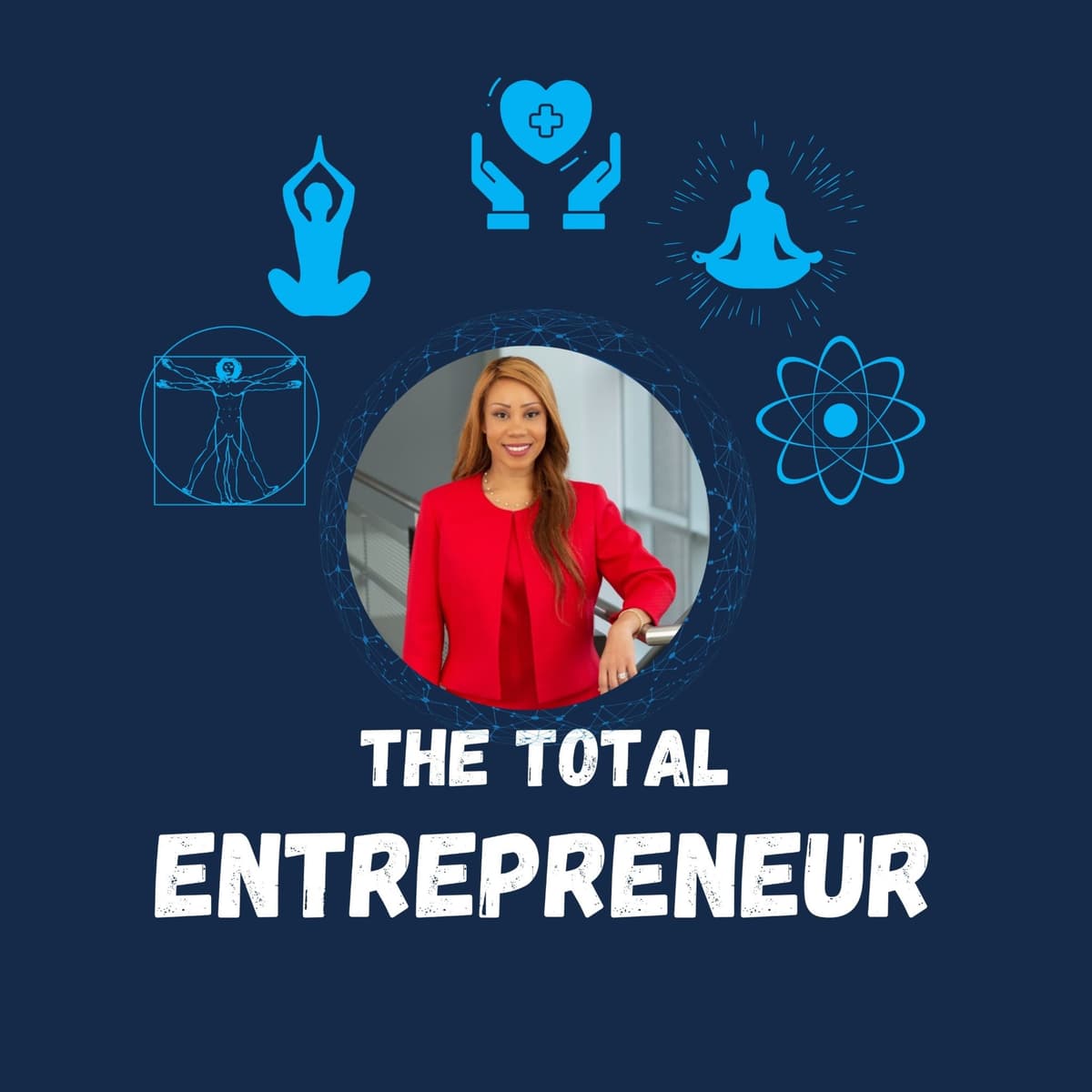
The Joyful Leader with Nicole Van Valen
with Nicole Van Valen
Apr 11, 2025 · 00:38:08
Part of our conversations on
Today's guest is Nicole Van Vallen, MS, LMFT, SHRM, SCP. She brings over 2 decades of experience leading transformative initiatives in healthcare, behavioral health, and social services. As the CEO and founder of Keen Insights, Nicole partners with healthcare systems to create sustainable growth, elevate wellbeing, and cultivate environments where resilience and inclusivity are more than buzzwords, They are the foundation of a thriving organization. Nicole's signature platform, the 3 Stages Along Your Resilience Journey, empowers healthcare professionals to overcome challenges, adapt to change, and thrive in high-pressure environments. Her holistic approach combines evidence-based mental health practices, spiritual healing, and energy techniques to address the needs of the whole person, resulting in healthier, happier teams that deliver better patient outcomes. Welcome to The Total Entrepreneur Mind, Body, Spirit, where we turn cutting-edge science into practical strategies for entrepreneurs. I'm your host, Dr. John Torrance, entrepreneur, Inc. 5000 honoree, and professor of entrepreneurial practice at Syracuse University's Whitman School of Management. Each episode, we dive into mental, physical, and spiritual health with expert guests offering actionable insights to help you thrive and perform at your highest level. Let's get started. Nicole, welcome to the podcast. It's really great to have you.
Oh, I'm so excited to be here with you and your group of listeners here. Let's get into it.
Excellent. So your background is really interesting. You've got a— you're a licensed marriage and family therapist. You've got a master's degree, and you're also an SHRM-certified consultant. So talk to us a little bit about that. how you got there, and then we'll talk about how you apply those skills for your clients.
So I'll just go back to growing up. So I'm from the Caribbean, from the Bahamas. So growing up, my choices were to be a doctor or a lawyer. And my dad is a retired physician. I grew up in healthcare. I basically grew up in the private practice, family private practice and all of that. And you know what? I didn't really like blood very much. So I was like, okay, I guess I'm going to be a lawyer. So I went to school at University of Miami. pre-law, and they're like, you could just do any major you want. So I did a lot of psychology and philosophy classes and did some internships in politics for law. And I was like, this is just not for me. So I just stuck with psychology. And then I ended up graduating with a psychology major and going on to get my master's in marriage and family therapy. And while I was doing that, I was actually a cheerleader for the Dolphins. the NFL team here in Florida. And I was doing that for 2 years. I was going for my 3rd year. They're like, you're going to be captain next year, possibly, and all this great stuff. And I was like, well, I have a class on Wednesday next semester, so I can't make rehearsals on Wednesday. They're like, well, you have to be here. Go, I have to get my education. So I didn't do that anymore and graduated from there and started working for a nonprofit organization, Women in Distress, helping women and victims of domestic violence and the children who observed it. And then I decided I'm going to try out for another dance team. So I tried out for the Miami Heat, for the NBA dance team. And I did that for a couple of years. And I ended up coming back and being an assistant coach. So all that time of doing dancing and cheering, I was in the corporate world trying to climb that corporate ladder. Now, years looking back, Dance and cheer was my resilience resource as I was working in the field. So I had like 2 worlds going on at the same time. And I remember I was doing a lot of training for law enforcement, lawyers, doctors, nurses, and that for their CEU credits. And I went to the police department, the sheriff— no, actually it was the sheriff's department. I gave a presentation on domestic violence because that's one of the most dangerous calls when they go out. to help for the officers. I'm saying it's one of the most dangerous calls for the officers. So I'm giving that presentation. I'm all buttoned up, bun in my hair, suit and everything. And then that same night we had a basketball game and I was dancing. So here I am pregame dancing with my friends and I see 2 gentlemen walking down the stairs and they're staring at me as I'm dancing. I'm going, I feel uncomfortable inside. My inside voice was saying, I feel a little weird. And as they get closer, they keep staring at me and I feel like they're talking about me. And then when they get down to the actual floor, those were 2 officers that I trained earlier in the day. And they were at the game while I was dancing. So my 2 worlds kind of collided there for the first time because I kept them completely separate. And then while I was working in corporate, I never told anyone that I used to be a dancer. And I finally got to senior-level management. And they asked me to do an interview for this peer support group program product and service we launched there. And so I did it. I talked about the dance and chair, and people were okay with it. And I wasn't really shunned for it like I thought I would be in my mind. And I was actually helping other people talking about the different healthcare, mental health services that we had. So now it's all kind of coming together and being my authentic whole self. Today's days and age as an entrepreneur, our company is like our baby. It's a part of who we are. And you are just so much more uplifted and you have so much more joy in the work that you're doing when you can come and be your whole self. Altogether. So that's a little bit of the story of my background.
Yeah, that's interesting. So you were really busy. I mean, you had basically 2 careers almost, right? I mean, being a full-time student and dancing. Dancing has gotta be really rigorous and tough on the body, and then you're going to school. So, so you said that was a, a good resilience resource for you.
Mm-hmm.
And my mind immediately went to just how brutal and difficult that was probably on your body. So So talk to us how that kind of, you know, rigorous exercise or activity was, was used as a resilience resource.
Yeah, so just like what you said, John, that's what people say to me, like, how did you do all of this? And I went through it, but at the time I wasn't thinking that it was hard on my body. I was actually doing something that I enjoy that brought joy into my life. I was around sports and entertainment, which I love. I was around other women that were just as passionate about dance and working in their careers. So some of them were going to school for law, psychology. You know, when we go back and do alumni reunions, they're thriving in businesses, presidents of large organizations and things like that. So I was a part of a sisterhood that is really strong and impactful for women. And then we were supported and had allies by the men in the sports and entertainment industry. So for me, I wasn't thinking that, oh my gosh, this is so difficult and hard. I was more like, I get to do something that I love. And if I have a hard time with anything physically, I remember when I was dancing for the Heat, I did hurt my knee and had to go through physical therapy. But I wasn't thinking like, oh, this is so hard and miserable. I was thinking, This is so much fun. Like, I get to dance in front of thousands of people. And yes, it can be nerve-wracking, but when I got off of that field or court, I was like exhilarated. I, I just had such a great time. Yeah. So I guess I just didn't think about it.
And I think there's something about the, just the discipline that you have to apply to something like that. And I think that translates into other areas of your life, like your business. So actually, yeah. So tell us a little bit about Keen. and what you do there.
Yeah, so Keen Insights is a company that I developed because I love speaking and helping people so much. So what we do is I give keynote presentations on resilience to help people manage their stress and avoid burnout. And it's designed for leaders, for executive leaders and entrepreneurs as well. And we have a slew of different programs and services to help people learn this skill set in any way that works for them. So if they want to read my book, I have a book coming out, The Joyful Leader, next month in time for Mental Health Awareness Month. That's in May. So everything and everything is packed into that book. It's a labor of love. There's that. And then I have webinars, seminars for leadership teams so they can learn the model that was developed over the years from, you know, all of that I've done in my life and working with families. So it's a, a 3-step model basically, and I call it the Ready, Set, Go model. So it's a, it talks about 3 stages along your resilience journey. So one is to get ready, and one of the ways you can get ready is to discover yourself. And you're basically discovering what brings you joy. And I find that leaders sometimes forget what brings them joy. So we have to kind of really think about that. I remember giving one of my presentations and the CEO was asking, is her work considered joy? So we had to dive into that more. And then there was another CEO that said, you know, I used to love drawing and art. I haven't done that in years and my 7-year-old daughter loves drawing. We're going to go take an art class together. You know, it helps people discover themselves again, takes them out of the grind of the everyday job. And then once they do that, they reenergize themselves, and then they can get ready. And that is the part where you go back into your work environment, home environment, wherever that is, and bring your energized self there. And what happens is you begin to cause changes in other people, and you can work together with your team, with your colleagues, within the organization and come up with the innovative things that you need to do to grow your business and your teams. And then you go. And that's the part where you go and you take action and you deliver on your goals. So that's the 3-step model so that you can do things a different way. Because a lot of times when you think of resilience, you're thinking about grit. I think about I have to be absolutely miserable and completely stressed. in order to meet my goals. And I was like, well, there's got to be another way. Like, can I be more resilient through joy, through the things that enlighten me and light me up and also light up other people? And that's what the whole premise is about. And you know what I found out? Because I'm a big nerd, there's facts that having more joy in your life leads you to success.
Yeah.
Yeah. Makes you more likable. You can connect with people on a deeper level. And that's what business is all about, is connections, relationship building, and building that trust. I mean, when you go to the grocery store and the person serving you is all grumpy and miserable, you wanna run away from them, right? So that's, that's what it's built on.
Yeah. You said so much that I wanted to get to, but I, so the, idea about being joyful and having that just radiate from you and, you know, have everybody feel it, I think is really important and probably something that gets lost. At least the entrepreneurs that I see or work with, a lot of times they're just very caught up in the grind and they feel like if they're not doing or achieving, then they're not really succeeding, right? They're not actually being entrepreneurs. But like you just said, working on finding joy is, The ROI is pretty significant because you're going to establish better relationships, you're going to be more creative and get more things done. So what are some, like, when you're working with somebody and finding joy is an issue, or even just resilience in general, what are some things that you've seen that work really well for people who are just stressed and need to increase their resilience and need to find some joy?
A lot of it is just stepping back. So that you can bounce forward.
Ah.
So it's kind of— the first thing is to just recognize that you're feeling stressed or that you're feeling burnt out, because sometimes you don't even realize it. And sometimes it might take someone else saying it to you or noticing it for you. And once you've identified it, then it's about, okay, what am I going to do about it? So I've created this thing called a joy menu.
I love that. It sounds like a great menu to look at.
Exactly, right? So it's a joy menu, basically. So you can go ahead and write down, be preventative, proactive, and write down the things that bring you joy and have that ready to go. And when you have identified that you're feeling stressed, just go look at that menu and pick one thing to do. And there could be things that are as simple as taking 3 deep breaths. Like really taking those deep breaths. And I've done that in our webinar and people can't understand how much energy doing that takes. I mean, brings them after doing it.
Yeah.
And they're just re-energized. And that doesn't take a long time. And I do it sometimes when I'm in meetings, I'm feeling a little stressed or I'm giving a proposal or things like that. And you can do that and no one else knows. It's so that's 3 seconds out of your time to do it. But when you do have time, you can think of other things that you like to do. So now for me, it's like I love a hot cup of chai. If I can get a nice cup of tea and sit for 5 minutes, 10 minutes and drink that in solitude, that reenergizes me. Other people, they want to go bike riding or something, you know, that's a lot of energy, like takes a lot of energy and exercise. I'm just going to walk around the block, but other people are going to do a 3K, mile, whatever those things are. But there's different things that you can do. So I advise people to just think about things a little bit differently, pull them out of what's draining them. And then we have an opportunity to discuss what enlightens you. And then how can we decrease the things that drain you and increase the things that energize you. And that could be simply looking at your energy level during the day. So for me, my energy levels skyrockets at night in the evening. So I'm going to do my core things in the evening, that must-haves that takes a lot of my energy in the evening. My husband's a morning person. He's up at like 5:00 AM. He does all of that core work early in the morning. If I try to have a conversation with him at 9:00 PM, It's not gonna happen. When he's like, I'm like, what's going on? I'm like, what time is it? Oh, it's 9:15. Okay, we're gonna have to talk tomorrow.
Yeah.
Yeah.
So you talked about the person who asked if their work can be their source of joy. And I get this a lot too, right? Because, you know, you talk to people and you ask them about their hobbies or what they do and they say, no, you know, my, my work is my hobby. This is what I do. And yes, they can get joy from their work, but How do you respond to someone like that? Or what can— how can you help them see that there is maybe something different?
Yeah, so a lot of it is just listening. So, okay, you get a lot of joy from your work. Let's talk about that and dissecting that and what aspects about that brings you joy. Is it you're so engrossed in it that it's distracting you from anything else that's going on? And then starting to talk about, okay, what else have you felt Whatever that core feeling is for them. So everyone's going to answer a little bit differently. And then going in and dissecting a little more. When else have you felt that way? When you were— sometimes it's asking them, oh, when you were younger, what were some of the things that you really liked?
Right.
And are you still doing those things today? And if not, are you able to carve out some time in your day You know, an hour sometime during your week so that you can put that into your schedule to reenergize you? And then when should we put it in there? So it's that kind of having— I would go through a series of questions to help them understand themselves a little bit better, verbalize it to someone else, because it's kind of when you verbalize it or you write it down, it becomes reality. And then it's about— valuing yourself enough to care for yourself. And it's not just about self-care, but it's about leadership care because we need even more care because it's not just only about us because we're giving so much to our customers and our clients and the prospective customers when we're out there. So we have to feed ourselves.
Yeah. And I can feel that pendulum shifting a little bit from the You know, sleep when you're dead mentality over to, hey, you know, you've really gotta prioritize yourself so you can show up the best person. Now, some of the things you were talking about earlier, like the, your, almost like your body battery and your energy and the 3 deep breaths in the middle of the day, there, you know, there's a lot of peer-reviewed research on that too. And just how resetting your energy levels can help you. And, you know, that radiates out to other people around you. All right, so if you're feeling less stressed and you're coherent, that's going to be felt by everybody else. And I think that's a really important aspect. But one of the things that— one of the parts of the mission for Keen Insights is to help people embrace a deeper spiritual understanding of their essence. And I love the spiritual side of things. So can you talk a little bit about that?
Yes. So in the book, I have all of these experts in the book from philanthropy, sports and entertainment and healthcare executives and spiritual people that have founded organizations based on spirituality. And that's a big part of my life. So tapping into that is where this notion of joy came from. And joy is something that is internal, that is something you can always have, and it's something that you can nurture. and actually expand on that joy to where you can go from feeling of joy that is internal. It's not based on outside impacts or what's going on with someone else. It's something you develop. And you can have that regardless of what's going on around you. So when I talk about energy and all of those things, that's part of the spiritual alignment. And once you've filled yourself with that joy, You can go even beyond that, beyond to bliss and things like that. So even with my book, The Joyful Leader, on the COVID is a beautiful phoenix. And I'll just give you a little bit about the meaning and detail more in the book. But so it's a golden phoenix. And the idea is that we were born golden. Like we have everything that we need. We're here to go through various experiences to expand expand ourselves and to grow. So we have that. But then the phoenix is shown with its wings wide open, and under the wings display the different experiences in life through colors. So red is like that rage that we could feel at times. Then it could— that orange is like the anger that we could feel based on circumstances. And then the yellow is like that happiness, unhappiness that we go through. So that's Contingent upon what's going on in various relationships we have. And so that's kind of like that conditional type of love. Then there's the green, which we get into the joy, and that's something that we have control over because it's internal. And then it goes into the blue, which is bliss, and then purple, which is beyond bliss. And then the background behind the phoenix is black, and that signifies this unconditional love.
That's beautiful.
That's that spiritual love that's there for all of us if we decide to tap into it. So that's the whole spiritual side. And resilience is something that is talking about tapping into this energy. If you want to call it the Great Spirit, some people call it the universe, whatever your spiritual beliefs are, it's basically building yourself and growing so that you are in this space of, you know, in this space of just joy and bliss just radiating off of you regardless of the circumstances. And in my field in marriage and family therapy, we studied systemic approaches, basically meaning the sum is greater than the individual parts. When you're connected to yourself and you go into your work culture and environment or wherever you're working, Because you have the energy within you and it's radiating out, just you being who you are naturally, you are going to make a change because your joy is going to affect other people. Sometimes it's going to affect people positively, like, yeah, the joy, great, it's loving. Some people are like, oh, that's too much energy, I can't take that. And, and then you're gonna know, you know, who are you— who is harmonious with you and who's not, who you should be collaborating with or partnering with and who you shouldn't. So it's an opportunity for you to be your true, authentic, actual self and be okay with that. And it took me some time to get there, you know, with the whole hiding the cheerleading thing. And even the title of the book, Joyful Leader, I kind of pushed back on that because I'm like, who's going to take me seriously in business and corporate with the joyful leader?
Right.
But I had to accept it and say, okay, well, I am joyful. I've worked with cross-functional teams, procurement and all the buttoned-up serious types. And listen, I get in there in these cross-functional teams, everyone's all stiff and everything. And I would start with a dad joke or a corny joke to lighten the mood. I mean, it would be tied to what we're going to talk about and it was strategic, but get some giggles in there and some laughs, and then everyone kind of lightens up. And then that's when the brainstorming can happen and the creative ideas, because It lifts up this level of trust when we're authentic, when we're energized, when we are connecting with people, like truly connecting and understanding each other.
No doubt. Yeah, it's true that we're feeding the field all the time, right? So no matter what, whether it's positive energy or negative energy, whatever it is, we're sending it out there and people are receiving it. So yeah, it's important to lean into the joyful side. Do you see a, I guess, a resistance or reticence among leaders when you start talking about spirituality or just spiritual essence or even joy, right? Because joy, you know, kind of has this rap of being like a frivolous thing that, you know, who has time for joy? You know, I'm a business person or not an entrepreneur, I gotta grind, I got stuff to do. Who has time for joy or spirituality? Do you hear that a lot?
Oh, yeah. So, you know, You know, when I come on podcasts like this or I sit on a panel or anything like that, question always comes up, you know, how is this received? Is this frivolous? And I could say it could be perceived that way. But when people try this method and see that it actually works, then they have a different tune. But if you're just over there observing it and just kind of like pushing it to the side, then maybe it's not for you. And maybe you want to grind it out and go the grit route. And that's okay too. So this is open for people that want to try that. And every Monday morning, I have a Joyful Leader guided meditation. So that's part of the spiritual piece.
Oh, I love that.
It's so beautiful. And so to help and bring that green mystical energy and hearing people's responses of how they perceive and feel the energy after going through that guided meditation. It's less than 15 minutes every morning. Remember, I'm not a morning person, but this kind of lightens me up on a Monday morning to get my day going. So it's really helping me, I feel like, more than everyone else.
Yeah, no, sure.
But those who decide to join me in the morning, they talk about how impactful it has been for them. So I tried it one time and then I said, hey, I'm just going to keep doing it because Even if I'm the only one that shows up, which, you know, I'm hap— I have people coming, but even if I'm the only one there, I'm gonna still continue to do it because it helps me to stay, you know, in my lane of how I want to grow. And then if I can help others at the same time and add value to them, you know, I'm all for it.
Of course. And, you know, everybody wants to be around joyful people, right? You'd much rather be around somebody who's sending out those vibes than somebody who's grumpy or stressed or rushed. So yeah, it makes a lot of sense.
And I'm not saying it's an easy thing to do, mind you. It's not that easy. I had to be reminded yesterday because I'm, you know, on crunch time with the, you know, the book and everything. And you know how it is with entrepreneurism. Some days, you know, things are really high and then some days you're— it's crickets and you're wondering what's going on, what's next. So it's kind of having something in place that you can rely on. Through the ups and downs of entrepreneurship, or even if you're in corporate America, there's so much going on there with change and challenges and mergers, acquisitions, and layoffs. I could just name all of the things that are going on, and we're all trying to do the best that we can. And I have something that can be utilized to help individuals, to help teams, or entire organizations if they choose to help manage all of the changes that are going on. And on top of that, not only manage it, but have a way to think a little bit differently. So a lot of my clients who I consult with and either mentor or coach, they say they're coming in for one thing business related, and they walk out with something more and have changed the way they think about things. and discovered what it is they really need. And it changes the whole trajectory of their business. So I had one coaching client, he came back to me and said, you know, I implemented all the things that we talked about. And then he came back and provided all the data points and the numbers of increase that have happened. And it was really about him thinking differently about his business and hiring and delegating appropriately so that he can be at the helm of the business with the creativity and the— the contacts and the relationship building and leaving the tactical things to a trusted person on the team.
You know, I get that kind of question a lot. Like, so, so sort of related to what you were saying, like, you know, people, since I've been doing this podcast and having people who talk about mental, spiritual, and physical health, people ask, well, it seems like you're promoting this idea of just always being zen and just being happy and this kind of thing. And I think the idea is that no, entrepreneurship is hard. And yes, successful people do go through hard times, but I think they practice resilience. And it's not all about just staying zen and staying happy and woo-woo and that sort of thing, but knowing how to bounce back when it is hard or having the strength, the resilience, the fortitude to dig in and dive deep when it is hard, lean into that, enjoy the hard if you can, or at least push through it, and then get right back, right? And find joy while it is hard. And I, you know, I think it's important for people to realize that the things that we're talking about don't mean that you just have to be blissfully, you know, in the zone all the time. But, you know, it's helpful to have that resilience to be able to bounce back. Do you find that as well?
Oh, definitely. I mean, my husband would be like, Nicole is not happy, blissful, joyful all the time.
Right.
You know what I mean?
Yeah.
But the thing is, If I find myself a little off and my accountability partners that I have either professionally or I have my accountability partners within my family, I say I have a board of directors that help me out. If they see me a little bit off-kilter or I feel it, at least I know I have a systemic approach that's peer-reviewed-backed research to help me get on track. And that approach that I use to help others, I use it all the time. At least daily. I had to use it yesterday because I was like, what's happening here? I was a little, you know, shaken by all of the things that I had to do to try to meet all of the different commitments that I have. And I was feeling that overwhelm. And then I had to really realize and identify why I'm feeling that. And it was because I was doing multiple things at the same time. Which would take a lot of energy even if you just focused on one. So I had to talk to my accountability partners in different areas after identifying I was overwhelmed and then go and do something that I enjoyed. So the thing that I did was I took my dog Layla out in the back and we were playing catch with the ball. And just, she was having a good time rolling around in the grass. I was feeling the sun. And then checking out my fruit trees to see if any mangoes are popping out because mango season's coming. And when I came back inside, I felt like a weight was off of my shoulder.
Yeah.
I was able to think clearly. I was able to remember what some of my accountability partners said for me to do because I was opened up that space to actually think and hear my own thoughts. Because that's when journaling really helps. To get it on paper and you can look back at it. And then I felt like that weight that I was holding didn't seem so heavy. My mom always says, sleep on it. And the next morning, you'll look at it differently. And that happens all the time. And one of the things I'm thinking about is I'm the chair, mental health initiative chair for a nonprofit organization, Kennedy Kids Foundation. And it's founded by Robert Bailey, who is one of the biggest sports agent presidents here in South Florida. And his daughter died by suicide about 2 or 3 years ago. And so the message is to get awareness out to young adults and teens about suicidal ideation. And being a part of that particular organization, and I'm part of other ones that helps children and teens, but being a part of that really reminds us that what we are going through may not be— I mean, it is significant, but when you think about what other people are going through, and if you step outside of what you are going through and offer support and help to someone else, that kind of lifts us up. So that is one of my resilience resources tools is to be able to give back to my community. That is giving back to my local community. And that kind of lights me up and gets me excited. And I don't even feel if I'm going through any kind of pains, I'm not feeling that in the moment because I'm completely focused on helping someone else. And so that's a tool that, you know, I talk about in the book to, you know, volunteering to alleviate some of the stress that you may be going through.
Yeah, it sounds like it's all about finding the right tools and putting them in your toolbox because Life is hard and being an entrepreneur makes it that much harder. And, you know, you have to just accept that it's not gonna be easy all the time, but you can make it easier on yourself if you have, you know, a box full of good tools that you could use.
Yeah. And being kind to yourself. I love what you just said, being easy on yourself, cuz that's what I had to remember. And then one of my accountability partners just said, Nicole, you're doing more than you think you are doing.
You know, it's always the busy people who feel like they should be doing more, right?
Exactly. And then my family's like, calm down, just relax. I'm like, okay, I'm gonna go follow this model here that helps other people.
Yeah. So tell us about the Joyful Leader's Playbook. So I know you've got the, you know, you've got the book, The Joyful Leader, but then is it, it's a newsletter and you, you give people tips and things like that?
Yeah. So I do have a newsletter that's out on LinkedIn. I send that out every 2 weeks or so. usually every other Thursday. That's just me getting to nerd out a little bit where I could look up other research and just provide insights on resilience or stress management or burnout for leaders and to think about things a little bit differently because there's so much going on in the world around us. So we're impacted by what we're trying to do, what's going on in— if you're in the United States or what's going on in the world. How can we kind of just bring it in and focus on the value that we bring as leaders? And how can we put that out to other people and add value to others? Because what's happening in the world, it's going to happen. And we do the best that we can, but how can we enjoy what's in front of us and where we can make an impact? That's basically what that is about, is to provide information, offer some tools to help build skills, to build resilience and stress management, and then just a community for people to communicate back if they want to share what they're going through or add any of their tips that they have with the community as well. Because I think we're stronger together. That's that whole systemic approach again.
Yeah, no, I think that's really powerful and really strong. So a lot of your work is in healthcare and health systems. So are you seeing any interesting trends with the people you're working with one way or the other? I know what, during the pandemic, of course, healthcare was super stressed. I'd imagine that some of that has lingered a little bit. What are you seeing?
People feel a little bit more comfortable talking about mental health and wellbeing than they did before. So the stigma's still there because people wanna be perceived as professional. They don't wanna be perceived as weak. In the demographic that we're talking about, you know, in professionals. However, what I'm seeing with the younger set, they are more apt to talk about, I'm going to therapy, or my roommate's going to therapy. It's a norm. It's more acceptable because they're really focused on taking care of themselves. They're looking at their parents or grandparents and saying, I don't want to live that life. I don't want to be stressed out. So they're preventative. In healthcare systems now, the big thing is AI and cybersecurity and all of these things because we're going through this big shift again. So there was a shift through the pandemic and now with AI, there's a big shift also. And a lot of the workers or a lot of middle management, they may be using AI, various AI tools. And then those at the very top, CEOs, C-suite probably are not. And then how are we going to bring that together in a safe and secure way? And given that we're adding these tools in healthcare, how do we not lose the human touch? Because I believe that if we are so focused on AI and doing all of these things, it's going to turn its head over and then people are going to want that high touch. contact and having a community because people are still feeling lonely. They can be in a house with their family and still feel lonely.
Yeah, no, for sure. I agree. I mean, I, I love AI, but I, I also think there's a lot of room for human intelligence as well. You know? Yeah. Well, Nicole, so you're, you're a successful entrepreneur. You help other executives and entrepreneurs with their stress and resilience. Which I think is super important for people, especially nowadays. If people are interested in learning more about you and your work and what you do, where can they find you?
So you can find me on my website, www.keaneinsights.com. So that's K-E-A-N-E-I-N-S-I-G-H-T-S.com. So everything is there. You can email me, you know, and that's nicole@keaneinsights.com. I'm putting my email out there. So if there's, if you're wanting me, you know, if you're looking for consultation or you just wanna connect so I can learn more about you, you can reach me there. If you're looking for consultation, if you're wanting to get in on the book presale, because there's a little, there are different gifts that you can get along with that if you buy presale. So it's keeninsights.com/book. That's another opportunity to understand and learn more about Keen Insights and stress management and burnout.
Amazing. Nicole, thank you so much.
Thank you, John, for having me.
Thank you so much for listening to the Total Entrepreneur Mind Body Spirit Podcast. If you liked what you heard or heard something interesting today, please give us a like, share a comment, or better yet, subscribe to the podcast. Thank you.
About This Episode
In this episode, Dr. John Torrens welcomes Nicole Van Valen, a licensed marriage and family therapist, and the CEO and founder of Keen Insights. Nicole shares her inspiring journey from growing up in the Bahamas to leading transformative initiatives in healthcare and founding her own company. She discusses her three-stage resilience model designed to help leaders and healthcare professionals combat stress and burnout by rediscovering joy in their lives. Nicole also highlights the importance of maintaining a holistic approach that includes mental, spiritual, and physical health for overall personal and professional success. Listen for actionable insights on integrating joy and resilience into daily routines and leveraging these principles to thrive in high-pressure environments.
Keep listening
More on Mind



About the Host
Dr. John M. Torrens
5× Inc. 5000 entrepreneur, Professor at Syracuse University's Whitman School of Management, author of Lightning in a Bottle, and TEDx speaker on ADHD as an entrepreneur's superpower.
Browse all podcast guests →Book a strategy call →