Content Creator Burnout: How to Stay Sane in the Creator Economy
Jul 9, 2026 · 00:46:58
Part of our conversations on
Hey, Thomas, welcome to the podcast. Really great to have you.
Thank you so much, Jon. I am beyond excited to be here. When I got the invite, I was like, let's go. It's time. It's time to get deep. So, I'm excited.
Awesome. Well, why don't we kick it off by talking a little bit about what you're doing now with the Center for the Creator Economy? And then I want to move into just the unique stress that entrepreneur creators have. But tell me about the Center for the Creator Economy, why it exists and who it serves and what the goals are.
Yeah, absolutely. So the Center for the Creator Economy is the first academic resource center of its kind. It's an academic resource center focused on social media content creation. and the various revenue streams that kind of exist within this very quickly and very fast expanding industry that is the creator economy. So when I describe the center, I kind of like to break it up into 3 parts. So the first part is the curriculum piece, which you are a part of, which is super exciting. The curriculum end, we just released the first ever creator economy minor, which is going to be available to students starting fall of 2026. with classes that exist within predominantly Newhouse and Whitman, but there also is gonna be some credit-bearing classes that exist in Falk and BPA. And it's really cool to kind of just, I mean, I'm not directly involved with the curriculum stuff as much, but I've been able to offer some input where it's been valuable and super interesting to just kind of see it from the outside and how Syracuse is really tackling this space and trying to provide what it can for students. So very interesting and super exciting to be able to say, like, we are the first to be doing this. The second pillar is the research component of the center. So last year we had a team of grad students that were working very closely with our launch director, Carrie Welch, in creating research around the question of what is a creator? And that kind of sounds like an easy question to answer at first, but if you think about how many different creators there are and what defines a creator as opposed to an influencer, or when you actually try to put defining terms or definitions on these terms, it becomes a really interesting puzzle to solve. So they've been doing a lot of research and they're going to be coming out with annual State of the Creator Economy reports. And it's something that we believe positions the Center for the Creator Economy and the university as a whole in a really great spot to kind of be a reference point for people. So That's being developed and that's super exciting. And then what I work on the most, kind of like the third pillar, would be kind of like the student-facing community-focused portion of the center. So I was involved with creating workshops and bringing in guest speakers. We had Tim Schlittner, who was one of the directors of communication at the NFL, come in last semester. We also did a really great panel discussion with Culture Media, and we were kind of a a stop on their nationwide college tour where we had some of their creators kind of come in and speak on a panel in Flom. So super fun to be able to connect and work with so many really, really awesome alums. You know, like they always talk about how strong the Syracuse alumni base is, but I've never seen it in action more than I have this year. It's been really, really awesome. And there's a lot of enthusiasm about the center and, you know, us approaching this space. I'm also a part of kind of like building out the digital brand of the CCE. So I was a part of hiring the first ever 8-person team called the Creator Crew. These were 8 part-time student employees that were essentially helping build out the digital brand of the center. And my kind of vision was to use the content creation that they were already making and try to find a way to bring that style, bring their voice into the center. and have it exist with us and kind of paint the picture that we are a diverse group of creators and a community that is willing and open to anybody. And we seek collaboration and seek promoting and exposing as many of our student creators as we possibly can. So we just did a collab with Syracuse.com. We did a collab with Broadway Syracuse. And we're looking to collab with more people and more alums. So that's kind of the long-winded answer of what the center is and all the different things that we're working on. So it's really fun to be a part of.
You know, and I'm proud to be part of a university that's leading that. You know, it's an interesting thing. And yeah, it is very exciting. And just, you were talking about Whitman and Newhouse, and Whitman is the School of Management. Newhouse is School of Public Communications. VPA, Visual and Performing Arts, just in case people didn't know those acronyms, but. Yeah, it's super exciting. So in terms of the entrepreneurship angle of it, right, a lot of creators are entrepreneurs, but they may not even know it, right? So what are you seeing with creators on campus and who's got some interesting activity going on from an entrepreneurial perspective?
Yeah, it's so interesting because there are so many creators on this campus and they kind of come from a lot of different sectors. So, and that's like, of the really interesting things about the creator economy is, I mean, you could be a chemist, right? Like, this is an example that I love to give is like, you could be a chemist and you could be someone who is like in a lab, like, you know, most of the time. And you can totally, totally change the trajectory of your research with a good solid understanding of social media strategy, right? And so for us, you know, at the center, we're looking at any creator, whatever it is that they're into, whatever type of content that they create, and we're trying to offer them resources. And what I notice is either one of two things. Either students are really, really killing it with their content creation. They're incredibly creative, they're incredibly artistic, they're making content consistently, but they're not at the point where they're monetizing yet. Or I see a lot of entrepreneurs that have a product or have a service that is really far into development and maybe they already are revenue generating, but they're lacking a good understanding of social media strategy. And I consider Anyone, if you create a business and it's a service-first business, I consider you a creator, right? You are still absolutely a creator. And I would almost go as far to say is if you are a business owner in today's world, you almost need to be a creator. You almost need to understand how to get yourself out there on social media and at the very least, how to create content that people can say like, I see this, I know what they're doing, I know that they're out there. Even if viral isn't the goal, getting yourself out there on social media is something that I would almost call a must. So yeah, it's a very interesting mix. And we do have some superstars that are already doing huge things. Like, off the top of my head, I would say John Spina out of Whitman. I think you know him. He has a huge following on TikTok. His voice and his authenticity come through his content really well, and he's picked up some really great brand deals along the way. Someone like Maddie Weisholtz, who was abroad last semester but is a good friend of mine, she's worked with over 500 brands kind of creating college day in the life POV type content, review type content. And she understands the value that she carries for brands, her perspective and her voice and how she's kind of become a little bit of a reference point on campus as like a content creator here. carries a lot of value and she's taking advantage of that. So creators like them, we want to work with them, A, of course, to provide them with the resources that they need to succeed. But of course, we're also trying to utilize them to bring in more creators and kind of help as many other student creators that we can on campus. So it's a lot of fun. It's a huge mix. One of the best parts of my job is being able to talk with students and and just meet people where they're at. You know, of course, because there's so much that goes into content creation and being a creator and being a business owner, there's a lot of, you know, needs that need to be addressed. But it's a lot of fun, you know, kind of like solving those puzzles and listening to what the goals are for the people that exist on campus here.
Have you had any feedback of prospective students maybe giving Syracuse a closer look because of the Center for the Creator Economy?
Next semester, I'm super proud to say that I have a little cousin that's going to be coming in and enrolling for his freshman year into Newhouse. And I'm so excited to kind of help him out, usher him in a little bit. But one of the conversations that we had kind of going in, and he was keeping his options open, of course, but he wanted to ask about the center and what the vision was. And he found it very interesting for himself and his own goals. He wants to go into sports journalism. part of his Newhouse application and portfolio that you send in was him doing like iPhone interviews after his high school football games. So I was like, you're already on the money. Like you're heading in the right direction already. But one of the things that he said that was really interesting was he was like, there is such a demand for this. Kids in high school, they're making TikToks all the time. You know, kids in high school now, they're trying to get their first brand deal. They're becoming entrepreneurs. such a young age because the barrier to entry is so low within this space. So a lot of demand, a lot of interest. And I think there's so much data that would support me saying that it's only going to become more popular. I think if you look back at COVID and what that really was and what that really turned into is you had millions and millions of kids just turning to social media to stay connected and to stay entertained. that kind of became the new source of entertainment. And so I think that the center is really interesting because we are positioning ourselves as a university to be really ahead of the curve. And I know that the goal is, I've heard it from not Vice Chancellor Haney anymore, but Chancellor Haney himself, that the goal is to position ourselves that if you want to be a YouTuber, and your parents are like, well, you still need to go to college, then Syracuse University is still the place to go. So that's kind of what we're feeling and what we're seeing.
Yeah, I'm excited about Chancellor Haney too. And actually, we should mention that the Center for the Creator Economy was his brainchild in the first place. I think he was just kind of sitting around watching students on TikTok wondering, well, what's going on here? And it's just the way he operates. So yeah, it's great that we're in this place and yeah, he deserves the credit. credit for the creation of it, for sure.
Absolutely. Just as a quick story, how I got this role was when I was a student, I was a student entrepreneur. I was a co-founder of a business called Project Freefall. And so back in 2022, me and my very good friend, shout out Nick Moscatello, the founder of Project Freefall, who's still at it and still finding a lot of success. Our whole thing in 2022, which was like really cutting edge for the time, was we went to music artists and we said, instead of spending $5,000 on a music video that not a lot of people will watch, spend $500 on a short-form campaign and watch us 10x your engagement. And that was kind of our value proposition. And within 8 months of our founding, we had one of our clients we took from 1,000 followers to 700,000 followers within 4 months. Our first summer off the ground, we had generated over, I think, 200 million views for our clients across all platforms. We had a very successful summer. And I remember I met Dr. Haney after speaking at freshman convocation my junior year, and he was like, okay, so this kid's a business owner. And we walked in and we told him about social media and what we're doing, and he just didn't get it at first. It was like, Are you really providing these people with value? What are you guys actually doing? How are you valuing a view? What are the metrics that you guys are working off of? And the answer was, we didn't have any. But I think that is what really intrigued Dr. Haney to learn more because it wasn't just us that he was meeting with in his office. It was other content creators across campus, people like Jack Adler and Sam Holland and Spencer Chan and John Spina, just to name a few, Reid Rosen, people who were in the creator space, students who were doing real things in real time. And this is where I give Dr. Haney so much props. And the center absolutely is his brainchild because instead of turning away from this because he didn't understand it, he turned towards it because he wanted to learn. And it was through these conversations with students and it was through the impact that I would say that we were making, that really encouraged him to pursue it and look at it closely. And I was honored when the conversations when I was turned into like, what are you doing in the creator space? To what could Syracuse do in the creator space? And I offered my insight, I offered some thoughts, and then on a sunny day in Cape Cod, I got a call that said, do you want a job? And I was like, absolutely. So that's kind of like the backstory of how I ended up here. And a lot of credit to Dr. Haney for approaching this space open-mindedly to make it all happen. Absolutely.
It's super fun. And I mean, you know, we're Gen Xers, right? So like, we didn't really get it right away. But I think, you know, once we got on board, we kind of figured it out. But yeah, I mean, one of the reasons for the podcast, I mean, the main reason for this podcast is because, you know, I see a lot of student entrepreneurs who fall into this hero worship of the founder who needs to literally kill themselves for their company, because that's how you're successful. That's what they hear from everybody. And I think we do our student entrepreneurs a disservice when we bring those people in front of them only to the exclusion of anybody else who talks about balance. And yeah, you can actually be a healthy human and, you know, run an amazing company. So that was the main reason. But the other reason was, like you said earlier, on the academic side, you know, building some curriculum, actually teaching a course in the fall, the first Whitman course for the creator economy. And it's just in my head that, you know, if I'm going to teach this stuff, I got to do it, right? I've got to go through the steps, I've got to do it so I can teach from a place of experience. And it's been really interesting because I've taken some lumps, I've been humbled. It's been quite a journey, but it's just armed me with a lot more information and just better experience to teach some of this stuff. So I wanted to talk next about the extra burden. So if you're an entrepreneur already, life can be stressful, right? But if you're a creator entrepreneur, It just seems to me, and I've experienced it, that the temperature is dialed way up. Like, you're stressed about, is the algorithm putting me in jail? Why aren't they showing me more views? Why aren't people listening? I need a better hook. I need whatever it is. You just get so overwhelmed with the details. And being a creator entrepreneur seems to me like it's even more stressful than just being a regular entrepreneur. So I was wondering, you know, about your experience on that.
Yeah, there absolutely is some added levels of pressure because a lot of the retainer sort of agreements that I look at, people's income can be based off of how many views they're getting. And that's a really kind of difficult position to be put into where a certain amount of money is not guaranteed to you. That can put a lot of strain on you mentally. And you're like, if this content doesn't perform, I'm going to make 50% less than what I could be making. That's incredibly stressful. So yeah, I think there are some added pressures towards it. And I think the other thing that's really interesting about the creator space is, and I was kind of talking about this earlier, is there's so many different types of creators and there's so many different types of brand partnerships. There's so many different types of monetization within this space. I mean, you could have someone who's a Substacker journalist, and that's their whole thing, and they're just writing every day, and they could be dealing with similar problems of someone who's like a cinematic short-form content creator who is writing skits and shooting skits and offering money to brands for product placement. And What I'm trying to say here is that there's just so many different ways that this space evolves in real time, and the algorithms change in real time, the platforms change in real time, the strategies change in real time. It can literally be like a week-to-week thing. And now we're in a time too, like visually, the tools that exist, if you're not constantly staying on top of what is the next generative tool that I can use, or what is the next strategy that I need to be implementing into my content, you could fall off. So it really can become a 24/7 type of job regardless of the type of creator you are. And those expectations can be very taxing. I have my strategies of how I kind of overcome that and what I look towards as a creator to relieve some of the stress on that. But I'm in a position where I'm very lucky where I'm on a salary with Syracuse University and my monthly income isn't really determined on what's happening on my account. And so I can understand, regardless of the advice that I give, that that is going to be a challenge for anybody no matter what. So it's a really interesting space and a really interesting time. Things are— I hear a lot of creators refer to it as it's still the Wild West in many ways. And so it's an interesting thing to be a part of right now. Yeah.
So what are some of your strategies? I mean, you know, given, yes, you're on an income, right? So it's maybe not as stressful, but it's, you know, especially like I've got ADHD. I work with a lot of entrepreneurs with ADHD and it seems like this constant, hey, I just posted a TikTok and every 5 minutes you're refreshing to see how many views it got, right? So I feel like the opportunity for nervous system dysregulation among everybody is especially dangerous for neurodivergence and ADHD people. So I've been really mindful of that. If I post something, I really just try not to look at it until later that night or something. But yeah, I'd love to hear your strategies because I think I could probably learn from those.
Yeah, absolutely. So the first one that I always say is you really do have to create for yourself. You know, what you create, regardless of what you're creating, If you can find a way for you to be able to feel comfortable in saying that this is an extension of yourself, this isn't— instead of you posting content, you're sharing content, you're extending yourself to people. That can be a place where you find validation regardless of views, regardless of engagement, regardless of traction. And when I talk to people that are kind of like just starting out, what I really encourage them to do is to do exactly that. Make content that is an extension of yourself and something that regardless of who people looked at it is something fulfilling because you created it. That way, when you do hit that point of, oh my gosh, you wake up one morning and that video has 500,000 views and it's, we're rolling now, something's happening. You want that video to be something that you can say is an extension of yourself because with every post you're creating your brand. And you want your brand to be something where you can wake up, feel passionate, and feel excited about creating something that you can look at as, you know, this is a part of me and now I'm getting the viewership as opposed to I just wanted to follow a trend. I just, you know, wanted to get views and I wanted to get myself off the ground. And then that ends up happening. But it was a video that you weren't passionate about and you weren't excited to make at all. And now that becomes the expectation for your account and for the people who follow you. And so that's always a piece of advice that I tend to give. My personal brand, my content is a lot of cinematic stuff. I created for my senior thesis, it was a short-form narrative campaign that was 27 episodes long called Welcome to My Mind. And the idea was if you watch it from first episode 1 all the way to episode 27, if you scroll through, it's like a microdrama. It's like you're watching a film, but I wanted to put it on social media because it had the opportunity to be seen and that it was. I was lucky that it gained over 10 million followers, or sorry, 10 million views. Now, I wish 10 million followers, that'd be awesome. Maybe one day we're getting there, but over 10 million views on that project. And I didn't go into that project necessarily thinking that it was going to get a lot of views. I went into that project because I wanted to create film for social media. And on the other end of it, some great things happen. So that's kind of the first piece of advice that I always give. The second piece of advice is consume less, produce more. It can be really easy to get caught in the scroll. I find myself getting caught in that too much, frankly. And what it does, from my experience, is it can really increase anxiety to just be like, you see all these other—
It's meant to make you anxious and enrage you, right?
Yeah, absolutely. You see people who are Living the life that you want to live for yourself, creating the content that you want to create for yourself, or you're getting thrown 5 different opinion pieces at you within a span of 2 minutes. And like you just said, that anxiety that you get while you're scrolling, it makes you kind of feel paralyzed where the only thing you feel like you can do is just continue scrolling. So, something that I have that I would recommend to people is Screen Zen. So, when I open up, here, I'll pull up, I kind of have these tucked away in their own sort of thing, but this is my entertainment social media app thing. And both of these are locked. And if I click on them, it'll show you Instagram. I have 4 out of my 6 sort of opens available left for the day.
What's the name of that app?
It's called Screen Zen. Screen Zen. It's free on the App Store.
Love that.
And so it's a 10-second timer. So if I wanted to open this, I'd hit here, it would wait for 10 seconds, and it asks you, why am I checking it? Like, you read it and you're like, why am I checking? Right? And if I have a good reason to check it, if I'm going into post or there's DMs that I need to get answering, I'll know why I'm checking. But if not, even the habit of just like opening an app is kind of taken away with it, and it makes it much harder to fall into that scroll. And after 10 minutes, that screen will pop up again. it'll interrupt my scroll. So I found that using that over the last few months has really helped. It's important to consume content because it's good to be inspired. It's good to look at other creators and say, like, I take pieces of what they do and apply it to myself, but you don't want to get trapped by it. I think that that's something that can really slow people down. So if I was to give 2 pieces of advice, I think those are you know, some overall general social media literacy kind of thing you can take with you and might relieve some stress.
Yeah, you want to be a creator first more than a consumer, but you do have to consume content, right? And I love that. I love Screen Zen because, you know, I like— I find myself at a traffic light, you know, like I have to wait for 30 seconds for the light and I'm so bored that I've got to just check my feed or something. It's absolutely— it feels insane, right? And I feel like it sort of deteriorates the amount of deep thought or deep work time, right? I mean, you know, most of my life, I've not had these tools. And I've been able to appreciate the time to just kind of slide into a, you know, deep thought state or just a more creative state without that kind of interference. So I think it does take some discipline to be able to preserve that time, right? Because, you know, to build anything, you need that kind of quiet, contemplative time, I think. So yeah, that's, that's good advice.
I think part of the battle, and it's so interesting to be working out of the Center for the Creator Economy because I'm very critical of social media. I'm a creator and I talk about social media every day, but I'm also very critical of it. It is very much an attack on our focus and our time if you allow it to be. And I worry about the youth a lot because I didn't have a phone in front of me until I was like 14. And I'm very thankful for that, that my parents were like, Thomas, you don't need to be in front of a screen all the time. And even back then when I was a kid and 13 and 14, scrolling really wasn't a thing yet. And I think that can really just kind of put a bad sort of mechanic in someone's brain of like anytime you're bored or you feel like you're not looking at something that's engaging enough, You can just swipe through and get a new piece of information. So, I definitely think some digital literacy is an important step to be introduced for consumers as well. Like, what are you looking at? What type of content are you absorbing? What is it going to do to your mental health? It's easy to think that, oh, what I'm watching isn't going to impact my mood or how I'm feeling for the rest of the day, but it absolutely It absolutely does. So those are really interesting things and I think important to note as people who are engaging within the creator space and helping define the next generation of creators, keeping those conversations alive of how do we still protect ourselves and how do we use this amazing tool of social media wisely? I think those are important conversations to have.
Yeah, I find for different reasons, mostly because of my sleep hygiene, I stopped even looking at screens an hour, sometimes 2 before bed. And, I still see my wife will do it or my kids will do it. It's just super easy just to scroll right before you close your eyes to try to go to sleep. And, all the research I've been reading just tells me how disastrous that is because the light emitted from your screen tells your brain it's summer noon. And, summer noon is not when your brain's trying to wind down to go to sleep, right?
Yeah.
So, as somebody who's been trying to prioritize sleep as a I guess a longevity tool recently. Yeah, that screen time has definitely been one of the things I've had to mitigate later in the day anyway.
It is very interesting. And I find myself scrolling late at night, you know, like I'm just, I go through my screens and like anything that's left, I just go through it at the end of the day.
And your budget. Now, do you wake up in the middle of the night and look at it? Like if you can't fall back asleep or something? No. Okay, that's good.
I avoid that. I avoid that.
Really good.
I think something really did change in my brain when I realized this style of consuming content is going to rile you up. Even going to bed, that's one side of it. And even for me, I like to be a 5:30 riser type of guy. I'm a big reader and meditator in the morning. I love a good 15, 20-minute meditation when I wake up. And, I saw some studies too. If you wake up and the first thing you do is scroll, and so many people do this, it's horrible for things like your heart, really hard on your heart.
You're already in fight-or-flight mode, right? You've activated your sympathetic nervous system before your feet even hit the floor. And yeah, that's tough.
And so, we have like, don't look at it right after you wake up and don't look at it as you're about to go to sleep. And, it can become And, people tend to look at it the most during those times in particular. And, I think that that can just be really, really tough on your mental health. And, I'm sure there's some biochemistry that happens in your neurochemistry that happens in your brain from those things. So, it's really important to be aware. And, I think on the spiritual side, consciously being aware of what it's doing to your subconscious, I think, is something that's really helped me a lot. I would say I'm a spiritual person. I grew up in the Catholic faith and I've really found a love for Buddhism and the practices that exist within that religion. I kind of find myself not totally identifying to any particular religion but just being very— I tend to think that if you live with love and compassion, which a lot of religions kind of center around those ideas, a lot of really great things happen. And so, I think social media can be a really great place to spread that love and compassion, but it can also be a place where you find the exact opposite. So, I think what it really comes down to is just being aware and being educated and informed on what you're looking at and how it will affect you. And if you can almost instead of be swimming in the waters, instead if you could be surfing on the waters, see, and just kind of being aware of what's going on around you on a more conscious level, I think that can really help. And, I think that that can overall just improve mood. And, even if you're a spiritual person or not, I think that those are good to kind of think about and consider.
Yeah. And, to that end, you could actually cultivate or curate your feed, right? So, my feeds are almost exclusively surfing pranks like the James Brown, I feel good. Have you seen those before?
I don't know. I love James Brown, but I don't know if I've seen those.
And so, there's a clip where somebody cues up James Brown, I Feel Good, and they put it on volume 10. And, when somebody's pouring a glass of water or wine, they hit it and James Brown goes, I feel good, throw the wine and stuff. I guess I must have watched that way too many times because that is in my feed constantly. Any kind of prank with an air horn startling people.
Yeah.
Yeah. So, surfing pranks and consciousness stuff. I get a lot of woo-woo type of things in my feed because those are the types of things that are interesting to me. Tried to curate my feed so it's not making me mad. Like, I don't have anything political in my feed, um, nothing like that. Just surfing, pranks, and consciousness. And so that's— it's taken a while to get there because every once in a while I'll just click on something that, that draw— drew my attention, right? Like something political or something stupid, and then all of a sudden it wants to give me more of that, right? So I really try to be conscious and protect my feed and just, you know, make it so it's just stuff I want to Absolutely.
I think that that's such an underrated part of the social media conversation. Something that I've heard before is you can reset your feed at any time. And this is actually on a separate podcast. I heard a conversation about this, and I guess this is one of the negatives of social media, very important to address is for those who are battling addictions, It absolutely can be a trigger because if you've consumed content that kind of feeds into an addiction that you're trying to overcome, social media is going to look at— the algorithm is going to create your feed in a way of what are you looking at the most? What is something that's gaining your attention? And of course, that's going to be something that you might be struggling with in your personal life. And again, just important to be aware of that. Important to be like, whatever it is that you're struggling with, if you go on social media and you've absorbed that kind of content, you might not even consciously realize, but you go on social media, see that thing happening, whatever that vice is taking place on social, and then all of a sudden, that's a trigger and you might fall back into that cycle, right? So, it really is important to consume what is good for you. And I think being aware of it, consciously aware of it is a big piece that can be missed for some people. And I don't want to say that I'm speaking above it. Like, I don't struggle with it too. You know, of course I struggle with it in my own capacity, but it's the journey to kind of get through it. That's, I think, the thing to focus on.
For sure. Yeah, it is a journey. I think that's a good way to put it. And yeah, but the good thing is you can largely control what you look at. For young creators who are, you know, maybe they've got a concept or something they think they could create around, or they've got something they're thinking of. Beyond just the hygiene and the health aspects of it, what kind of strategic types of words of wisdom do you have for them?
What works right now and has worked all of human history is storytelling. And now more than ever, you have an outlet to tell your story, tell your why or your business's why, and potentially reach millions of people. That is awesome. That is a real, real opportunity. So Ultimately, business, a good business in my opinion, is solving a problem somewhere, somehow. And that problem carries a story. And if you are able to articulate what that problem is, why it exists, and where you are able to solve it somehow, some way, that's a story that people can align with. That's a story that people can follow. And that's a story that ultimately will positively impact your business or your creator endeavors. That's always the advice that I give. And storytelling also, like I just said, exists in the creator space in so many different ways. You could be a college creator who just films content like this with your iPhone and just you talking to your iPhone. You could be telling stories on Substack and LinkedIn and written platforms. You could be creating microdramas and cinematic content and telling stories that way. You could be a business who is creating content for music artists and you're telling your story and your why you're doing that for music artists. I really think that being able to tell the story, tell the why, what problem are you solving and who are you helping can really, really go a long way. And it doesn't have to be that complicated. That's always the first thing is if somebody comes in and they have a business and they're like, okay, I'm trying to get started with content, I'll usually start with that is like, what is your story? What is your why? And write it out and don't just write it out, Write it out and feed it into Claude or feed it into Gemini or feed it into OpenAI, whatever you feel the most comfortable with, because that becomes your creative collaborative friend where it'll tell you, okay, like first it'll always compliment you, which is always nice, but what you're really looking for is what is it highlighting? What is it about your story that it's saying this in particular is really good or this is an angle that you should explore? And if anything, it just keeps your brain kind of moving in a forward direction and you kind of know the next step to take. So, I always recommend that is like, what is your story? What is your why? What is the problem you're solving? And then the next step is find 4 to 5 creators or businesses that exist on social media that are doing what you want to do and they're doing it well and study them. Watch their content. What video of theirs has the most views? Watch it 5 times. Why did it work? Watch the hook 10 times. Why did the hook land? Go through their accounts and how are they communicating with people? Are they answering comments? Are they creating polls? Are they doing the AI comment thing and we'll DM you a link to our subscription, right? All of those strategies exist. This isn't— of course you always want to reinvent the wheel, but you don't want to take on too much. If there are strategies that are working, utilize them. We had John Youshai come in as our keynote for our CreatorCon. He said something that stuck with, I think, all of us for the whole year, which was copy with taste. It's not copy and paste, copy with taste. And that's really an art in and of itself. And to have inspirations that you can kind of work off as you go can be really helpful. So those are usually 2 really good places for people to kind of start as they're getting going.
The other thing he said that really stuck with me is that perfectionism is just procrastination in disguise. And I don't know if you can remember back to the very first time you hit post, But I can't because it wasn't that long ago because I never really had much going on in social media, especially not YouTube. But the anxiety before I hit post for the first time with the first episode or the first whatever was pretty severe. Like, I was like, does anybody really care? Are they going to think I'm crazy? Are they going to— you know, it's just, it's hard. So the idea that you want it to be perfect, nobody really cares if it's perfect. They're just kind of looking for the message, right? So that's something that I've had to deal with and get over is this anxiety about You know, because it's not a, you know, it's not something that you're publishing or it's not like a peer-reviewed research paper that a bunch of people are going to critique and make you feel bad about. Or it's just, it's just a video, you know, that some people will watch and others won't. And that was a hard thing to get over, was just that anxiety about the perfectionism. But the more you do it, the less, the less you worry about it, right? You're just like, it's just one more video. It's going to get views. Maybe it won't. You know.
There it is. I want to give a shout out to a creator and friend of mine, Set Will Free. who taught me something very valuable. He said, get it out at 85%. If that video is 85% done, get it out. Even because in your mind, you'll see 15% that still needs to get done. But that last 15%, a lot of times ends up taking 2 extra days for some reason, because you start thinking about the details and you start thinking about the tiniest little thing that realistically nobody has the time to notice. If it's gonna be a good video that finds success, it'll happen at 85%. And it's better for you to get that video out and to get into the motion of just onto the next, onto the next, as opposed to every single video you need to feel like it's 100% done. Of course, if it's coming from you and it's a particular video and you're like, for me, this needs to be 100% done, that's a totally different game. And I think that's where you have that separation between Are you posting or are you sharing? I think through that lens of the, you know, I want to share this part of myself, this extension of myself, my story or my art or my content, whatever it is, that's, I think, a more validating sort of path that you can take.
And there's a difference too between sharing to inform, sharing to inspire, sharing to educate, sharing to entertain or whatever, right? So it's different. And I know even on my different platforms. Like, you know, the stuff I might post on, say, Instagram, I would never post on LinkedIn, even though a lot of people might say, oh, you got to just hit all the platforms. But to me, it would feel really weird to post something that's, in my mind, an Instagram piece of content to LinkedIn just because the audiences are different. And that's the way I look at it anyway.
Yeah, that's a really interesting— I mean, I'll give a strategy that I've been recommending people to use right now, uh, which is a cross-platform thing between TikTok and Instagram. TikTok is an app that is predominantly discovery. Most people are 90% on FYP on TikTok. And so really the game is to quantity, right? TikTok strategy is get it out, low lift content that you can put out consistently and get noticed. And then if you're able to have consistency on TikTok, that can serve as a metric of, okay, I posted 10 TikToks. This one TikTok got 10,000+ views. The rest of them didn't. I'm going to put this one TikTok that got 10,000 views and throw it on my Instagram. And that kind of becomes like a little bit of a time saver in that like you're not stressed on like, what do I post to TikTok versus Instagram? TikTok almost serves as like, hey, like this is a dataset. Like if this video did well here, has a good chance of doing well here. It won't always, but it at least allows you to post on both. And it kind of gives you a little bit of a strategy that you can work off of. When it comes to LinkedIn and Substack, I entirely agree with you. It is an entirely different audience and people are expecting entirely different things. But what I'm kind of seeing that's working on LinkedIn, because it's such a professional-first, work-career-first platform, I'm noticing content that touches on the personal is doing really well. Like I had actually, he crashed at my apartment last night, Sam Holland, is in the 315 this week. And he was telling me that one of his posts was about him losing his phone or his phone dying at a Celtics game. And he just wrote about how he had to live in the moment. And that was his most engaged with post because he was just keeping it real. Like, my phone died, I had an opportunity to just be in the moment. And it wasn't about his career, it wasn't about anything professional. And that was his most engaged with post. So something interesting to think about with, you know, how to approach LinkedIn is like, of course you want to update your career and your professional, but people also want to see the personal side too, which I think is really great.
I think that's the key part, right? Is that it's personal and it's not just your, you know, I mean, I guess there's, there's room for a lip sync video here and there, right? But, you know, yeah, if you're going to be sharing, it should be like you said, authentic. And that's what people connect with, right? Even in terms of the background or where you are, right? It doesn't have to be like a, a perfect set. It should just be your environment that, that looks and feels authentic. So what you were saying about TikTok resonated. So back in, I think it was February, you know, so I've been doing this podcast and it's been doing pretty well on a bunch of platforms. And I thought, all right, maybe there's an opportunity to use TikTok. So I just did this challenge where I'm like, all right, I'm going to do 3 TikToks a day, every day until I get to 1,000 views or 1,000 followers just to see how that worked. So that took over 90 days. Now it only took me 2 weeks to add the next 1,700 followers. So it like seems to be, you know, accelerating. And but I have to tell you, it is difficult and somewhat annoying every day to do like, you know, 3 little TikToks on my phone. But I just do the same thing. So it feeds the algorithm the exact same thing. So it's been kind of a fun experiment. And again, one of the reasons I did it is so that I would have at least some kind of experience or some sort of authority when I'm talking to students about, hey, this is something you could do, or this is how this worked or something. But it is very funny to go through that.
It's totally unpredictable. That is, I think, the thing that can be frustrating, but also it's kind of great in this way. For me, with Welcome to My Mind, my whole goal was, okay, I'm just going to like— I didn't really have a views thing in mind. I just said, I want to make the content that I want to make. which was film stuff. And I had no plan, no vision. Within 5 episodes, the 5th episode sits at 2.8 million views right now. And it just like, for me, it took 5 episodes. Do I think I'm anything special or that I did anything? Honestly, no, I don't. I think I was going through ideas. I had an idea where I was going to put myself on a first date and it ended up going well. And I think that that's It can happen within 5 or it can happen within 6. But I really believe if you keep going, I do believe you'll stumble on something. Case study, Aiden Turner, which I believe you know Aiden. Sure. Yeah, I know Aiden. I was kind of consulting with him for his content for Greater Things last summer for 3 months. We'd hop on a call every week building out these different series or these different types of videos that he can make about Greater Things. And he'd be the first to tell you nothing was sticking. He was traveling to make this content. He was man-on-the-street interviews and doing game shows and trivia. Nothing was working. He pivots his brand from Greater Things to he's now the Garment Architect. Within 2 weeks of Garment Architect, he's got 2 videos that have over 250,000 views, right? Now, would he have gotten there without the months of trying and the angles that he explored? I mean, maybe, but I'm sure that this time that he wasn't finding success helped inform him for the success he's having now. And all that to be said, it's, I think in your mind, if you can come at it from, again, I'm sharing this, this is a part of me, I want to make this content anyway. And if you can think it's not a matter of if, it's just a matter of when. And if you can just keep your head down and stay humble and keep going, I've seen it multiple times. It really can happen. It really can. And don't chase a particular number. That's not the goal. It's to build the community. It's to build what it is that you want to build and for have other people to be a part of it. That's the goal.
I agree. I think that is the goal. So, Thomas, I really appreciate you being here and just kind of sharing your experience and wisdom. This is a cool new economy that's being born right in front of our faces, and it's just fun to be a part of it. And I appreciate you being here to talk about it. about it. Thank you.
Thank you so much for having me on.
About This Episode
If you're a creator or a business owner building an audience online, these content creator burnout tips could save your mental health and your momentum.
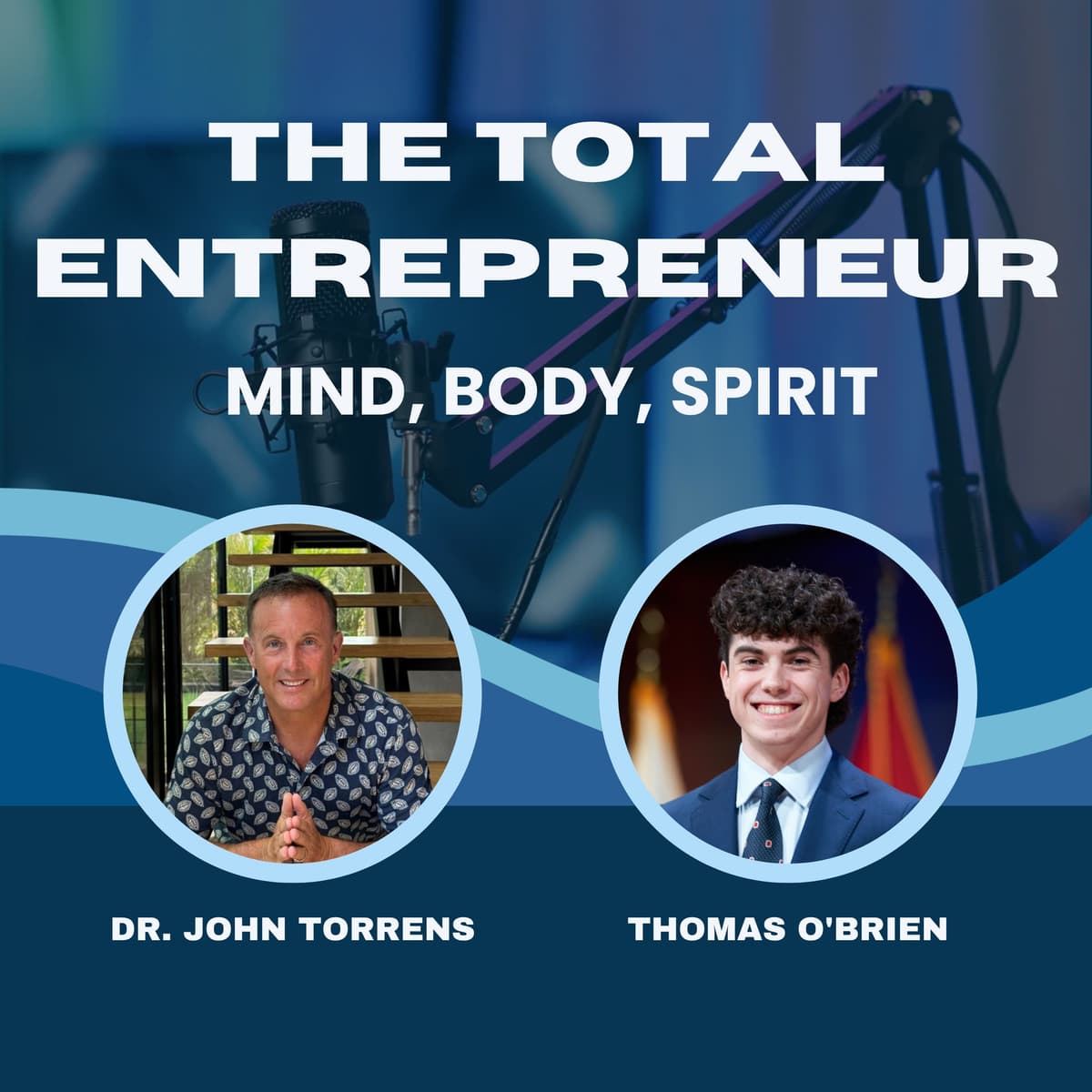
Thomas O'Brien is the Project Coordinator of the Center for the Creator Economy at Syracuse University, the first academic resource center of its kind, and a creator-entrepreneur himself whose cinematic short-form series "Welcome to My Mind" pulled in over 10 million views.
In this episode, he and John dig into the unique pressure that creator entrepreneurs face: income tied directly to view counts, algorithms that change week to week, and the constant compulsion to refresh, scroll, and compare. More importantly, Thomas shares the practical strategies he uses to stay grounded, protect his focus, and keep creating without burning out.
In this episode, you'll learn:
Why creator entrepreneurs carry a heavier mental load than traditional entrepreneurs, and how to manage it.
The single mindset shift that separates "posting" from "sharing" (and why it protects your self-worth from the algorithm).
"Consume less, produce more": how to break the scroll cycle that quietly fuels anxiety.
The free app Thomas uses to interrupt doom-scrolling and reclaim his attention.
Why scrolling first thing in the morning and last thing at night wrecks your nervous system, and the science behind it.
How to curate your feed so social media stops making you anxious or angry.
Why storytelling is the most durable content strategy in human history, and how to find yours.
The "get it out at 85%" rule that kills perfectionism and keeps you shipping.
How to study other creators the right way: "copy with taste, not copy and paste".
The truth about going viral: why consistency beats chasing any single number.
Keep listening
More on Mind
About the Host
Dr. John M. Torrens
5× Inc. 5000 entrepreneur, Professor at Syracuse University's Whitman School of Management, author of Lightning in a Bottle, and TEDx speaker on ADHD as an entrepreneur's superpower.
Browse all podcast guests →Book a strategy call →