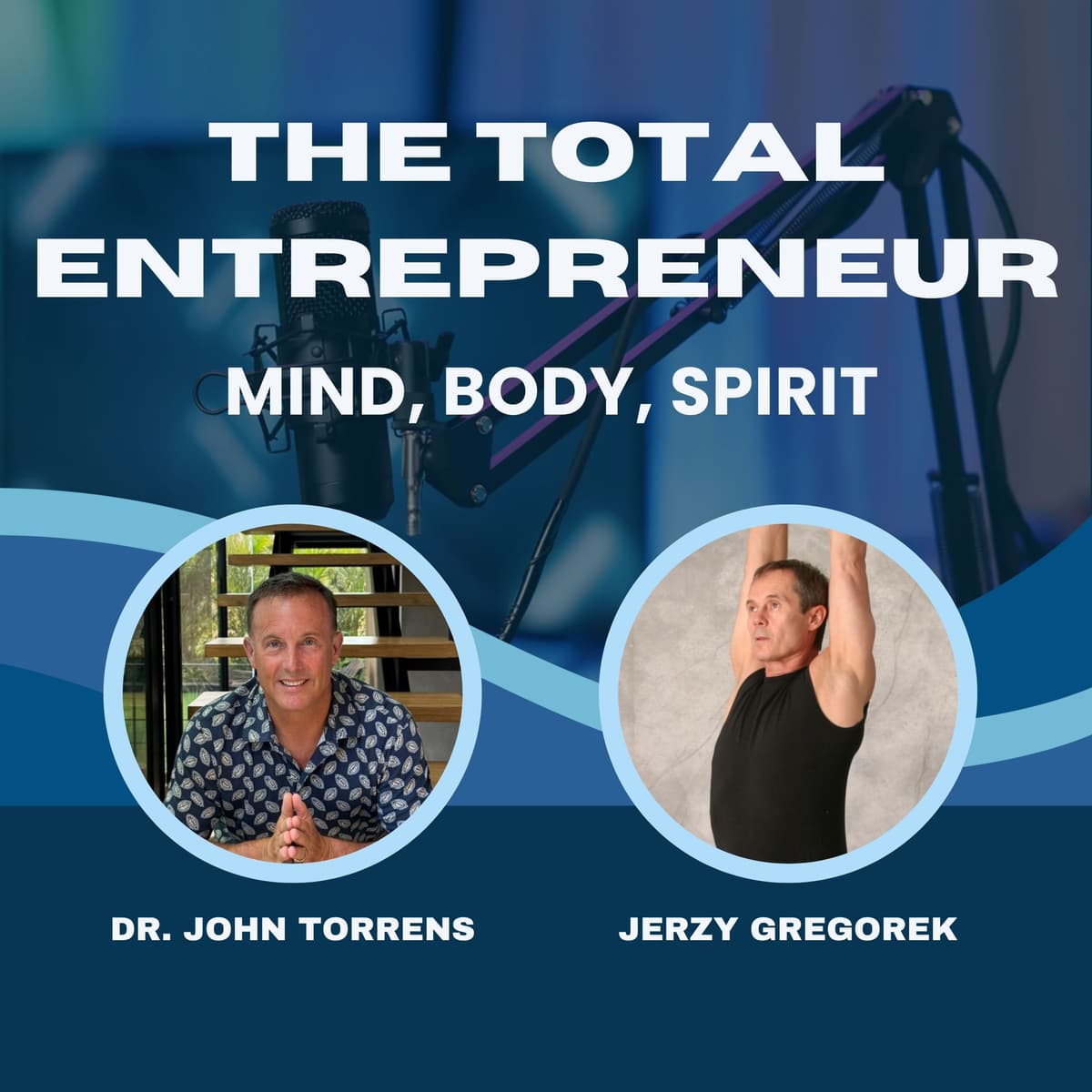
Jersey, welcome to the podcast. Really great to have you here.
Jerzy Gregorek
Thank you, John. It's great to be here. Yeah. Good day.
John Torrens
Hey, I want to start by asking you about this philosophy behind hard choices, easy life, easy choices, hard life. I think that can resonate with a lot of people for different reasons, but I was hoping you could explain it in your own words.
Jerzy Gregorek
You know, every time when I talk about this, every time I give a different explanation. So I guess we evolve and understand it from a different perspective. Today, I'd like to say that how I understand it from the perspective of difference between medicine and psychology. When we actually want to do something and we want to do something But it will take 2 years or 5 years. So that is delayed gratification. As soon as the delayed gratification happens, the hard choices appear because it's really hard to wait for the reward a year or 2 or 5. We are mostly into instant gratification. So we want to feel good on a daily basis right now. And that is our— cycle with the midbrain and rewarding system and instant gratification. It's like in marshmallow study, the kids that they had instant gratification, they would eat the marshmallow right away. And those who had delayed gratification, they waited and they had 2. So period of waiting, 15 minutes, you get 2. You don't wait, you get 1. In a short version, it's very clear, right? Because hard choices then are happening when discomfort happens, some self-control happens, and we are more aligned with the long-term vision for ourselves and wait for the reward. It's really hard to do it, hard to save money, let's say, and put the money into retirement and wait and have that vision and connection all the time to the future. In a way, the hard choices have to happen all the time. And eventually, we build something what we want. And that's why it leads into easy life because— We get it. If you want to be flexible, it will take you a year, but then you are flexible for the whole life, right? So that's the easy thing because your routine then becomes enjoyable. At the beginning, can be that routine is not enjoyable, and that's the hard choice to go through it. Maybe we don't like it, it hurts everywhere, and so on. So we need to learn how to actually do that. So, hard choices happen when we want something happen in the future that would be a reward. And easy choices happen when we actually want to feel good right now. But it doesn't bleed into the future that is better outcome than it is now.
John Torrens
Right. So, it's a sense of discipline, but it seems like rather than discipline restricting you in some way, like the easy example is, Discipline with your diet, right? So when you're thinking about a disciplined diet, you're restricted from eating certain things. But if you cognitively reframe that and say, hey, my discipline now gives me freedom later, maybe instead of restriction, that's the way to look at it. That's what you're saying.
Jerzy Gregorek
Yeah, the self-control, right? This is, you can say in 4 words, virtues and self-control. When we have this self-control, we are actually able to link this frontal lobe with the future. If we cannot link that, then we are falling into the instant feeling good and not achieving much. But at the beginning, this hard choice is I am a volume eater, right?
John Torrens
Yeah.
Jerzy Gregorek
My pleasure is to eat a lot. Then I know that I eat a lot, I will become fat and obese maybe. So now it's either 2 things, like I'm scared of becoming that, or I don't want to do it, or I want that body that is lean and beautiful and flexible and strong throughout my life. How does mind work delivers us the ability in that moment to choose the hard choice. And to do what needs to be done over long periods of time to what we want there. And then I want my lean body, I want flexible, I want strong, I want to be 90 or 100 and feel good and move around and maybe play with my grandchildren, exist for them and enjoy this physical interaction. And I see that physical interaction is very crucial for us.
John Torrens
Yeah.
Jerzy Gregorek
You know, if we go skiing but we cannot ski, then we cannot enjoy our relationship with our grandchildren, our children on the mountain because we don't have flexibility because we are in pain because we are weak or broken.
John Torrens
Something I talk to a lot with my young entrepreneurs and the students and people I work with is that, you know, you wanna be able to enjoy the fruits of all your labor later into your years, right? So the things you do in your 20s and 30s will lay the foundation for what you're able to do and what you're not able to do in your 70s, 80s, and beyond. So I wanna back up. You've been really open about the darkness you fell into as a teenager, becoming an alcoholic around 15, and then having it turn into this transformational journey you've had. So can you talk a little bit about those early days? And what that was like and how did you turn that around from becoming a very young alcoholic into a very healthy adult?
Jerzy Gregorek
Alcoholism was brutal. I fell into darkness, right? I was drinking every day. My purpose was to find money to drink, right? If I could find money and the money I could find with other people, somebody was paid, somebody had some things, and we always found these people who had money. But that, if we didn't, then we wouldn't drink. So we would join others there, find— the purpose was to find the vodka, find the beer, find the wine during the day. That was the purpose only at that day. And then hopefully you drink enough so you have blackout, right? So then that's it, you're done for the day. And then the next day comes in. And that was my life for about 3 years. And my best friend died. He was 21. And the life was suicidal, right? The life was dark. And why to live life when you are in that place? So I wrote about 3 books about fatalism, the master. And then for me, that voice that was in me, it was almost 100 percent voice of the negativity and suicide. So when you are in that place, you cannot recover by yourself. So you really need somebody. And that's why we need to lock ourselves in places, rehab places, or that people can help us to pass this time to even capture a little bit energy to work with hard choices. Right, because you cannot make a hard choice when you are really in that place. I was lucky because somebody really came to help me and stayed with me, trained with me for a year. And I needed that year and microprogression to shift, to change the way of my living to the way of my living that I was becoming. So, The hard choices was not up to me. That is the time when we really need other people to help us with these hard choices, that we don't feel that they are hard choices. Because the hard choices that emotionally intelligent person makes is that they are already capable of making them. But there is a time when we build the vision, when we build what we want and we don't see it, we need other people to help us. And then you can see that a lot of people go to college, let's say, and they are not able to sustain. If they are lucky, they have somebody, they find somebody to help them with that. And sometimes we don't need much. We need 2 weeks, 5 weeks, sometimes half a year. It just depends what is it. But as soon as we click in, our frontal lobe starts working and connecting to the long vision, we are back. We find ourselves and we are able to correct ourselves with what is needed to create that better we that we want.
John Torrens
Yeah, that makes total sense, right? We need a tribe, we need support and people to help us along the way. At what age did you become a political exile and have to rebuild while you're in the US? That's just another layer of complication in your early life. And then I want to get on to what you did after that, but that seems like that would just add a lot of stress to a young person's life.
Jerzy Gregorek
Yeah, that's another shot. So another darkness, but it's a different darkness. I was— when I came out of alcoholism and when I was 19, I became a fireman and I really liked to be a fireman. So I somehow, when I came out of alcoholism, I became a different person too. So when I was going into the fire, I experienced this good feeling of a person that goes somewhere to help somebody. I've never really experienced that feeling in me. It was the first time when I was going to the first fire that I, I was proud of myself. I was feeling good about myself. And I liked that feeling. So I liked the fire department. I liked to be a fireman. And I taste that feeling, good, when you actually help others. And it was just instant, and it was right there. That's where that maybe instant is really good, right? It's just, if it's really about goodness, then it's good. After 5 years, I decided to go and study fire protection engineering, and I spent there almost 4 years. Just before graduation, it was 1981. And that is the time when the government decided to take over the Solidarity. So it was 8 years before Europe really flipped, right? And then Poland flipped. But at that time, Soviets really ruled Poland. And that was this dark time. And then they wanted, the government wanted to use the fire department against demonstrations. They wanted to really use the fire engine, colored water, for example, spray and arrest people after when they go home and when the marches are broken. So we said no, the strike happened. I was one of the leaders of the strike. And after 10 days, helicopter landed on the room or the roof, and then tanks moved in. And they took us out. Then because of the whole situation, I lost everything. I couldn't graduate as an engineer and an officer. Then I was underground. And then I was underground for 3 years. And then after 3 years, when things got really close to me that I could be captured and tortured and murdered, I I left Poland, went to Sweden because of the strike and politically aligned myself with freedom fighting. I lost everything what I was working for. I lost my fire protection career. I lost graduating as an engineer and officer. This life was closed for me. But something opened up. What opened up is friendship with people who were incredible. They were the leaders of Solidarity, and they had something incredible, what I've never seen. What they had is this unconditional love of people. They really loved people, and they fought for people. And somehow I brushed myself against it, and got some of it. So when I went to Sweden, I started really helping people with depression, with anxiety. And I was really good at that. And I really like to help. But the help was different at that time because at that time I help from the place that I like people. Not only that I was helping them, but I love people and any people, right? So I had this compassion develop. Because of that, people would start coming to me and I was helping them with whatever was needed. I was good at that. And there was this psychologist in Sweden, Stockholm, Van der Saaij, said, I will open the clinic. You can do what you do because I don't know what you do, but what you do works. And I will watch it and maybe I will learn something from you. But I said, I'm sorry, but I'm not staying in Sweden. I'm going to US. Somehow US was something place that I wanted to be. I thought that country was aligned with my way, my independence, my freedom was strong. I wanted to be that way. I wanted to be in the country that independence is the extreme value. I came to US and in US I pursued my way of helping people. I became the personal trainer in the '80s and then slowly understood how to create something like the Happy Body. My coach was saying, my job is to keep your body happy. So, I was just thinking how I can keep people happy when it comes to food and exercise and meditation and created with my wife the Happy Body. With certain standards and pursue and became this athletic lifestyle medicine that people can use today and create this way of living that is really robust and ready and ready for almost any physical task that people could imagine. So, we can be in 90s, but the body can move like it is in 20s. And that came also with psychological challenges that these hard choices got presented. That was difficult. I noticed in the last 20 years that it is difficult for people to make hard choices. And I started working with how to help with that, started writing poetry, started writing dialogues, exposing these internal dialogues and ability to eventually help the fatalist to be aligned with the master and choose the constructive choices. The choices that they are maybe irritating, the choices that they are really hard, but the choices that contribute to delayed gratification.
John Torrens
You became a weightlifting champion, a world champion, which is not a small accomplishment. So I want to dig into that a little bit and then move into your Happy Body program because I think they, they work together. Tell us a little bit about your weightlifting journey and then we'll talk about Happy Body and then how for people to know that it's just not too late. Ever to achieve that.
Jerzy Gregorek
When I was— when I came from alcoholism, also became a weightlifter because the one that was helping me was a weightlifter. So, I was in weightlifting coming out of alcoholism and getting into weightlifting. And, after 4 years of training, I was a really first-class Olympic weightlifter in Poland. And then, what happened is that I got injured. I got injured and temporary par— experienced temporary paralysis of my legs. And then, when I recovered, I tried again and happened again. So, I started a long recovery process. And, when we were in U.S., I kept this long-term recovery process. Another five years, and then my wife said maybe we can compete. Maybe your back is okay. So we started training, and after about three years, we entered the nationals competitions and then Pan American Games and the World Championship. First World Championship, they came second, and then then the second World Championship. I came first. And then, I went to Master Olympics in Melbourne, 2002, and Sydney, 2005— 2009, I think. 5, yeah, I think 5. The Olympic weightlifting was a really huge learning process and lots of hard choices.
John Torrens
Mm-hmm.
Jerzy Gregorek
And because the goals were so strong, It helped this frontal lobe to— on the journey and keep those hard choices to make. Without that, I don't know if I could do what I do. But definitely, the goal that helps with hard choices has to be really the big goal. We want big things. And even if they take 5 years, they can help us with those hard choices now and develop this microprogressive system to get there. But that brain is really the brain side effect brain that happens because of the goal. So the goal, let's say Olympics, the goal is, or medicine, somebody wants to be medical doctor, but it will take 10 years. To go to Olympics, 10 years, right? So this is the same story that when it's really strong desire, passion, that's where passion is. Because the passion is needed for the journey, not to really achieve it, but to the journey of daily journey that hard choices will eventually appear. And yeah, they have to be made over and over and over until everything has become integrated. And the pleasure comes now, that instant gratification now is that what we actually do and love and is aligned with long-term. That's where the hard choices become easy life. We love to do it. Yeah.
John Torrens
So, tell us now about this Happy Body program because it makes sense to me and I think it's really great for people to understand that it's never too late.
Jerzy Gregorek
We coach all kinds of people between 3 years old and 93 years old. And not only people that would have different targets, different goals, but also people that have problems like, you know, cerebral palsy, autism, and chronic fatigue. All these difficulties that come with life. And we pursued, to help them, we pursued Olympic weightlifting idea. Flexible, strong, fast, good posture. Lean and certain body weight. Put this into the standards and we understood that you keep going and improving those things and you are like an athlete. And the way of life should be like an athlete way. So, that's why we call it athletic lifestyle medicine because medicine is to heal, to get better. But also improve beyond what you are. The medicine tries to recover you, restore, heal you to return where you were. But athletes, they try to— athletic coaches, they try to make you better than ever. And that brain is a different brain. But that brain is needed for us, is needed during the journey living because we want to go beyond what we are. We don't want to only get healed, but we want to get better than ever. And that is coming with the compound interest idea of athleticism. You have microprogression, you have goals, and you slowly train yourself toward that place. You can do certain things and never get better or get better, but not much. It's like You put to a drawer $50 every day, and after 30 years, maybe you have $70,000. But if you have compound interest, then you have a million. So that is the same thing. We go to the gym and we spend in the gym 5 years or 10 years, and we are the same or worse. A lot of people have experienced like that. Or you go to the gym and have the plan, have the strategies. You still go to the gym like others. You do the training. And after 10 years, you have this awesome way of living. So, why not that one?
John Torrens
So, what does your day-to-day look like? What's your routine like?
Jerzy Gregorek
I teach the Happy Body at 9:00 AM, but I wake up around 7:00. Then, I have coffee, little bar, go to the gym, and we do the training, Olympic weightlifting training. Then 9 o'clock, I have the class that I teach every day, the Happy Body. And then, then I go and I have this potion, garlic potion that I make. It's a mix of garlic, a lot of garlic, parsley, lemon juice, and avocado. And I eat this with banana. So, every day, I eat this around 10 AM. So, this is like my God's potion, anti-anything that could happen to me that is bad in the body. So, really love that. That is my routine. And then, and after that, I have clients. And at 1, I have soup usually. We like to have soup at lunch. And then, then after that, I have a nap. And then, after nap, I restore myself around 2. I have clients until 5, 6, and then we have dinner, usually is salad. And the happy body I do in the evening when everybody is gone. I watch a movie that I like, or I like great courses and I watch professors, what they teach. I do like at 10 PM when everybody is— In bed, I do my Happy Body.
John Torrens
Great to hear. So, Jersey, if people are interested in learning more about you and your work, where can they find you?
Jerzy Gregorek
The best is just thehappybody.com. So, come there and there is a lot of information. What is the Happy Body and how to begin, where to buy the book, where to buy the videos, where to join. me, let's say, in the class. And is it good to begin with the book? Because the book can develop this vision, help this frontal lobe to connect, and to get to connect and say, okay, yeah, I like it, right? And I would like to actually do that. Then you can move to the next step of practicing. And, you know, we put on a program, like I said, Between 3-year-old and 93.
John Torrens
Yeah. Well, no, you're a great living example of how to develop as a human and how to live a great life. So thank you for joining us. Really appreciate your time. And I hope people get a lot from the conversation.
What if the secret to building self-discipline isn't willpower, motivation, or the right morning routine, but understanding the fundamental difference between what your brain wants right now and what your soul is actually building toward?
In this episode of Total Entrepreneur: Mind, Body, Spirit, John interviews Jerzy Gregorek, a four-time World Weightlifting Champion, Master Olympian, political exile, former Polish Solidarity strike leader, and co-creator of The Happy Body program. Jerzy's life story is one of the most extraordinary arcs of transformation, recovery, and reinvention in the health and performance space: from teenage alcoholism and daily blackouts in Poland, to leading a solidarity strike against Soviet-controlled government forces, to going underground for three years, to eventually arriving in the United States and becoming a world champion weightlifter in his forties.
Jerzy breaks down his now-famous philosophy - hard choices, easy life; easy choices, hard life, from the perspective of neuroscience and psychology, explaining how the frontal lobe connects to long-term vision and why most people never build self-discipline because they never give their brain a goal worth waiting for.
Whether you are an entrepreneur trying to understand why your discipline keeps breaking down, or someone who wants to build a body that moves freely and powerfully well into their later decades, this conversation will give you both the philosophy and the practical framework to start making the hard choices that lead to the easy life.
Key Points Discussed
Hard choices, easy life explained through neuroscience: Why self-discipline ultimately comes down to the frontal lobe's ability to connect to a long-term vision, and why, without a powerful enough future goal, the midbrain's instant gratification system wins every time.
The marshmallow principle for entrepreneurs: How the classic delayed gratification study maps directly onto every business decision an entrepreneur makes, and why the ability to wait for the reward, even when it takes years, is the single most important factor in building something that lasts.
Recovery from alcoholism requires other people.
From political exile to world champion: How losing everything - his fire protection engineering career, his future in Poland, and the life he had built - opened a door to a different kind of strength, and why the Solidarity movement's unconditional love of people became the foundation of everything Jerzy built in the United States.
Passion is for the journey, not the destination: Why passion is not what you need to achieve a goal, it's what you need to sustain the daily hard choices required to get there, and why without genuine passion, the micro-progressions required for long-term growth become impossible to maintain.
The compound interest model of physical training: Why going to the gym for ten years without a progressive plan leaves most people the same or worse, and how applying micro-progression and clear athletic standards to training creates the same compounding effect as a long-term investment.
The Happy Body philosophy: How Jerzy and his wife developed a set of athletic standards - flexible, strong, fast, lean, good posture, that apply to everyone from three to ninety-three, and why thinking like an athlete rather than a patient is the difference between restoring where you were and becoming better than ever.
5× Inc. 5000 entrepreneur, Professor at Syracuse University's Whitman School of Management, author of Lightning in a Bottle, and TEDx speaker on ADHD as an entrepreneur's superpower.