From Corporate Life to Spiritual Entrepreneurship with Lindsay Mastrogiavanni
with Lindsay Mastrogiavanni
Dec 13, 2024 · 00:42:20
Part of our conversations on
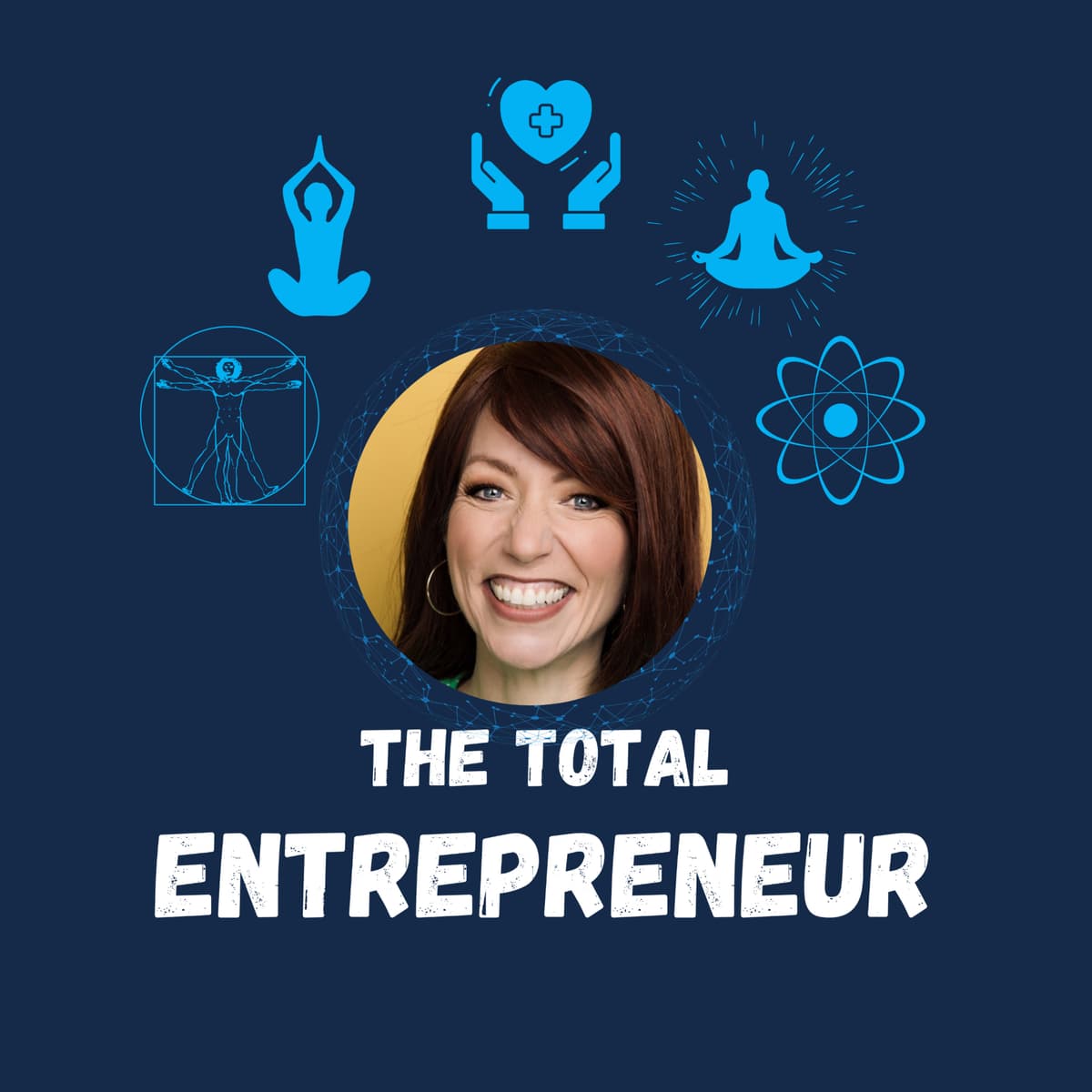
Welcome to The Total Entrepreneur, Mind, Body, Spirit, where we turn cutting-edge science into practical strategies for entrepreneurs. I'm your host, Dr. John Torrance, Entrepreneur Inc. 5000 honoree and professor of entrepreneurial practice at Syracuse University's Whitman School of Management. Each episode, we dive into mental, physical, and spiritual health with expert guests offering actionable insights to help you thrive and perform at your highest level. Let's get started. Today's guest is Lindsay Mastrogiovanni, a conscious entrepreneur, published author, and CEO of Conscious HR. With over 15 years of experience in business development and human resources, Lindsay is passionate about helping creative and caring leaders escape the corporate grind and thrive as business owners. She specializes in guiding leaders through every stage of business, whether they're starting, scaling, or selling. with a unique blend of strategy, practicality, and energy. Lindsay is the author of Becoming Conscious in a Corporate World Without Losing Your Sanity, where she shares insights on maintaining sanity and purpose in the corporate environment. Through her work, Lindsay is committed to developing conscious people, businesses, and communities. Well, Lindsay, welcome to the podcast. It's really great to have you. Thanks for being here.
Yeah, thanks for having me. I'm excited.
So the first thing I wanna ask you is, what is conscious entrepreneurship?
Ooh, what a loaded question to start the podcast. Well, I think I'll start with just the word consciousness because that's pretty much everything I embody, or try to anyway. I think it's one of those words that's kind of gotten more popular and has been spread around and kind of changed and manipulated and even been trademarked in some aspects.
Mm-hmm.
So consciousness to me is just living intentionally, and it's really grounded in self-awareness and making not all decisions, because that's almost impossible, but I think like the big ones. Just stopping for a second and thinking about, does this serve me? Is this in line with things that I want? Is it bringing me joy? You know, we can Marie Kondo the whole consciousness thing. So that's really in a nutshell what conscious means to me. And then apply that towards any specific area of life, right? So conscious entrepreneurship is for me beginning with your why and your mission, your vision, your values, and then building any type of— I hesitate to even say business because I also have a lot to say about how entrepreneurship doesn't necessarily have to take place just in starting your own business. So just consciously and intentionally moving forward and growing and making an impact.
Yeah, so I want to dig into that a little bit more too because we know the The academic definition of entrepreneurship is simply the pursuit of an opportunity without regard to resources that you control. So talk to us about that in more of a corporate context.
Sure. I didn't really realize that I had the spirit of an entrepreneur when I was still in my corporate days and kind of starting my career. I found myself, you know, I've been in HR for longer than I'd like to admit at this point, 'cause I realize how old I'm getting. But I realized that every time I was going into a new adventure, I want to say, because it always feels like an adventure, again, things outside of your control, I really wanted to look at the bigger picture of things. And again, I always kind of started with a why. And I was doing that way before I knew Simon Sinek's Start with Why, and way before I knew this was kind of like grounded in all things spirituality too. I just always was driven by this need and want to kind of make things better or look at the long-term impact of the things I was doing. And come to find out years and years later that this is what they call entrepreneurial spirit.
Mm-hmm.
And I have now, like, outside of corporate and in my own transition to my own business, have helped coach others in not just leaving corporate to start their own jobs, but also scaling up within their organizations and what does it mean to have that entrepreneurial spirit when you're still remaining, you know, under the umbrella of working for somebody else? Like, it's not only just possible, I think it's needed. And I actually see this kind of like heart and this spirit and this drive with the why in the younger generations.
Talk to me a little bit about your flip from corporate life into your own business. The students that I work with, This is the thing they struggle with, right, is how do you make that switch? How did you know you were ready? What did you go to? Talk to us about that.
Oh, well, this probably is the wrong answer, but like, you don't. You never know you're ready. I know for me, the big switch happened when I started feeling that the work I was doing was no longer in line with what I felt like in my body. Like, it was a real feeling. And it took a little bit to actually have that realization for myself. I worked in a very large corporation that I actually loved working for, for many, many years. And I was lucky enough to be a part of building what we delivered as I worked through my time there and started rolling that out to other people. So I was really living in my embodiment of my values, which is education, Expansion. So for a long time, I was very happy doing what I was doing. And, you know, same old, same old leadership changes, direction changes. And I was so just blood, sweat, and tears tied to this persona of who I was, of this like HR leader and this corporate ladder climber. And I had all the letters after my last name, and I had all the things you're, you know, quote, supposed to do in life.
Mm-hmm.
And things changed and it took me a little bit to realize within my body that it just didn't feel right anymore. And on top of being HR career lady, I also am a medium. I have this very intense spiritual gift I've had for my entire life. And I was pushing it away for a very long time, just kind of ignoring it, even though that is who I am. And it would come back like threefold on me. Like it kind of would wash over me and I would lose direction. So I knew at some point that I had to incorporate that side of me alongside of, you know, Lindsay the HR lady. And those are 2 very different things. I think a mistake that a lot of people make is thinking that they have to completely change their persona when they are kind of going into new territories, right? Like, I could have just quit my job, said I'm going to be a medium forever, and pursued that.
Mm-hmm.
But I knew that wasn't the answer. I wasn't looking for something completely different. I needed to bring those 2 pieces of me together. So I kind of just jumped off the ledge and came out of the broom closet, as I like to call it, and was like, hey guys, like, I talk to dead people. And at that point, I had built up my career reputation so much and had very good partnerships, and people trusted me, and they believed me, and they saw the great things I did. So it wasn't like, crazy because I was already living authentically within that one piece of myself, but not my whole self. So for me, it was a very welcome kind of piece of news and really allowed me to fully embrace the idea of how do I bring these 2 things together? So it was about 3 years that I still stayed in corporate, but I was kind of experimenting with this side gig of like, who am I? What do I want to offer to the world? So, you know, from the outside looking in, it might look like Lindsay spent 8 years at this corporation and then bounced and started her own job. But there was a good 3 years of me like testing the waters, playing, seeing what worked, what didn't. A whole lot of things didn't. And now, like, finally I'm in a place where about a year and a half outside, completely on my own, I'm like, I hate using the word thriving, but like, I seriously feel like I'm thriving.
Yeah, well, if it's the right word, right?
Yeah, yeah. It's another overused one that I'm like, eh.
Yeah, no, no, no. But well, it's good if a lot of people are thriving, right?
Yeah. And there has to be some type of that plan, that middle ground, right? Of like, I did not have the resources to be able to just step out and take a chance. I still did step out and take a chance. It's still scary every day. Like, you're not super ready. But I had readied myself enough and had a bit of a backup plan. And at the end of the day, I'm like, hey, if this whole thing goes kaput and fails, like, I still know I can go be an HR person somewhere and didn't burn any bridges anywhere I was.
Yeah. You were living authentically through this desire to start your own company and you planned it out. And I think a lot of people take that route, right? They sort of slowly get into it as they've still got the safety net of a corporate job or something. So you mentioned what didn't work. Talk about that, because that's always, to me, very interesting. I think we learn a lot more from what didn't work.
Well, for the first 2 years, I was really just throwing spaghetti at the wall. Like, I wanted to do readings, I wanted to do HR consulting, I wanted to do business advisory, because those are all 3 parts of me, right? But I'm like, how do I do all of this together? And, you know, I followed a lot of experts, and I read all the things you're supposed to read, and I got the social media advice you're supposed to get, and like, none of it worked. Truly, the only thing that really mattered was me coming back to myself and looking kind of like, if you want to boil it down to something easy, a SWOT analysis. Like, what am I good at? What am I not good at? And how am I going to get to the point where I can be in my zone of genius and have a team support around me? So the big mistake I made for a long time was trying to do it all by myself and taking advice from people who weren't invested in what I wanted to do. And they didn't see my mission. And they didn't see my vision. I was convinced I could tell everybody about it and get everybody on board. And once I just kind of put that behind me and just said, I'm just going to do what I feel like I need to do, the right people start to fall in line with you.
Yeah. So what was it like when you— like you said, you came out of the broom closet. I imagine that that's got to be tough at first, right? Because I mean, I think nowadays is probably a little easier. Like if we were having this conversation— 20 years ago, I think it would be way different for you.
Oh, yes, for sure.
I think people get it and they understand it.
Well, 20 years ago as a woman, I don't think I could have started my own HR consultancy firm either.
But yeah, so talk about coming out of the broom closet. I find that really interesting.
Oh boy. You know, I had my close circle of friends that knew I had experiences. And to be honest with you, like, I didn't even know I was a medium. I, I guess, was super naive in thinking that everybody's brains worked that way. And I'd gone to see psychics and mediums in my life. It was always like a big part of my vibe and what I loved. But I never sat to ask like, oh, is this different? And your idea of what mediumship is, is really driven by, you know, TV and movies and books and all those things. So for me, it wasn't weird. I just thought I was in like haunted places a lot. I did not know it was me. Also, a big realization for me was understanding that my thoughts were not my own.
Ah.
That was a real big distinction. Like, all of these thoughts that go through my head all day, every day, that feel push and pull and not like myself and like myself, I had no idea that that was spirit. Like, I just thought I was crazy, and I thought I was really creative and imaginative. But then weird things would happen. Like, something, you know, I would think of would happen down the line, or I quote, just know things. I just thought I was really smart. So it was kind of, you know, years and years and years of all of that. And like I said, the more I pushed that away and tried to ignore it, the more it would come back and kind of interrupt my life, the pretty little cutesy life that I had built up for myself. I call it the picket fence lifestyle in my book.
Yeah, honey.
I just kind of got to this complete stage of burnout and thinking I knew who I was, and I had no idea who I was. And I was very lucky to have those close friends who could sit down and be like, Linz, like, what are you doing? You know, you're trying to go in this other direction, which you're good at, but you're miserable. I remember the day I was like, oh, I gotta go. This is after the 3 years of me kind of side-gigging it and being out as a medium and doing readings. And, you know, I'm like full-blown Lindsay at this point, but still very entrenched in my corporate world. I was in my office up in my house and my husband walked by my office and I'd actually gotten a job offer for like another position in the company. And it was a step up and it was a promotion. And I was like furious about it.
That's crazy timing.
I know. I was like, I can't believe that they would make me go on to go do that and blah, blah, blah. And I was just like flipping out. And my husband of all people, who is not the person who was ever like, sure. Go jump off the ledge. Go do it. Stopped and looked at me and he goes, you can't do this anymore. And that was like, wow. Oh boy. You're right. It wasn't until that point that like my spirituality, my business side, it all kind of came like crumbling down together. And I'm like, okay, I got to figure something out.
So talk a little bit more about your mediumship and spirituality, just because I think it's something that doesn't get talked about as much, although I think it is more acceptable to talk about it. I've always found it really interesting, and I could imagine there's a lot of really cool applications that you could use in business and in your work.
So mediumship is kind of a subset of psychic abilities, right? So I explain it, psychic abilities is like a giant spectrum, and there's a million different gifts that you can have within that spectrum. And one of them is mediumship. If you're a medium, you're a psychic. If you're a psychic, you're not necessarily Mm-hmm. If it's mediumship, we're talking more about like, grief and love and healing. Psychic, I think, is really where more of like, the business stuff can be applied, because psychic abilities is more like, seeing forward, right? Like, using your third eye, being able to say like, what are some things coming down the road? What tools and resources can I potentially pull forward to help me? But the biggest misunderstanding I think about psychic abilities is like, free will. I can sit down with you right now and tell you, you know, the potential of what's going to happen, but the second your thought changes or the second you stand up and walk out the door and do something a little bit differently than we're doing right here in this moment, that entire trajectory could change because you have free will. There's also, you know, many beliefs surrounding your ability to build mediumship, which I think is true, but I'm one of those, you know, born with it type people.
Mm-hmm.
I didn't have teachers around me. I didn't have anybody telling me what it was, which was the big kind of realization for me is when I sought out those teachers to say like, what's going on with me? And it took a very, very good medium, a registered medium in Lily Dale, to sit me down and literally force me to read him. And I'm like, what are you talking about? I'm like, I don't— like, he's like, go. I'm like, what do you mean go? Like, what do I do? Do I have to like do a spell? I don't know. I don't know what to do first. He's like, just go. What's in your head? And so I literally thought I was making up a story.
Okay.
I started telling him about this guy and he's like, where is he? I'm like, he's sitting in a kitchen. He's like, what does he look like? I tell him what he looks like. He's like, what is he doing? I tell him he's reading a newspaper. He's like, just keeps asking me more and more questions about this story I literally think I'm just making up in my head. And I'm like frustrated and annoyed the entire time he's doing this because I'm like, what are you talking about? And after I go through the full explanation of like who I think this guy is and what he looks like and what he's doing, he holds up a picture. It was his dad.
What?
And I literally like, my hands flew up to my mouth. So it literally took somebody like smacking me over the head and being like, listen, you're a medium. And I just didn't believe it until that moment. And that is a huge part of not just mediumship, but of psychic abilities and you're practicing them, is getting that feedback and that validation that like, oh, the things that I'm thinking and feeling and saying and hearing. are not me just making things up or being creative. Like, this is a real thing that somebody understands. And until you actually start practicing and getting that validation from people, one you don't even know, and then the biggest struggle that any psychic or medium has is trust. Like, trusting spirit, trusting yourself. I mean— It's still hard. I've been actively practicing now since 2021, and it's still hard. That's the biggest piece. And Because of who I am and like my value system, my biggest goal, if somebody does come to me for psychic or mediumship, is just make sure that they leave that room better than when they came in with me. It truly is a gift. I don't even like using that word because again, I think it's overused, but it really is. It's healing. It's powerful. The fact that I can be a channel and can be a healer for people that are experiencing something. I probably discredit psychics more than I should. Because I'm just so driven by the ethical portion of psychic work too.
Mm-hmm.
There's unfortunately a lot of people that take advantage, and the more I can do to educate people in general on like how it works and how, hey, you can be a medium and still live like a quote normal life, whatever normal looks like. You know, I run a business, I'm married, I have a house, I have a daughter, I have a dog, I Scroll TikTok at night. I love Netflix. I love camping in the woods. There's a whole lot of aspects that is the human, and it's so, so important that we're enjoying human life in addition to embracing and understanding like that spiritual connection that we have.
Yeah, it's interesting because not only are you, you know, you've started your own business, but you've started one in an area that Yeah, it could be controversial or people could be skeptical about, right? So you've got a double hassle there. Yeah. Did you lose people in your social network? Like, did people just say, hey, Lindsay, now that you're out of the broom closet, I don't know if I can be part of this. Did you suffer any, you know, I guess social damage because of that?
I was honestly so lucky. If they did, I was unaware of it. There was probably a handful of people that Stopped paying attention to that stuff, I guess, if I would talk about it. But I also, in spirit of full embodiment, I just am me everywhere I am. So I had a lot more interest than anything else. And I'm sure, like, the people that I haven't talked to in 20 years on Facebook, maybe some, like, long-back family members were like, what is this? What is she doing? But, you know, because of that entrepreneurial spirit, I'm always, like, doing something new.
Right. Right.
So I don't think it was too weird in my case that, like, all of a sudden I was announcing something. But this is a bit different. So I think if anything, there's probably more people that are shocked that this is still what I'm doing and that it's grown and it's bigger.
Yeah.
Like, not to, like, pat myself on the back, but the only reason I've been able to get where I am right now is because I kept believing that this is just what I had to do. It was like I had no choice.
Mm-hmm.
I was going to crash and burn. I had already really crashed and burned. Like, I had hit extreme burnout. You know, short of having a complete mental breakdown, I was just like, I don't have a choice anymore. And I turned 30, and I remember having a moment where I just like, again, kind of like the moment with my husband, I was going crazy and just like totally in it and spiraling and obsessed with what I was doing. And I realized like all of a sudden, and that all of a sudden is spirit sometimes, intuition, spirit. And I had the thought, oh my God, I'm 30. I said, I can't do this for another 35 years.
Hmm.
That was the moment for me. I felt like I had worked a lifetime already. And compared to some peers, I was plugging it out. I was like, wow. And I don't think that thought came to me just because I'm smart. I think that was a little bit of intervention from the universe being like, hey, we've been trying to force this in front of you. You've been ignoring it. This is who you are. It's how you're going to be the greatest version of who you are, and you're gonna deal with this now.
Right. Before we have to give you a less subtle hint, right?
Yeah, right. And, you know, it never— fortunately for me, never came in the form of, well, a real job loss. Unfortunately, a lot of us are put in that circumstance where we have— it's literally just taken away from us, and there are very little resources. I very fortunately was in a position where I could kind of create my own new life. Even before I started my side gig, I kind of started framing my career in a way that I knew And this brings back in the psychic and the intuition piece too. I knew that something was coming down the pike. And so I'm like, hmm, I don't want to leave yet. I could, and that's what I'm supposed to do, but I'm not going to do that yet. I'm just going to reframe my direction and kind of what I'm diving into and the people I'm partnering with and the conversations I'm having. I'm going to reframe this a little bit so that when shit does hit the wall— like, hit the fan, rather— That I'll be okay. So that is where I talk about this a lot in my book of how your intuition really will point you in certain directions, even if you're not really paying attention to it.
Mm-hmm.
And my entire career, I always took the next step as soon as I got that feeling that something was going on. And every single time I've left a position, it's happened. And I luckily was just not there to have to be in the middle of it and be in that really difficult state of like, oh God, now I don't know what to do. So I listened to my intuition and also pretended that it was me being smart instead of like, oh my gosh, look at me.
Well, it is, it is still you, right? You're the antenna receiving the signal, right?
Exactly. Yeah.
So it is you. You know, I think intuition is really interesting and a lot of entrepreneurs, you know, work with gut feelings and that sort of thing, right? Yeah. Let's focus a little bit more on your work. with people. So I'm really interested in, you know, what role spirituality and intuition plays in an entrepreneur's success, decision-making, leadership style. What have you seen? What kind of practices or what kind of best practices have you experienced or offered, or what do you work with?
Yeah, so I actually have this really handy guide that I kind of created because I'm all about practical at the same time that you're spiritual. Like, you have to have some type of application and education surrounding All of these words and these feelings and all these things. So in the business world, like, we typically can't just go up to our CEO and go like, I have a feeling we got to do this.
Show me the data.
And if you do have a CEO that's like, great, go for it, like, hopefully they have a bajillion dollars and that's never a problem. It's still business. Like, we still have to work with some type of logic, right? I think lead with your intuition, Gather data as your backup to why you want that to happen. So the intuition part of it, the first big step I think for anybody is understanding where they receive that information. I work a lot with the chakras, the energy centers, just because I'm a very clairsentient person. Like, I can feel things. So, which I saw, it took me a long time to feel my body. Like, That was a lot of trauma from my childhood too that I didn't know I was missing out on. I couldn't feel myself. But once I got there, once I worked through that, that is really the first step. I talked about it in my book, is like, you have to know yourself and heal yourself first before you can do any of this work. Once you can feel where your information is coming from, or you can hear it, or you can envision it, or you can smell it, like, it basically any of your senses is where you can pick up on these messages.
Wow.
And we all have different strengths in different areas. So the chakras is where I focus with people I'm working with is like, how are you understanding that this is your next step moving forward? Or, you know, you have this big project or this initiative at work and you have to roll it out. And you're telling me you can feel it right here in your gut, like physically.
Mm-hmm.
So that tells me that's your solar plexus.
Mm-hmm.
So what I do is I work directly with that energy center and my client to say like, okay, if that's your solar plexus, that's gonna have a lot to do with your larger scope, or it's bridging into creativity and also has a lot to do with joy and happiness. So what is going to bring happiness to your organization? That is usually gonna be the data you need to collect to back up that feeling you have. Or if somebody's like, I just know, I just know, I just know, that usually means it's coming through your third eye.
Your pineal gland, right? Is that what you refer to when you say third eye? Yeah.
Yeah.
Yeah.
So yeah, if it's coming through your pineal gland and you just know, that's the words that you hear all the time from people, then I'm like, okay, well then we got to do some forecasting, right? Like, what is this going to look like in 3 months? What is this going to look like in 6 months, in a year, in 5 years? Let's put numbers to what you know is going to happen. So it's not that different from how we're running business anyway. It's just that we're getting numbers and like forecasts are really just ideas based on trends. Right.
Because you won't really know if you're accurate until you wait 5 years and you look back on the forecast, right?
Yeah. And then you're like, oh, well, that wasn't like too great. Or, hey, we blew it out of the park. Like, whatever the answer is. You still just have to operate within the business umbrella, but it doesn't mean that you can't tap into your intuition and tie it to some tangible result that's maybe going to be appreciated a bit more. What's really interesting in what I'm seeing now with some of my clients who are still in corporate or are like trying to make their way out is the intuition conversation is much more appreciated and they can actually use some of that language. As long as they have the data. So you gotta play in both worlds. And I've got kind of like a whole chart that I have in my book that's like, if this is what you're looking to do, this is where you're gonna feel it. And then vice versa. And where can you gather the support, whether it's people, resources, money, time, whatever it might be. Like, these are the things you have to collect to put together a business case for yourself.
Yeah. Have you ever experienced somebody who had this intuition or gut feeling, and then when they tried to assemble the data to do a projection, it was just incongruent, it was mismatched, and they didn't know what to do with that?
Well, the funny thing about data is it tells whatever story you want it to tell. So good point.
That is very true.
So I personally was very good at like, if this is what I want to do, this is the information that's going to prove it. So I worked in a toxic corporate environment for long enough to see how the numbers really—
how that works.
The quote numbers really And honestly, that's usually in a corporate environment that usually flies. Small business is a whole other ballgame.
Yeah. How can entrepreneurs cultivate a sense of purpose in their businesses while also nurturing personal spiritual growth? Because I think a lot of times, you know, people separate business from personal or business and spiritual realms for whatever reason don't often mix or they aren't spoken of in the same sentence. So how can entrepreneurs do that? How can they cultivate this for themselves?
Well, it starts with having a grounded mission, vision, and value statement for sure. I would even venture to say you could probably have 2 depending on what type of a business you're looking to build. If you're a solopreneur, your mission and your vision should be tied to who you are and what you wanna do.
Mm-hmm.
If you're looking to scale and build a team and have that support around you, Then at that point, I would encourage my clients to have kind of their like personal mission statement that then gets tied into their business statement. Again, kind of for the same conversation we were having about the corporate stuff, to be able to show like a bank, for example, for lending, like this is my actual tangible thing that I'm looking to build. The bank is not going to be interested in your heart and soul, unfortunately.
They don't care that you've got intuition about it.
Yeah, they might love it. They might be like, oh my God, I just love you and you're so amazing. But prove it. And prove it means make the money first. And that's kind of my like long-term goal is to be able to support solopreneurs who are in that transition because there's a giant gap of support there. I've been there long enough. I see enough people who are there that there isn't people out there that trust them to be able to make that big leap. And most people never make it because they don't have the resources they need. So I think it has to be tied together. And I have struggled with this idea myself because, again, my mission, my vision, my like need for life was to bring all of those things together to be truly authentic.
Mm-hmm.
I hear from a lot of other people that they don't want them together at all. Like they want them to be separate. And we've certainly seen plenty of entrepreneurs and CEOs that have been successful in doing that, but they've been successful in business from the outside. I don't know what it looks like when they're home alone on the couch. I don't know what it looks like when their eyes close at night, you know?
Well, it seems like it would be a common thread throughout all aspects of their life, right? Although I guess maybe that doesn't have to be the case. For you, for example, how do you incorporate these principles and practices? And because you're growing a business, how do you apply it?
So my values for my business, for Conscious HR in particular, for my team, are the same values that I have. Striving for authenticity is number one. Honestly, you could be doing terrible at your job. If you are truly who you are, you will always be better, or we will find a place where you can work. I also am an HR person. I know how to recruit the right type of people.
Mm-hmm.
So I help other businesses understand how to recruit the right type of people in. But that number one to me is striving for authenticity. It's who I am. Like, I know that it is incongruent for me to not be authentically who I am.
Mm-hmm.
So I want my people to be that way too. Another one, I've got like 5, I won't go through all of them, but another one that I really love is finding magic in the mundane. I think you could boil it down to Curiosity. It is a separate value that I have, but finding magic in the mundane is really that like, joy in finding— just like, having a little bit of excitement. Because in the day-to-day of work, like, things suck, you know?
Definitely.
It can be really boring. It can be like, hard. But if you can find that one little thing that like, made you laugh or made you smile or somebody that said something to you that improved your day. And for me, especially as a, you know, solopreneurs, before I had a team, before I had people around all the time, I didn't sit around and wait for people to kind of come in in my world. I actively looked outside of people who knew what I had going on to find those little pieces of joy.
Mm-hmm.
So I might literally just go like, sit on a bench and eat a sandwich and just listen to the conversations around me. And like, that would bring me something that would make me laugh or smile. So I guess like I'm not condoning stalking, but I think like, and that comes back to that consciousness and that intentionality of things. Just go be a human in the scope of you like grinding, right? Yeah.
I mean, that's a skill is being able to find something good in the chaos or something that can bring you joy among the mundane. So I really like that. So I'm really interested in spirituality as like a key thing for entrepreneurs, right? Because we talk about mental, physical, and spiritual health. And I think spiritual health is really important, but it doesn't get enough love or interest. Even though it's getting better, it's viewed as maybe not as real as some of the other things, right? How do we keep advancing this? How do we get people to understand that, no, this is really important, especially in entrepreneurship, because your life is going to be really hard and you need this as your rock?
So this is a weird one-word answer, but words, I think, is where we go. There are really influential and powerful people out there now, thought leaders who are using the right words to talk about what spirituality is. If I walked in tomorrow and started talking about, you know, the ghosts that I communicated with who told me that, like, you know, I would be laughed off the stage. I also think this is why I was successful in coming out of the broom closet was I knew enough to use the right words to connect 2 very opposing ideas of thought. So words like mindfulness, that's not an alarmist word. That's very accepted. It's tied to scientific concepts, so it has substance behind it. It's trusted. And because of all of those things, it's used in a corporate context.
Right.
When we're talking about mindfulness, we're talking about spirituality.
Yeah.
But we're not coming out and saying spirituality. So I think a lot of it is just in finding that middle ground and the explanation and tying the science behind spirituality, because it is one and the same, which is why I appreciate what you do so much. It's education. And it's also tied to just the general state of the, at least in the U.S. right now, right? Like if people just kind of get fed up.
Yeah.
It takes that little bit of fed upness, I think, to start paying more attention to what could be different or what Is this all about? But they're certainly not going to go jump into, you know, spirituality land, right? Or talk about twin flames or something. You know, those are like polarizing words.
Yeah. But you know, my experience is that people do like it or gravitate toward it or understand it. Maybe they feel like because of the programming they've had that they can't, or maybe because it's always been tied too closely to religion or something, right? But You know, the truth is that the science is catching up to that, right? We are at a point in time where we have ways to measure and study these things. So in terms of consciousness, really quickly, like being part of the one field and the quantum field and things like that, tell us a little bit about that from your perspective, because I think that takes some of the woo woo out of it and makes it more tangible and actually relates it to physics.
Well, I think again, like coming at it from the middle ground, the way I explain it to people is everything is energy.
Right.
Like, you are energy. The immovable object over there is energy. The tree is energy. The ground is. Your laptop. Like, we accept that energy is in so many things. Like, we plug in our lamp every day. We grab our phones. But for some reason, when it comes to our bodies, we're like, ooh. Even though we can literally stand and like, you know, don't stand in the water when it's lightning outside. Like, we understand that that's a risk, But for some reason, we don't understand that we're conduits.
We're just electrochemical magnetic beings, right? I mean, that's what's going on inside of our bodies.
Yeah. So that's kind of the conversation I have alongside the consciousness and how we're all interconnected is like, we all impact everything and everything impacts us. When I'm having this conversation in readings and trying to bring the practicality back into the spiritual conversation, I explain to people who are already living on like, that side of the world of words that like, we are spirit living in a physical body. So our spirituality is like, we are spirits having a human experience. We are not humans having a spiritual experience.
Right.
And that typically, you know, dovetails into the conversation about the afterlife and end of life. And like, that's why mediums can do what they do because like, there really is no end. There is an end to the physical body, like—
Right.
But the energy doesn't go anywhere. We know that. It's interesting to have that same conversation in 2 different venues. And I think that's what's needed. And it just comes down to using the words that people understand in that venue. So, if you go into a room full of scientists, you're gonna talk about that theory, you know? If you go into a room where I'm doing a reading with somebody who's struggling because their husband just passed, like, I'm not gonna come at them and be like, everything is energy.
Right.
That's actually my problem with readers is they're coming at it too woo, and I'm like, this is somebody that's experiencing a real, like, mental and emotional breakdown or struggle or trauma, like the level of trauma that we have as human beings. And if I come in and like, my solution for you is like, throw it to the world, trust the universe, like, I'm gonna throw you into a deeper spiral. Like, that's irresponsible. I'm not the psychic for you if you're looking for like, a super crazy woo experience. I can get pretty wooey, obviously, but it's so important to me that people are bridged towards the middle. Mm-hmm. Because that's where we're gonna really be able to move forward together.
Yeah. And there are everyday examples, right? I mean, so when you walk into a room and you can feel the energy, for example, right? I mean, you're picking up on people's energy that's being emitted from their bodies, right? And there's even science that supports the fact that our hearts have a magnetic field that expands about 3 feet from our bodies and, and we can measure that.
Wow.
So it's only natural that even in an entrepreneurship context, if you're sitting in a key meeting, Or you're going to pitch somebody, or you're looking to hire somebody, reading that energy is a really important skill.
We've been using the words read the room, right, for how long? Like, that— it's just energy, it's just intuition and spirituality. But, you know, the best salesmen on planet Earth have been reading the room forever. And that is a large part of what made me successful in my career, especially in HR. Like, somebody would come in my office, sit down in front of me, They didn't really have to tell me what was going on. I could feel exactly what was going on and I'd be able to adapt my response to that in a way that was going to make them feel comfortable and safe. And that is emotional intelligence.
Yeah. And what a key skill, right? And of course we've got to embrace that and work on it.
Yeah. So there's, you know, as much as we have our spiritual gifts that are just innately within us. Just like anything else, you have to train them. You have to work with them. In a work context, it's usually through emotional intelligence trainings. And then if you want to get like, way into the spiritual side, you go and you talk to a psychic about that kind of stuff. But only the people that are very interested in those things are going to approach it that way. So the way that we truly make a giant step forward as like, a human race, is to start with ourselves and become conscious. And everything I do, everything we do at Conscious HR, everything Lindsay Mastro does is starting with conscious people who create conscious businesses, who create conscious communities.
Well said. I love that. So if people are interested in learning more about you or your book or your company, where could they find you?
Well, my company is Conscious HR. You can find us at conscioushr.co. We help small businesses scale We approach everything from a heart-aligned lens and very practical strategy as well. And we're really funny and fun, and we're a great team, and we'd love to work with you. And if you're interested in learning more about my book, or maybe you're interested in moving up or out of corporate from that spiritual side, you can find my book, Becoming Conscious in a Corporate World, on Amazon. And you can also go to my website, lindsemastro.com.
Lindsay, thank you so much.
Thank you. This has been awesome.
Thank you so much for listening to the Total Entrepreneur Mind Body Spirit Podcast. If you liked what you heard or heard something interesting today, please give us a like, share a comment, or better yet, subscribe to the podcast. Thank you.
About This Episode
In the dynamic world of entrepreneurship, incorporating mental, physical, and spiritual health can significantly enhance one's journey. In this episode, Dr. John Torrens and discuss Lindsay’s journey from corporate to embracing her spiritual gifts and starting her own business. They unpack the concept of conscious entrepreneurship, integrating spirituality in business, and the importance of authenticity and intuition for personal and professional growth. Lindsay also discusses her book, 'Becoming Conscious in a Corporate World Without Losing Your Sanity', and offers actionable insights for creative leaders. Listen in to discover how to align your mission, vision, and values for success.
About Lindsay:
Lindsay Mastrogiavanni is a conscious entrepreneur, published author, and the CEO of Conscious HR. With over 15 years of experience in business development and human resources, Lindsay is passionate about helping creative and caring leaders escape the corporate grind and thrive as business owners. She specializes in guiding leaders through every stage of business—whether they're starting, scaling, or selling—with a unique blend of strategy, practicality, and energy. Lindsay is also the author of Becoming Conscious in a Corporate World (Without Losing Your Sanity), where she shares insights on maintaining sanity and purpose in the corporate environment. Through her work, Lindsay is committed to developing stronger people, businesses, and communities.
Keep listening
More on Spirit
About the Host
Dr. John M. Torrens
5× Inc. 5000 entrepreneur, Professor at Syracuse University's Whitman School of Management, author of Lightning in a Bottle, and TEDx speaker on ADHD as an entrepreneur's superpower.
Browse all podcast guests →Book a strategy call →