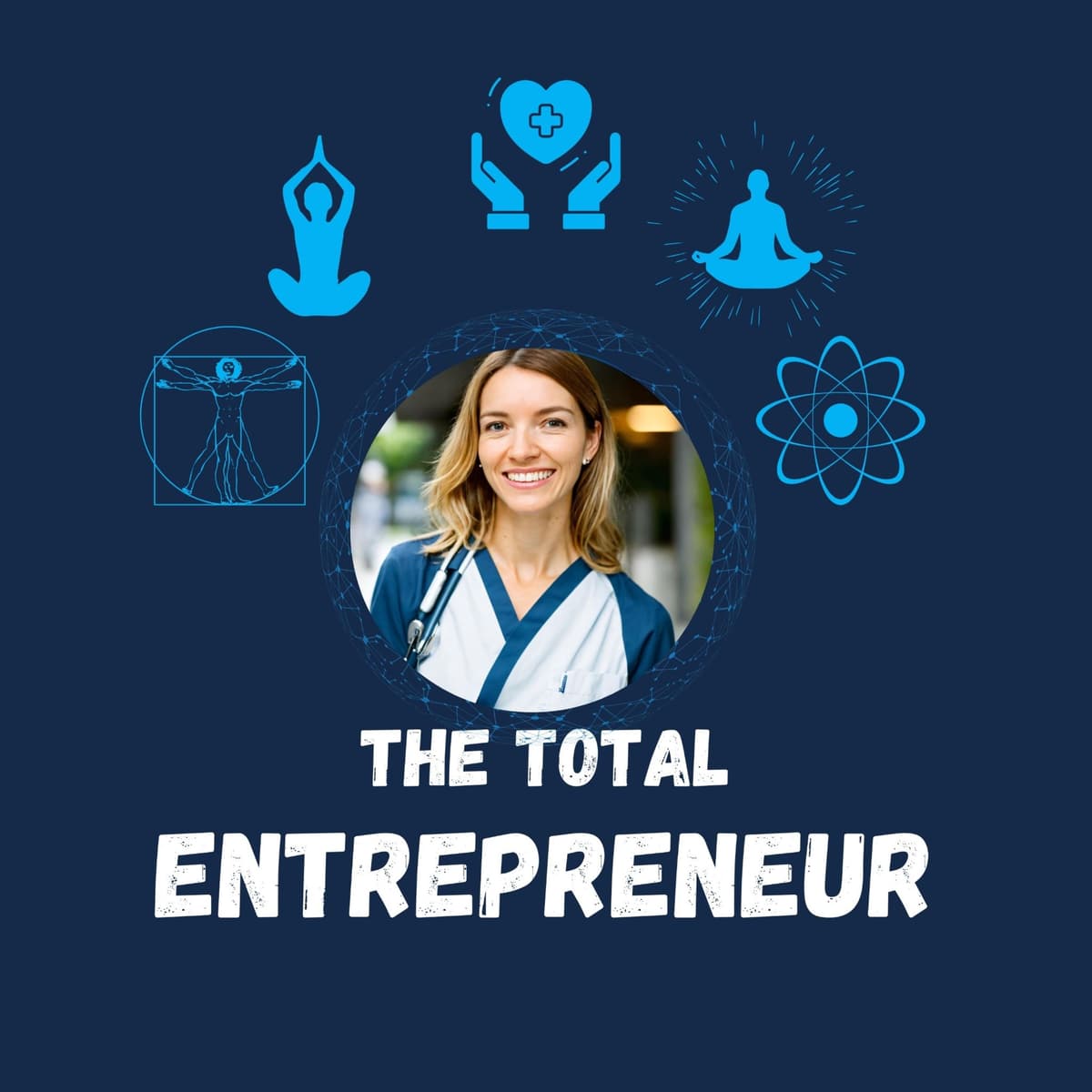
Enhancing Entrepreneurial Health and Performance with Dr. Emilie Laplagne, MD
with Dr. Emilie Laplagne
Jan 10, 2025 · 00:50:50
Part of our conversations on
Welcome to The Total Entrepreneur Mind, Body, Spirit, where we turn cutting-edge science into practical strategies for entrepreneurs. I'm your host, Dr. John Torrance, entrepreneur, Inc. 5000 honoree, and professor of entrepreneurial practice at Syracuse University's Whitman School of Management. Each episode, we dive into mental, physical, and spiritual health with expert guests offering actionable insights to help you thrive and perform at your highest level. Let's get started. Today's guest is Dr. Emilie Lepland, MD. She is an accomplished physician specializing in functional anti-aging and preventative medicine, known for her holistic and personalized approach to patient care. With a strong foundation in family medicine, she serves as the Chief Medical Officer at Zero Club, Europe's largest anti-aging community. A renowned speaker, Emilie conducts workshops on health and performance improvement, Engaging diverse audiences, including CEOs and corporate leaders. Fluent in French, English, and Spanish, she is also the author of Rescapé Malgré Moi, a widely recognized biographical novel about the Khmer Rouge genocide. Doctor Laplan, thank you so much for being here. It's great to see you. So the first question I have for you is: Could you just talk about the difference between functional medicine and what we know of as traditional Western medicine?
Yeah, I would say, you know, I was trained a family doctor, so I've been practicing Western medicine in the beginning of my journey. You know, it's basically for me, the experience was people would come up to my office when there was already a problem. So, you know, you have stomachburn, you have multiple conditions, you have diabetes, and you come because you already have symptoms, and generally they're quite debilitating. And so what I would used to do is prescribe a medication and then, you know, people come back after a couple of months. Generally, you know, the medication helps, but they need more of it or they need to renew it. And we don't really go to the root of the problem. So I felt like, you know, I was just putting a bandaid on a cancer basically.
Mm-hmm.
And I felt like, you know, I wasn't really helping on the long term. So, you know, I would have people that had multiple medications, but they needed it to feel better and to be better. And without it, you know, they would have other conditions that would develop over time. And I felt like I could help them if only I had the time to talk about how they eat, how they exercise, how they sleep. And I also had some patients for whom we didn't really have a solution, you know, some people who had IBS, other autoimmune disease for which we don't really have a cure today in Western medicine. And I felt like I was just playing ping pong, you know, with specialists. So, you know, they would have joint pain and I was like, oh, go see a rheumatologist. Oh, well, he said that everything was fine. I don't have a specific disease. And I was like, okay, well, you also have gut pain. Go see a gastroenterologist. And he would say, oh, everything's fine. And these people were still 25 and they had brain fog and pain. And I felt like I wasn't really helping. And so that's how I started looking into functional medicine, looking for solutions in situations where it looked like there were no situations, or at least the doctors were like, we don't have You know, we don't really have a diagnosis. We don't have a solution. We don't have a medication that's helping, or we do have a medication, but it has side effects. Then it causes another problem. And that's how I started training myself in functional medicine.
Yeah. And what does that leap look like? So do you have to go back and do another residency, or do you just take continuing medical education? Or so how does one make that leap from, you know, traditional medicine, like, you know, being a family practitioner to a functional medicine practitioner?
So I guess it depends where you live. My practice is in France. I'm a French doctor. So in France, what I did was it's mostly, you know, you have to take new courses, you go back to school. So I did this for 6 months. I had a training in— well, in France, the training I took was called anti-aging medicine. But I don't really like this term because when I say that, even in France, you know, I say I'm an anti-aging doctor, people always tell me, oh, do you do Botox? And I say, no, I don't really do aesthetics.
Really?
Although it's also part of it. You know, I can refer my patients to, you know, doctors who do that. So I don't use that term, but that's how they label it. But it's mostly preventive medicine and a medicine that's also not, you know, this typical medicine in silo that we have. You know, we look at organs. So, you know, you have a heart problem, you see the cardiologist. You have a brain problem, you see the neurologist. But what we are missing is that, you know, the body works holistically. So, I mean, your gut is influencing your brain, your brain is influencing the way you move, the way you move influences, you know— So that's also the problem with traditional Western medicine, you know, that we're missing the fact that You know, the way you eat will influence your gut, and then your gut will influence your neurotransmitters that will influence your energy and the way you think and your memory. So sometimes you think, oh, I'm losing my memory, I'm gonna go see a neurologist, but the problem might come from your gut. I mean, as a family doctor, I already had this background of looking at problems, you know, holistically. So it made more sense for me to go down this road.
So how did we get there, right? 'Cause human beings are, We're holistic, where, you know, there's a lot of things happening. So how did it become so functionally siloed? It seems opposite of what we need to be doing for ourselves.
Yeah, I think, you know, it's mostly because medicine and doctors became experts. And in a sense, it's a really good thing. I mean, when you do need to get brain surgery, you're very happy that the surgeon that is gonna operate on you is only doing this all day. and knows the drill really well. So, you know, that's why we started training doctors so that they would have a super expertise on a given thing. But then we took it to the extreme where everybody now is really like only looking at what they're doing, the organ that they know, and then they lose the big picture. And it's a little bit like in businesses, you know, you need to have— sometimes you need to have a guy who's the expert in HR and he's amazing. But at the same time, you can't look at the whole company and think, oh, you know, if I have an expert in this and an expert on that, everything is going to run smoothly. You also need somebody who's looking at the picture and seeing the big picture. And so, you know, that's where we're at today in Western medicine. We have specialists that are really good at what they're doing and we need these doctors as well. I mean, you know, I work with so many specialists and of course we need them. They have knowledge that I will never have because I cannot look at everything that's new and all the new science that's out there. But at the same time, sometimes you do have problems that you can't solve if you just look at one organ. You need to look at the whole body, the way it's working, the way, you know, what you're eating, how you're sleeping is influencing the rest of your organs. And sometimes You know, it's a domino effect and you think, oh, if I change this, then it's going to influence that. But, you know, you're missing something because you're not looking at the big picture.
Yeah, and that was a good analogy. That's actually the analogy I had in mind was business, right? You know, when I teach my students, we're teaching how marketing has to talk to finance, has to talk to supply chain and operations. And it's very similar with the human body. Yeah. So tell me a little bit about Zero Club. Yeah.
So Zero started as a community, basically. The 2 Maxes, who are the co-founders, started a community in Europe of health enthusiasts. At that time, it started also with, you know, following Bryan Johnson. So yeah, we were Bryan Johnson fans. And, you know, it was basically very logistical. But in France or in Europe, it's hard to ship things. It was just a chat and we were just interested in where can we find extra virgin oil that's good in Europe? How can we make our own Green Giant? Where do we find the supplies in France for this collagen and this? And so we met early when they were building the community and then they became a business because they started So, you know, having their own supplements that they're supplying in France or in Europe at least. And now we decided to start also testing people, doing biomarkers in labs in Europe so that people can keep track of their cholesterol, their fasting glucose, a lot of biomarkers that are important to, you know, prevent disease. And they were looking for a chief medical officer. So I joined them a couple of weeks ago.
Yeah, that's amazing. It sounds like a great organization. And Bryan Johnson, just for everybody listening who, who doesn't know, he's the entrepreneur who has been hyper-focused on reducing his biological age. That's correct?
Yeah, he's trying to reverse age.
Yeah. So let's talk about that for a minute, because when you say anti-aging, you're not necessarily talking about keeping yourself alive as long as possible with chronic disease, right? which is lifespan. You're talking more healthspan.
Yeah. And it's funny because, you know, when I say that, so I'm only, you know, brackets, but I'm only 34. And so when I say, oh, you know, I'm a longevity doctor, I don't drink, this is, you know, my routine, all of my friends, they look at me and they're like, why do you care? You're only 34. And I always tell them, you know, it's not only about living longer, it's also living in a peak state all the time, living at your highest performance all the time. And so I have 4 kids. I had 4 kids while going through med school. They're 10, 9, 7, 4. And now I'm a doctor. I have a practice. I have a business. I have a husband. I have a dog. And I just tell them, you know, I don't really care whether I live up to 100 or 105.
Me too.
But every day I need to have, you know, the lifestyle of an Olympic athlete just to go through my day. So the reason I do this is, okay, hopefully I wish maybe I'm gonna live up to 100 and see my grandkids and my grandkids' kids. But today it's also about being able to do all the things I wanna do and have maximum energy.
Yeah. And so, so the point of the podcast is to help entrepreneurs. live their best, most vital life. And I see it a lot in the young entrepreneurs where they literally kill themselves for their business, right? And it's tough to watch, especially in my students, because they've become used to the hero worship of the entrepreneurs that drive themselves into the ground and that sort of thing. So yeah, I think this is a really important conversation. So what are you seeing among young people? Like you mentioned earlier, You're working with 25-year-olds and seeing disease. So what types of things are you seeing and what are things that young entrepreneurs who are just getting started down that path of creating a new venture, what are some things that they should be looking out for?
Yeah, I work with a lot of tech people and entrepreneurs in tech. You know, they're between 30 and 40, so they look healthy. But the thing that I see most is their stress level. They have very high cortisol in the morning.
Mm-hmm.
And cortisol is the hormone that wakes us up, so we have a big peak in the morning around 6, between 6 and 8, and then it's supposed to go down through the day, and it's at its minimum around 5 PM. But in these people, you know, the cortisol just never goes down. So you have the peak at 8, and then it stays up, stays up, stays up. And, you know, when I tell them, most of them don't even realize or feel that they're stressed, you know, because in the beginning of the consultation, I always ask them, you know, are you stressed? Do you feel overworked? And most of them will say, oh, no, no, the business is going fine these days. I've been stressed before, but now it's fine. And I look at their metrics and I tell them, well, you feel like it's better because you were probably used to something that was like really stressful. but you're still very stressed and your body, I mean, you know, the neurotransmitters still show stress.
Yeah.
And I would say that's, that's the first thing that I see among young people. And the second thing I would say is not prioritizing sleep, you know, feeling like I can, you know, this 1 hour, I'll get this 1 hour of work more and, you know, the ROI is going to be a good one. But on the long term, it's never a good one.
Yeah, I talked to a sleep scientist a while ago, and yeah, he talked about that exact same thing, the ROI of sleep. So you say cortisol wakes us up, and I understand that, but why would it stay elevated after you're already awake?
Well, it's also the stress hormone. So what happens is the body secretes when it's under stress and pressure, because it puts your heart rate higher so that you can run. It's basically something that's very primal. You know, when we used to be hunter-gatherers, you know, you would— a mammoth would be coming at you and, you know, your cortisol would rise. It also releases other hormones like adrenaline, noradrenaline, and all these hormones activate the body for you to have a stress response. That's basically the fight-or-flight response.
Right.
And the problem is we were designed to have this as a survival mechanism. Of course, you know, you're in the jungle and a lion comes and, you know, it's a good mechanism. The problem is today we have chronic stress. So we experience this in our body, but we experience this on a daily basis, sometimes 5, 6, 7 times a day, whereas it used to be maybe once every 2 weeks. And then, you know, the whole— for 2 weeks you would be no stress. You know, you would have time to recover. Now it's different. You know, we have these stressors all day long. It's chronic and the body doesn't have time really to recover.
Mm-hmm.
And that's why the goal of functional medicine is also this, you know, it's evaluating how much stress you have and how you can handle it by also activating the parasympathetic system, which is, you know, what you activate when you meditate. When you do breathwork, when you do yoga, even exercising lowers the cortisol levels.
So cortisol wakes you up, but then if it's still elevated, it's maybe because you're waking up in an already stressed state. Is that accurate?
Well, it has to peak in the morning because it wakes you up, but then it should go down. And, you know, if you have regular stresses in the morning, it's not going to happen. That's also why I always advise my patients who are executives to take, you know, their important decisions before 11 AM, because that's when your cortisol is going down, but you're still, you know, wide awake. You still have this energy. And at the same time, you know, you haven't like accumulated all these stressors during the day.
So what are some things people could do if they're, one, if they know they're experiencing stress or higher levels of cortisol throughout the day? But 2, what can they do if they want to evaluate whether or not they are experiencing that?
I always look for what I call the 4 Horsemen of executive burnout. So the first one is sleep latency extending beyond 25 minutes. So that basically means, you know, when you go to bed, it takes more than 25 minutes for you to fall asleep. That's one of the first things, you know, because it means that generally you're thinking about too many things or you're living under stress. The second one is, we talked about it, cortisol staying elevated after 10 So it means that, you know, the peak that's supposed to go down isn't going down. Physiologically, you're experiencing stress whether you feel it or not. There's also how your fasting glucose is going to vary during the day because your cortisol is also going to influence your glucose level. So your fasting glucose is the glucose you have in the morning when you've been fasting 12 hours. When you are under stress, it's going to vary a lot. over a week. And if it changes more than 15%, it means there's a huge variability. And so it means that also your hormones are, you know, going up and down because of these stressors. And the last thing is your heart rate variability when you sleep.
Mm-hmm.
The heart rate variability is a very good measure of how well you recuperate, how well you recover during the nights. The higher, the better. And when it goes below a certain level, that's 20 microseconds. It's not going to be very interesting for you, but for me, it's important. So when it's dropping during sleep under a certain value, it also means that you're not able to recover from all the stress that you have during the day. So it means that it's a bucket. You need to empty the bucket if you will need to fill it again the next day. And so it basically means that you're filling your bucket with so much stress during the day, but at night you're not able to recover from it. So these are the 4 Horsemen. And when I see these in my patient, I have the reset protocol. So that's basically like temporarily remove all the non-essential decisions. You'll take these later because you're not in your peak state and you're not going to take the best decisions. I advocate for 3 days of dopamine fasting. So like no digitals.
Really?
social media, anything that is going to spike your dopamine too much. Then you can go on a fasting-mimicking diet for like 4 days. So no sugar, low carbs, high protein, and also using cold exposure. That's going to help a lot. So you can start with 2 minutes and building up to 10 minutes if that's possible for 2 days or 2, 3, 4 days.
That helps.
the body reset, you know, the neurotransmitters.
Yeah, that's interesting. My heart rate variability is, yeah, it's not as high as I'd like it to be. That's the one thing I'm working on for sure. Interesting. And people can measure these with an Oura Ring, a Whoop band, a Garmin watch, right? So we have tools accessible to us that can help with those. Yeah, Apple Watch. Yeah. So you mentioned metabolic health, or you mentioned fasting glucose. And I see this a lot with young entrepreneurs, just that their diets are, they're tough. So what have you seen among young people with their diets? How has it changed? What would you recommend?
Yeah, it's funny because, you know, you take your car to get checked each year, but most people when they're 30, 35, 40, they don't really know, you know, their fasting glucose levels. their cholesterol levels. And it's funny to me because, you know, if your car breaks down, you're still going to be able to replace it, but you only have one body. So the first thing I would say is we have very simple measurements of your metabolic health. There was a study that showed that, you know, only 12% of Americans are actually metabolically healthy on all measures.
Wow.
which is to me like crazy.
Totally.
So, you know, some of them are— we talked about it— fasting glucose, cholesterol, LDL cholesterol, HDL cholesterol, triglycerides, uric acid, HbA1c. There's a couple. The first thing I would say is, you know, if you're an entrepreneur or a CEO, you have to know these values. You have to know where you're standing because it's very important. If you don't have the data, you can't really know whether you know, you're doing things right or not. So that's the first thing, you know, get this checked. It's easy, it's inexpensive compared to, you know, getting diabetes in 15 years.
For sure.
And so once you have these results, you know, accordingly you can change your diet. I mean, you know, diet. So it's funny, it's, I'm European and I'm French. So for me, it's not so much something that I'm working with my patients who are mostly French, because to be honest, it's easier to be healthier in France than it is in the US.
Sure.
We have more access to healthy food. And also culturally, I guess, although things are changing, it's still culturally easier to eat well. Even if you eat out, even if you're at friends, the food that will be served, generally you can Still manage to have something that's quite healthy. If I should say one thing, the first thing would be no sugar, no alcohol. You know, if you can just like do these two things, it's already a lot because sugar is the real, you know, that's what sugar is then glycated to your proteins and that's what clogs the arteries. That's what makes us age. And so I would say that's the first thing first. And then, you know, it's mostly high protein, especially in the morning. Your first meal should be a savory breakfast with at least 30 grams of protein.
Okay.
Because this will help you regulate your glucose level through the day and you'll have less cravings. You'll have more energy.
So you mentioned something about just getting our biomarkers checked, which reminds me of just KPIs in a business, right? We teach entrepreneurs to track key performance indicators for the business, right? Whether it's cash flow or receivables or sales, you know, return on advertising spend, whatever the metric is, we teach that. Yet they completely ignore that, or not completely ignore, but it's not as top of mind when it comes to your body. Right? Yeah.
Yeah. And it's something that really works well with my CO patients, you know, because they're used to like having clear goals and reaching them. So they really like, you know, the fact that, you know, we go through the results and I tell them, I don't know, you know, your fasting glucose is 1.26 gram per liter. You know, we need to go down to 1. You know, it's something that's very tangible for them. And also it's It's easier to be motivated if you see the results.
Right.
So, you know, that's what I do. We test, then I tell them, you know, just cut off alcohol completely for 3 months, stop sugar, and exercise just once every week. And then we test again and they see the impact. The minute they start exercising, the minute they lose 5 pounds, they see the results dropping. So then, you know, you realize that what you do, what you eat, how you sleep really has an impact. And then, you know, it's easier to have another motivation for the next 3 months to say, oh, you know, I went down to 1.1, I did it. You know, the way I act really has an impact. So now I'm going to work harder and go to the next level.
Yeah, no, yeah, of course. You're motivated by setting and reaching goals, right? Yeah. And I think it's hard if you're young and you look fit and healthy from the outside. Like you mentioned earlier, right? A lot of these people look fine, but you can't really always tell that way.
No, you can't tell. There's a lot of different biomarkers and sometimes, you know, even this happened to me. I was quite healthy. I've never really drank. I was exercising. I was never overweight. And when I started testing my patients and being a functional doctor, I thought, oh well, maybe I should take care of myself as well. And it turned out like I had terrible cholesterol and triglycerides levels, which was due to my contraceptive pill, you know, but I had no idea. And I had been taking it for 5 years and I realized, you know, it was really bad for my metabolic health. So, you know, I switched and, but I had no idea. I wasn't really keeping track and it was still in, you know, values that my own doctor would consider normal. But You know, now I know better. And I was like, well, it's normal, but I don't want to spend another 15 years, you know, like this.
And I think it's important too to recognize that when doctors talk about normal ranges, they're talking about ranges based on an increasingly sicker population. Is that accurate?
Exactly. And the ranges are also for all ages and all sex. You know, it's just a really wide range that the laboratory has to give, you know. But obviously, if you're 25, I mean, if you take the fasting glucose, you know, basically over, in France at least, over 1.26 gram per liter, you have diabetes. Over 1.1, you have insulin resistance. But I mean, if you're 20, 25 and you're already almost there, it's already a problem because it means that by 30 or 35, you will be pre-diabetic and then you'll be diabetic by 40. So, you know, what's considered normal is not the same when you're 20 or when you're 40 or when you're 80. It's the same for, you know, your kidneys. You know, there's a really wide range, but if you have bad kidney health and you're 25, your kidney is not supposed to work the same as somebody who's 65.
Yeah, so it sounds like there's a need for discernment when you're looking at these labs and levels, and just because a doctor says you're within normal limits, you should think about that a little bit more and dig into it and see if it's normal for you. Or I guess the goal is maybe to be optimal for your age versus just normal for the population.
Exactly. Another very good example is testosterone levels. Testosterone goes down 1% each year as you age. It's the way, you know, we normally age. But still, you know, you could think, and that's, you know, the discussions I have with my patients. If you're a male and you're 50, would you want to have the testosterone levels of a man who's 50 or 25?
Absolutely.
Because if you have the lifestyle of a 25-year-old, or if you exercise 3 times a week, you still work, you go out, then why wouldn't you aim at having the testosterone levels of somebody who's 25?
Yeah, no, that's a good point. So I want to get back to testosterone in a minute, but I want to talk about alcohol a little bit because that's just prevalent. It's part of our society. There's advertising about it. I mean, it seems like social events revolve around alcohol. There's always an occasion to drink. I do have to say that the younger people that I work with drink less than, you know, just anecdotally than I remember them drinking. But what is the big deal about alcohol? I actually heard that, you know, it was even okay or even healthy to have a little alcohol. So what's wrong with all that?
Honestly, that's a conversation I enjoy having with my friends as well. Alcohol is the worst. And, you know, for me, it's really funny that, you know, so for example, you know, in France we have very strong regulations on certain types of psychedelics. For example, it's completely forbidden in France, which for some reasons I understand. But I also always challenge people and say, you know, alcohol is available once you're 18. I have seen the worst during my medical studies. I mean, there's even this guy who drank too much and like he literally went into a pond and drowned, you know, because he was so drunk at 18. And it's out there, it's widespread, and it's not a problem because of course we have all the lobbies of the companies, but it's still a poison, you know. It's terrible for your liver. It's just a poison for your arteries as well. And more than that, you know, it also really messes up your sleep. So if you do have a sleep tracker, I really encourage you to, you know, try it out. You know, just have one glass before you go to bed and compare it with your normal sleep, and then try also with 2 glasses.
Mm-hmm.
And you will see that the deep sleep, the sleep that is really enhancing recovery is completely destroyed even with one drink, even with one glass of just wine. So alcohol is toxic for the liver, for all the other organs, but it's also killing your recovery, which is, you know, the sleep. And also, of course, all the other problems that we have with drunk driving and all of this. But I mean, alcohol is sugar also, basically.
Mm-hmm.
calories with no nutrients at all, almost. Again, you know, I'm French, so we have a hard time with our letting go of our wine. And even in France, we have very strong lobbies of wine companies that say, oh, but wine is different, you know, it has polyphenols, it's like grape, you know, grapes, there's fruit.
Right.
So it's like, it's good for longevity. Look at the Blue Zones, they have Right. And I mean, you know, the thing that protects in Blue Zones is not the wine per se. It's the fact that you do take this time with your friends and family.
Yeah.
To unwind at the end of the day and that you enjoy this glass of wine. But to be honest, if it were to be something else, if it were water, it would still be better. Yeah.
Or tea or something. Yeah.
And I mean, I, you know, I say this, I, I'm still human. I, I have a, couple of glasses of wine, you know, when there's a birthday or a celebration.
Of course.
It's still very cultural. That's also what we're trying to do with Zero, you know. It's also to find new ways to socialize in healthy ways because we do have a problem in Paris, at least, you know. It's like the way we socialize is after 8 PM in a bar or a restaurant. There's always wine. Or there's beer, or, you know, and you go to bed late and you drink a lot and you eat too much. So maybe it's not only carbs, but, you know, you'll still—
Yeah.
We're also, you know, with the company organizing meetups where we exercise, where we have cold plunges, meditate. And it's like, you know, instead of going out and drinking, let's meet with friends in a context that is gonna motivate everyone to work out, go outside, get the sunlight.
Yeah, I love that. I think just, yeah, coming up with different ways to be social, right? Because like you said, you know, the Blue Zones and the wine, it's not the wine that's helping you, it is the community and the socialization, right? So yeah, if we can find better, healthier ways to do that. I mean, I noticed with my own, you know, so I wore a Whoop band and now I wear an Oura Ring. One glass of alcohol, will disrupt my sleep, depending on how close to bedtime I have it. So earlier in the day is okay. But yeah, I've noticed that for sure. Yeah. And, you know, the other thing I've noticed is the earlier in the day that I finish my last meal, the better my sleep metrics are. Why is that?
Yes, that's funny. I'm also the doctor of one of the co-founders of the company, because at the beginning he was looking for a functional doctor. And I said, well, I'm going to be your doctor. And he had exactly this this situation. He already had a good sleep. He had an 80% performance on his Oura Ring, and he said, I still want to go up to 90. I wish I could make it better. And we did 3 things. I told him, you have to cut out all stimulants, even the coffee in the morning, because some people are slow metabolizers. So even if you get a coffee at 10 or 11 AM, you'll still have a harder time going to bed. So he switched to decaf. He loved coffee, so he switched to decaf. Then I told him, have some magnesium at night and also move forward the dinner time. And it was easy for him because he has small kids. His 2 kids are little. So he told them, well, you know what? That works for me. I get them from daycare and I give them their meal at 6:30. I'm going to have my meal with them. I generally have dinner with my wife later, but now we're all going to eat together 1 hour before. And it was like in 3 weeks, his sleep scores were like 90, 92. He was so happy.
Yeah, I've noticed magnesium helps. And for, you know, the experimenting I did with my own body, 3:30 PM, if that's my last meal, my sleep is incredible, but it's not always practical. to have your last meal at 3:30 PM. So I think that's the trick for everybody, but especially young entrepreneurs who have the added stress of trying to start and grow a company, you know, to manage these things, right? Because not only do they have the demands of everyday life, but, you know, the demands of growing a company can be severe. And you could eat mindlessly. You could find yourself at a networking event where you're drinking and staying up late to finish something. It's a really, really difficult balance.
Yeah. And you know, it's the Sleep Foundation that has a study that says that every single night of poor sleep can reduce cognitive performance the next day by 25%. And it's the equivalent of a blood alcohol level of 0.05%. So if you're starting a company, you need those 25%. Wow.
So, so having a poor night's sleep could result in you functioning the next day similar to as if you were intoxicated or mildly intoxicated?
Exactly.
Wow.
Exactly.
Yeah. I guess when you put it like that, it makes it a little more accessible or relatable and important. Wow. So what are some things that young men should be thinking of as they age to maintain healthy or optimal testosterone levels?
Yeah, that's really important. Testosterone is critical. for male and female, but it's the main sexual hormone for men. It's really important in maintaining muscle. And of course we can supplement it, but there are natural ways to boost your testosterone. The first one is to have some exercise that includes strength training. So it would be like CrossFit or lifting weights, not only cardio. You know, people always tell me, what's the best sport? What should I do? And I always say, you know, there's nothing— there's not one thing that's good. What is good is generally a combination of 3 types of sport. You have to have cardio, so that can be like running, cycling, swimming. That's really going to help with the heart and the lungs. Then you have to have one that is going to build muscle. So that could be lifting weights. And that's the one that's going to help mostly for testosterone. And it's also important for women, especially after menopause. We always think, oh, women shouldn't lift weight. Why would they do this? They don't want to look muscular. But it's actually really important for metabolic health, for testosterone, for preventing osteoporosis. So that's really major. And the last thing I would add, if it's possible, is something for balance and coordination. So that could be yoga, Pilates, dancing, whatever. So yeah, so strength training for testosterone, sleep, because also if you're sleep deprived, your body is not going to secrete as much testosterone. You need it. And having enough selenium is important as well, but mostly sleeping well and Building muscle.
What are natural sources of selenium?
You find them mostly in oysters, all the produces that are from the sea, urchins, oysters, and you can find them as well in certain nuts. All these have selenium as well.
Yeah. Now, you mentioned women's health, and I know this is something you've done a lot of work on, is menopause, perimenopause, and things like that. And there's a trend, at least in the US, where, you know, people, women in their 50s are starting companies after they've had successful careers. So I think this is an important topic, and it has not gotten nearly enough attention in the medical profession. So give us a little summary on what women approaching menopause should be thinking about, or what are things that they could do?
What I've seen is, at least in Europe, and I think that it's a little bit the same in the US. Hormone replacement therapy in women has had a very bad press in the last 10, 20 years.
Yeah, there was a study a while back that got some really poor analysis. Is that kind of the root of it?
Yeah. Well, it turns out these studies were really conducted on not the— I mean, I could talk about this a lot because it is really something that I'm interested in, but These studies were done on females that were already, you know, 10 years past menopause with hormones that were not biosynthetic, so they were like synthetic hormones that we know today have higher risks of giving cancer and creating strokes, and women who already had hypertension, diabetes. So the studies that, you know, were done were not conducted well in a manner that gives us a good information for all women. And, you know, they came out and everybody was like, oh no, HRT, no way, it gives cancer, it's too dangerous.
Right.
Let's not do it.
And doctors still to this day will counterindicate it. Yeah.
Exactly. And at that time, it's funny because at that time I was in medical school. I was in just starting and my own mother was going through menopause and she called me and she said, Should I take, you know, HRT? I have hot flashes. What should I do? And I told her, no, you're a little bit overweight. My grandmother, her mother had had breast cancer. I said, no, no, no, don't do it. Turns out today I feel like, oh, maybe, you know, my grandmother had breast cancer at 94. So it was like not really genetic.
Right.
And turns out now I regret, you know, because at that time, that's the knowledge that I had. But now it's still not convenient. It's still not for everyone. I mean, if there is a history of breast cancer in your family, you're not eligible. You know, we still have counterindications for sure, but all women who could get it should get it, in my opinion today.
Mm-hmm.
You know, we, we, we don't have a cure for Alzheimer's today, but there's a study now, one meta-analysis that was done that showed that you know, if all women who could get HRT, so hormone replacement therapy, did get it, we would prevent 25% of male cases of Alzheimer's.
Wow.
So yeah. And in this meta-analysis, midlife estrogen therapy was associated with 32% lower rate of dementia.
Wow.
And that's only for Alzheimer's. You know, it, I'm not even talking about building muscle, osteoporosis, mental health, sexual health, the way you feel. Also even the skin, the way your skin needs sexual hormones to stay moisturized, hydrated. So 20 years ago, the saying was, don't give it unless this person has hot flushes, cannot work, cannot function, but it's too dangerous.
Too risky.
Now the way we see it, especially in functional medicine, is You have to start it the earlier the better. Of course, you have to have the lifestyle that goes with it. So no smoking, exercising, that's really important. And you still have to be checked, you know, for breast cancer, ovarian cancer regularly if you have these treatment. But if you're eligible, like it does help a lot because women today, when you think about it, they live longer. with no hormones than they do with hormones. But I'm not sure, you know, we were designed to live that long without hormones.
Right. So it sounds like there's a need to take ownership of your own health and your own body and not just blindly listen to the advice of practitioners who are really only trained to treat you once you have a disease state, right? They're not necessarily incentivized to keep you healthy or optimal. They're really treating diseases.
Whereas, you know, in China, it's the other way around. So in China, they, they say that you have a doctor who sees you once or twice a year, and once you get sick, he doesn't get paid because it means that, you know, he failed you as a patient.
Wow, completely opposite of the way we handle it in the States and in most other Western countries. Yeah. Yeah, the incentives are misaligned for sure for optimum health and healthspan.
Yeah, no, 70% of chronic diseases are lifestyle-related and therefore preventable today. So if you only go to the doctors once you have a problem, it's most likely a problem that started 5 or 10 years ago. So that's why, you know, we have to— have this consciousness and decide to go see the doctor in a preventive manner, not necessarily only when the problem is here.
Right. And we've become so socialized to think of going to see the doctor only when you need a cure or a remedy for something, right? Not necessarily just to track biomarkers for somebody who looks generally healthy. Yeah.
Yeah.
Wow. So if people are interested in finding an integrative medicine doctor or functional medicine doctor, where could they go or how do they find these practitioners?
It's a good question. I honestly don't know how it works in the US. In France, there's not many practitioners. I know a couple. That's what we did with Zero as well. You know, when we started the community, one question that, you know, people had was, where can I find a doctor who will prescribe me the biomarkers, who will help me on my journey? So we do have a list of practitioners, but it's mostly in Europe, but we have a couple in the UK, in Germany. And generally, you know, if you type functional doctor, then you have to be careful because what I understood when I was in the US last April for a health conference is that in the US you can be a functional doctor even if you're not an MD, which is not the case in Europe.
Yeah.
So that's also confusing. So when I'm in the US, I always say I'm an MD and I do functional medicine. But in the US, you can also have the label functional doctor even if you didn't go through med school. So that, that can be confusing. So just, you know, make sure that it's a medical doctor who then has a training in functional medicine, longevity medicine, you know, the terms change. Yeah.
Yeah, yeah. So again, it's not really replacing specialists, especially for acute disease, right? But if you're interested in increasing your healthspan and really being able to enjoy the fruits of your labor, everything you've created as an entrepreneur, being able to enjoy that late into your life and enjoying it well, it might be worth it to look for a functional medicine practitioner.
And even, I mean, even today, you know, we talked about it in the beginning, it's also better performance today.
Right.
You know, it's McKinsey conducted a study with leaders and they showed that the leaders who prioritize their own wellbeing inspired 90% higher employee satisfaction and 70% lower burnout rates in their teams.
Yeah, that's an incredible outcome actually. Wow. Really cool.
You know, it's you're also as a CEO, as a leader, you're also inspiring people. And you know, myself as a functional doctor, now I consider it's also my job to myself exercise, sleep, and practice what I preach. Because you know, I feel like I would be the worst hypocrite if I'm telling everyone you shouldn't drink, you have to exercise, and You know, I, and I always say, I also have a business. I also have 4 kids. It's a date with yourself. You know, it's something, it's top priority on your list each week. Takes 1 hour, 2 hours. You have to do it. Nothing comes, you know, you're not going to move it around. You just have to prioritize it.
Yeah, no, I think that's the key is prioritizing yourself. So I want to just switch directions for my last question and talk a little bit about your book. I know that You know, Pol Pot and the Khmer Rouge, it seems for a lot of people like ancient history that if you even learn it, you've forgotten about it. So what was the inspiration for the book and how did that help you in terms of, you know, maybe resilience and that sort of thing?
It's actually my father-in-law's story. So my husband's dad was a French teacher in Cambodia during the genocide. And so the whole story is how, you know, he ended up in a work camp and then had to flee. And then he was a refugee in France, met my mother-in-law. That's how my husband was born.
Wow.
And the whole story is basically he was an intellectual. He was arrested, put in a work camp, had to work, you know, in rice paddies to feed everyone. And one day he understood that most people, you know, they would say, oh, We're taking these people back to their village, the village they were born, to work in agriculture, in the fields. And that's what they would say because people would disappear. And he realized, he found, or he saw one of his friend's watch on the wrist of one of the people who were guarding the camp. And he understood that most likely he had been killed.
Hmm.
And he understood that he was next on the list. So he decided to flee with 2 of his really good friends. Both of them died during the journey, and he was walking for 40 days and 40 nights across the jungle.
Wow.
With nothing, all the way to Thailand. He was trying to go to Thailand to become a refugee. And it's his journey. It's also a spiritual journey. He heard voices. And it was crazy because the way the resilience he had, you know, during this. I mean, it's no one can imagine what it's like walking for 40 days and not even knowing, you know, when you're going to get there. You lose your friends; they get shot. You're attacked by wild animals, and then he gets there, and they put him in prison because they don't even know if he's a Khmer Rouge or if he's. a refugee. So he gets there and, you know, he ends up in a jail. And it's a story of resilience, you know, and it's amazing what the body and what the mind is capable of, you know, when you're under stress. And it's also— it talks a lot about the body as well. You know, there's this part of the story where he becomes completely blind.
Mm-hmm.
You know, today the medical I mean, the doctor in me is thinking, oh, he was probably in such a huge state of hypoglycemia that the vision was blinded. But for him, it was also a real spiritual experience. It's like, who's guiding you? Where are you going? What is my life worth? Why am I doing this? Why am I fighting? And he had such a hunger to live. Yeah, incredible story.
Yeah, and is is that available on Amazon if people wanted to to buy it?
Yeah, it's only in French though. But yeah.
All right, and could you say the name of the book for us?
Rescapé malgré moi.
Thank you.
Great.
Well, if people are interested in learning more about you and what you do, where could they find you?
I have a website. It's Dr. Like Doctor Laplaine, which is my family name. L-A-P-L-A-J-N-E dot com.
Great. Well, thank you so much for being here and sharing your wisdom and knowledge. It was a great conversation. I really appreciate it.
Thank you so much for having me.
Thank you so much for listening to the Total Entrepreneur Mind Body Spirit Podcast. If you liked what you heard or heard something interesting today, please give us a like, share a comment, or better yet, subscribe to the podcast. Thank you.
About This Episode
In this week’s episode, Dr. John Torrens is joined by Dr. Emilie Laplagne, a functional medicine physician and the Chief Medical Officer at Zero Club. They discuss the differences between functional and traditional Western medicine, focusing on holistic health approaches for entrepreneurs. Dr. Laplagne shares insights into chronic stress, dietary habits, and the impact of alcohol and sleep on overall health. She also provides strategies for managing stress and improving metabolic health. They further unpack the importance of hormone replacement therapy for women and maintaining optimal testosterone levels for men. The episode emphasizes the significance of preventive healthcare and offers actionable tips to enhance performance and wellbeing for entrepreneurs.
About Emilie:
Émilie Laplagne, MD, is an accomplished physician specializing in functional, anti-aging, and preventive medicine, known for her holistic and personalized approach to patient care. With a strong foundation in family medicine, she serves as the Chief Medical Officer at Zero Club, Europe's largest anti-aging community. A renowned speaker, Émilie conducts workshops on health and performance improvement, engaging diverse audiences including CEOs and corporate leaders. Fluent in French, English, and Spanish, she is also the author of Rescapé Malgré Moi, a widely recognized biographical novel about the Khmer Rouge genocide.
Keep listening
More on Body
About the Host
Dr. John M. Torrens
5× Inc. 5000 entrepreneur, Professor at Syracuse University's Whitman School of Management, author of Lightning in a Bottle, and TEDx speaker on ADHD as an entrepreneur's superpower.
Browse all podcast guests →Book a strategy call →