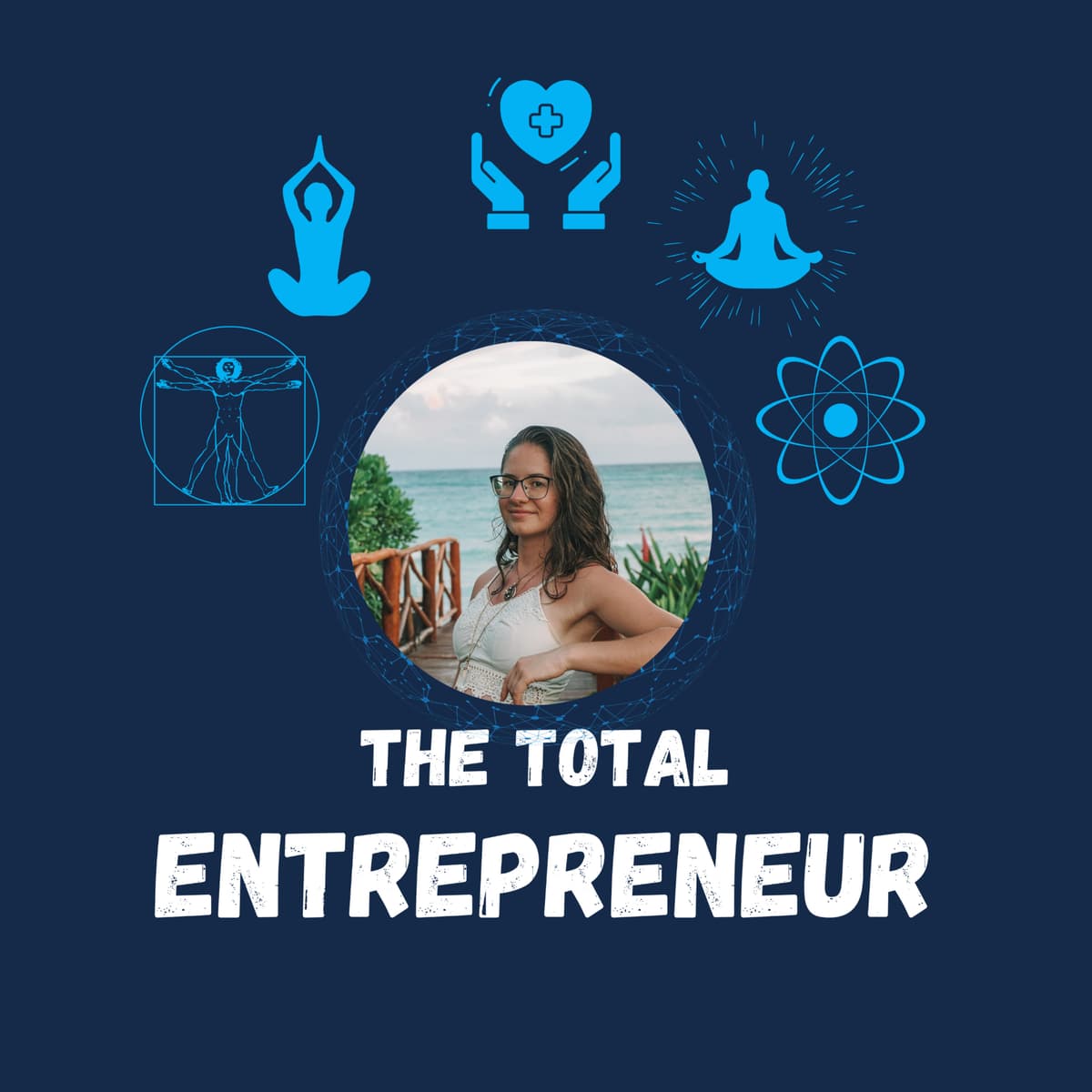
Overcoming Money Stress and Fear with Scarlett Stanhope
with Scarlett Stanhope
Jun 27, 2025 · 00:40:26
Part of our conversations on
Today's guest is Scarlett Stanhope, also known as the Biz Hippie. She teaches coaches to conquer their finances and own their worth so they can be fully supported by the work they love. Scarlett harnesses the power of money to break free from her workaholic career path and pursue her dreams. She uses a combination of tangible money management strategies, as well as a variety of coaching techniques to help her clients transform their mindset and relationship to money, allowing them to strategically achieve their goals. Welcome to The Total Entrepreneur Mind, Body, Spirit, where we turn cutting-edge science into practical strategies for entrepreneurs. I'm your host, Dr. John Torrance, Entrepreneur Inc. 5000 honoree and professor of entrepreneurial practice at Syracuse University's Whitman School of Management. Each episode, we dive into mental, physical, and spiritual health with expert guests offering actionable insights to help you thrive and perform at your highest level. Let's get started. Morning, Scarlett. Welcome to the podcast. Great to have you.
Oh my gosh, John, I am so excited for this conversation today. Thank you so much for having me on the show.
Yeah, my pleasure. So I was reading more about you and I, your background is super interesting to me. So you were, you were 18 years old, you were managing restaurants, you were going to school, and then you had a, an incident, I guess we could call it. So maybe bring, bring us up to speed and talk about those, you know, that period of time and, and what happened.
You want me to talk about the incident? That's what we're diving into? Okay. Yeah, let's talk about it. So up like my whole entire life, my childhood, my young adulthood was really rooted in this idea of success. Like I need to be perfect. I need to do it right. I need to be successful. I need to get straight A's in school. I need to never get in trouble. I need to make sure I get a high-paying job, make lots of money, that I'm strategic and responsible with my money and just like do everything right. And that was really how I lived my life. And so I really shifted who I was as a child and like was a perfectionist, like was a Type A high achiever. And as a result, like had constant migraines, was covered in eczema, like because I was just living this like very tightly wound perfectionist lifestyle. And so that bled into my young adulthood where I was checking all the boxes and honestly, like I was crushing it on paper. I looked awesome. I like was young and managing restaurants. I was getting paid more than my friends. I was getting my bachelor's in business management, accounting, and finance, and maintaining my 3.9 GPA while also saving money and paying for college out of pocket and having like zero student loans and like, I don't know, building my credit score. So I was doing everything right. And yet at the same time, I was unfulfilled. I was unfulfilled. And not only that, I felt like a zombie living in my own life. I was totally disconnected from who I was, what I wanted, and I was just running Running the rat race of what I thought I should be doing in order to be successful and hoping that when I crossed some magical threshold in the future, that finally I would feel good. Finally, my life would start and I could actually start enjoying this life.
Yeah, you were, you were, you know, getting involved in the whole credentials arms race, right? Making yourself look as good as possible on paper. Yeah, doing everything that everybody said you should do. And it's so interesting that, that, you know, because you know, you're told that, you know, you do X, Y, and Z and, and you'll be happy, right? Because you'll have a good life. But that wasn't the case for you.
Yeah, no, it, it totally didn't work. Um, I totally, it didn't work. And then one day I realized like, oh my gosh, I'm the one living my life and life is actually happening right now. Like I'm sitting here, especially as a young adult, like when you grow up as a, as a child, you're a child. And some people are saying like someday when you're older, You'll get to be independent and do the things you want. But then there's not like really a timeline of, oh, okay, and that's now. And it's like, actually, I'm the one living my life all the time. But it was really hard for me to wake up from this zombie life that I was living. And even though looking back in hindsight, the signs are very clear— I was depressed, I was suicidal, I would leave work at 2 AM Driving home, driving 100 miles per hour on the highway, radio blasting, like tears screaming down my face, covered head to toe in eczema, only like working or binge watching Netflix, in a relationship with somebody who didn't even speak English. And yet I couldn't like connect the dots and realize that something was wrong. I just thought this was normal. I just thought this was life because I had never experienced this phase of life before. And so it wasn't until the Incident, as you called it, that really woke me up.
Yes.
And I like to describe that as a really harsh rock bottom where I was in this state that I just described. And so one day I was given an edible, like a cannabis marijuana edible, and it was like, um, there was a miscommunication with me and the other person for like how much of this edible I was supposed to eat. And so she like hands me this amount and I just like eat it. And then she goes, you ate the whole thing? And I was like, what? I mean, you handed it to me. And so then I was like, okay, like I need to leave. I need to go home. So I went to my boyfriend's house, which luckily was very close. So I didn't have to like drive very far, my boyfriend at the time. And I'm laying there in bed and it's like 4:00 AM and my mind is just like reeling. I'm going on these. epiphanies about my life. And I'm just having all these realizations. When I tell this story to people, or at the time what I said to people was, I saw the Buddha and I went past him. I just kept going. And I just felt like I was going up and up. And I just had all these realizations about my life and my circumstances. And I was like, I'm covered in eczema because I'm here. I'm in this relationship. I'm in this life. Why am I letting this happen to myself? And then what happened was like, I had this high epiphany and then I felt my soul come back into my body and then like come go like past my body. And I just had this thought of like, oh my gosh, what's happening is I just am like having seizures and dying. And this is like a near-death experience. And I just experienced like the afterlife and I'm like, In between realms, and I went into a full-blown panic attack mode, and I genuinely believed like I am dying. Like this is the experience of death, and and a death experience. And also, I was young, and like weed wasn't legal yet where I live. It is legal now, and you know, it's there's all these childhood things, or you know, common like drugs are bad, don't do drugs. So I didn't know anything about marijuana. I was like, of course I can overdose from this. Like of course I can die from this. So I had like no. Scientific evidence to tell me I was safe. I was just like, I am dying. That is what's happening. And it was terrifying. It was so scary in that moment. I genuinely believed this was the end. And honestly, there was a huge part of me that was just like, okay, I'm just gonna like sit here and let myself die. Because I had always been a passive participant in my life, my whole entire life up until that point. I was a passive, indecisive participant. And in that moment I said, Well, you know what, if I'm gonna die, like, I do not want to die here in this bed, in this room next to this person. And so it was like one of the hardest decisions I ever had to make. But at 4 AM, I got up high as a kite, terrified out of my mind, really believing I was dying, went and sat in my car and called my mother crying. And she had to come and pick me up. And I was honest about what had happened and I had been hiding like the truth that I had ever had weed before that. And so it was like, that was really the pivotal moment that started to change everything. Wow.
What a story. I, it's, uh, that's incredible. Thanks for sharing that. I, I, uh, I really appreciate it.
Absolutely.
So what happened the next day? Right. So, so you eventually had this transition, you know, from, from being that Type A, highly, you know, tightly strung person to, you know, your life now, right? You're the biz hippie. Uh, you're helping people energetically with money and business and that sort of thing. So, uh, I'm, I'm sure you didn't wake up the very next day just doing that. So what was that transition like?
Yeah. Yeah. It was definitely not, uh, a next day transformation at all by any stretch. I, it took me a while to, because I, I, the way I like to describe it is it was like I had dug myself into this really, really deep pit and I was just like at the bottom of this pit and I felt really trapped and hopeless. And so the first couple years of my personal growth journey after that night, after that moment, was just me like climbing out of the pit. And it was really slow and challenging and hard. So it took me a while to break up with that boyfriend. It took me a while to transition out of that job. I like left that one restaurant location, like gave up some of my managing duties and did like server managing hybrid at a different location and like slowly faded off of that. It took me many, many months, you know, and then I was still in school, so I finished my degree and I just slowly started to peel away these habits, these circumstances, these, these things that weren't in alignment with me and really started slowly to discover who I was and what kind of life I wanted to live. And that took many years to go from being at the bottom of the pit to just standing on flat ground. Yeah.
So like, what are some of the things that you did? Or, you know, I mean, I'm, I mean, there's all sorts of practices, right? So what were, what were the things that, that got you on the right path? Or what are the things that you really connected with along that journey?
Yeah, I think one thing, this is really simple, but it's really important is Starting to be an active participant in my life and starting to make decisions. Because again, I had been really indecisive and passive. I was like letting life decide for me. And so one was recognizing that I had agency, that I had control.
Mm-hmm.
And starting to honor that control and recognize my power to make decisions. That was especially hard as a people pleaser, not wanting to let people down, not wanting to make the wrong choice or do the wrong things. So that's why it was hard for me to leave that relationship. I like had to choose to end it. It was hard for me to leave that job. I had to speak up and say, you know what, this isn't in alignment for me anymore and I want to transition out. I started to rebuild connections with my family and I like started to spend more time with other people who were more in alignment with me instead of being, putting myself in situations and more toxic environments that just were.
Yeah.
less aligned for me and those situations that were less aligned for me. So that was a really big one in my journey. And then other things included, I got super into yoga. Like one day I just woke up and was like, I'm gonna go to a yoga class and I never stopped. And now I teach yoga. So that's actually been a huge piece of my journey too.
Yeah. Yeah. It sounds like you did a, you know, a good job of just, getting rid of that momentum or, or, you know, you know what I mean? Like it's just kind of changing direction and, and yeah, like you said, realizing you have agency, which I think is really important. So let's fast forward a little bit. So now, you know, you call yourself the Biz Hippie, right? And it seems, so you do a little work merging business strategy with spiritual and energetic practices. I think I have that right. So one of the questions I had is that I, you know, I see you said, You know, you said that making more money isn't necessarily the answer to your money problems. And I see that in a lot of, you know, young entrepreneurs, right? They just, they can, they can earn their way outta the problem. They can increase their sales and solve their problems, but making more money isn't the solution to the money problems. I'd love to hear your perspective on that in more detail.
Yeah, absolutely. Because a lot of the work that I do now is as a money coach and an abundance coach, especially because in my journey, Like money was the thing that was really holding me back from living the life I wanted to live. Everything was under the guise of money's holding me back. Money's telling me that I need to live my life this way. And I know money is the thing that keeps so many other people stuck and trapped from doing the things they wanna do, like going all in on their business and, and like pursuing their passion.
Yeah.
So this is really the focus of the work that I do now. And that's a common misconception that I see is this idea of, I'm stressed about money, or I want to live this next level version of my life. And in order to do that, I really need to have more money. Like that's the solution that's going to change everything for me. But I've found time and time again that if you're somebody that experiences money stress, more money is not the solution to that problem because I've worked with clients with very little money coming in and they feel stressed. They feel like they're barely scraping by and they're living paycheck to paycheck. I've worked with clients who have a great, decent amount of money coming in consistently from a 9-to-5 job, and they also feel stressed, like they're barely getting by and living paycheck to paycheck. Because it's not about the amount of money, it's about your relationship with money.
Mm-hmm.
It's about how you feel about your money, what you think about money, your perspectives and your beliefs that you were learned, that you took, that were, that you learned about money when you were growing up. That now impacts how you live your life. It's about your awareness around your money and how you choose to use it and spend it. And what often happens is people have an unconscious, unintentional, emotional-based relationship with their money. So when they do make more money, they just spend it without even noticing it. And it's just slipping through the cracks because even though you're making more money, Your relationship hasn't changed. So you're just taking the same situation and you're expanding it because you're just pouring more money into it.
Right. So it seems like the idea is you make more money so you can get more stuff or, you know, whatever. And the trade-off is that, you know, it's worth my mental, physical, spiritual health to chase money, right? Like, like it's like, that's the goal. So I have to, it's okay to sacrifice because the end goal is money, I suppose. Yeah.
Yeah, exactly. And, and it's like really challenging for people. This is why I, I think a lot of people chase more and more money. It's because what they are chasing is a feeling of fulfillment and freedom. But the only way to feel fulfillment and freedom and abundance is to feel it now in the present. If you don't feel it now in the present, you'll never feel it now in the present. Really.
Right, right. But, and because that's what we have, right? That we have right now in the present. Yeah. It's, it's interesting cuz I see that dynamic in a lot of young entrepreneurs. Like you can tell the ones who are doing it just because they think they're gonna make a lot of money relatively quickly versus the ones who are there because they've fallen in love with solving a problem that means a lot to them or something, right? So I think it's, it's more than just the money. It's the idea of the meaning you get from it and the satisfaction along the way. And like you said, your relationship, right? So what are, what are some common limiting beliefs around money? Uh, you know, especially in terms of entrepreneurship, but in general, people have limiting beliefs when it comes to money. So what are some of those?
Yeah, there are definitely some key limiting beliefs. I call these scarcity seeds. They're the primary seeds of scarcity that honestly, like everybody has them and has experienced them to some degree throughout their life. And they play a huge role in business and entrepreneurship as well. They impact your business and your ability to land sales and make money and be strategic and intentional with your money in so many ways because your business is literally a money machine. It's money in, money out. So if you don't have a great relationship with money, that's going to massively impact your business. So I like to talk about the 3 primary scarcity seeds in the work that I do with my clients. The first one is not enoughness. This is the idea that there's not enough to go around. There's limited resources. The, the world is a pie and there's only so many pieces to be had. So you need to compete in order to get your share. That's the first one, but this is inaccurate. And the reason why that's true is because nature proves to us that there is an infinite abundant amount available. For example, if you have one tomato, that tomato is full of seeds to create an infinite future amount of tomato plants. Like, nature is just constantly evolving.
That's right.
And if you've ever heard people who have like avocado trees, they're like, when that avocado tree like blooms, we have too many avocados. We have to give them away to neighbors.
Yeah. And it's, you know, like back to the tomato example, like it has so many seeds and you can propagate so many tomatoes. Yet if you just eat that tomato thinking, well, I have to eat this so nobody else has it, or I eat the whole thing for myself, then you've kind of eliminated the future prospects, right? It's kind of interesting.
Yeah, exactly.
I love the idea of abundance. And, you know, I think that the lack mentality is, is prominent, right? I mean, we're, I think we're taught or programmed that from a very young age that there's scarcity of resources and there's not enough to go around. And like you said, you have to fight for your share, right? So that's one of the seeds. What are the others? Yeah.
And I think too, just to touch on what you said, it's because we are not working in harmony with nature that this appears to be true because we are eating the whole tomato instead of just saving the seeds and planting new tomatoes. So it appears as true, but when you live in harmony with nature, nature's natural resting state is abundance. And that really is the accurate truth. So that's the first one. The second one is worthiness. Like, I'm not worthy and deserving of receiving, or I need to work really hard or be different or become a different person in order to be worthy, deserving, and receiving. But I believe that this is inaccurate too, because again, if we look at nature, and I love to reference nature because it's so like tangible and also it's like the perfect picture of abundance.
Mm-hmm.
For example, if we look at a tree and we said, okay, tree, or if the tree said, I'm not worthy and deserving of receiving your carbon dioxide, because that's what trees do, like they breathe in carbon dioxide and put out oxygen. Like if the tree was like, I'm not worthy of your carbon dioxide, like what would happen? That tree would stop taking in carbon dioxide and would stop pumping out the oxygen that we need, that so many plants and animals and things on this planet need. It's because the input and the output is part of the flow of nature, like the circle of life. And so when you restrict your receptivity because you're not worthy or deserving, or because other people are suffering and if I don't receive then I'm somehow helping other people, what you're actually doing is you're restricting your output that you are meant to put into society in order to complete the function of you being here on this earth, just like a tree is.
Yeah. And I think that works for anything, right? If you're unworthy of love, you're not going to receive love or feel love. If you're unworthy of care or attention or any good thing, right? That's— you're going to block that energetic pathway. So that makes a lot of sense.
Yeah.
How about the third one?
Yeah. And also too, like, if you're rejecting love, if you're unable to receive it, you're also unable to give it.
Yeah, yeah.
So then you're not putting out that love that, you know, people— we need more of in the world. And then the third one, and this is especially important for entrepreneurship as well, is starving artist syndrome. This is the idea that we live in an either-or life. Either I can have lots of money and hate my life and be unfulfilled, or I can love what I do, but be broke and be a starving artist, but I can't have both. I can't love what I do and make money.
Yeah, that is really interesting. And I see that dynamic work out too. Like when, you know, people are just sacrificing themselves for the business, right? Because the, the business is the most important thing they have and it's okay if they suffer or they deteriorate or, you know, things like that. So it seems like they, yeah, they can't have it all maybe. Right.
Exactly.
But in fact, we, we know that that's not true. You can definitely have it all.
So, yeah. And the other way that I see that show up, especially in entrepreneurship, is when people start a business because of some, it's something that they really love to do. Like I work with a lot of coaches and healers and like those types of solopreneurs who are really passionate about their work, but there's this underlying thought of, well, I love this so much, so I shouldn't be making money for it, or I shouldn't charge that much. It's wrong to be charging people for this. Service. But this is inaccurate because— and it kind of goes back to that giving and receiving cycle that we talked about. If, if you are restricting your ability to take in money, what you're doing is you're also restricting your ability to output, output the service and the value that you feel called to provide, that you're meant to provide, that you're passionate about. Like, you have to be able to financially support yourself in order to give at the highest level. It's really hard to deliver highly and deliver a lot of value to your clients if you are not financially cared for and if you are stressed about money and if you can't put food on the table. So actually the, the two feed into each other. When you do what you love, you become magnetic, you become passionate, you attract money to you. Money loves that. And then as a result of taking that money in and really having a solid relationship with money where you feel abundant, where you feel thriving, all of that pours into the value that you offer and the service that you provide. And it just becomes infinitely expansive.
Yeah, I, I agree with that. And one of the biggest problems I see early on is that people, yeah, they, they just don't know how to price or charge and they feel really weird about it. Like you said. Right. So really the, I mean, you said it much better than I have been saying it, but the idea is like, hey, you, you are, you're providing value. you should receive value for that. And it's just an energetic exchange, right? Money for service or money for product or whatever. The other thing I wanted to mention was that, you know, we're talking about, you know, attracting money and energy of money. And I could imagine some people thinking, what are these 2 talking about? Like, money is money. It's tangible. It's here. Energy is something completely different. How could you possibly mix the 2? What the hell's going on here? So do you get that kind of skepticism when you talk to people? Or like, how do you bridge that gap for people? Because I'm with you. I'm all in. I get it. But I could imagine people wondering, well, how do you, how do you mix those two?
Yeah. Yeah. Let's talk about it a little bit more. And honestly, like I attract kind of the woo people who get it because this is how I talk. But for people who are listening and are like, Scarlet, I'm more biz and less hippie, I got you. Don't worry. I got the biz brain too. So we, it's easy to think of money as just this like thing, right? But the truth is, is you have a relationship with money because Money is how you create your life. It's a tool of creation. It's a tool of manifestation, if you're into that word or not, because how you spend your money is how you create the life you're living. It's how you manifest a coffee into your life and you're tired and you want some energy. It's how you manifest the home that you live in. And it often impacts your choices. What, what you say you can do, what you can't do, what you can afford, what you shouldn't afford. And it impacts your emotions. Mm-hmm. If you feel restriction or limitation or lack, if you feel guilt for spending, right? All of this is tied into your money, which is why doing this work is so powerful because really your money is a reflection of yourself. It's a reflection of what's important to you, what you value, what you prioritize. And honestly, it is your power of choice. So often people feel like, money is in control of me because money is telling me yes, or money is telling me no, or money's keeping me trapped in this job I don't like.
Right.
But the truth is, is you are the one in control of your money all the time, whether you're aware of it or not. You're the one choosing how you make it. You're the one choosing how you spend it. And you can take back the control of your money and really use it as a tool to live the life you want to live and create what you want to create. Yeah.
And it seems like there's a big element of fear there too, right? So the whole lack mentality, um, you know, rather than just saying, hey, right now everything's good. I've got my coffee. I'm safe. I'm fed. I'm sheltered. There's always the element of fear, like I'm not going to have enough tomorrow, or I've got to do these things so that I have more than I need in 5 years or whatever. So yeah, it seems like fear really is important in this equation.
Yeah, absolutely. And I work with a lot of people on money stress because that's very prominent for a lot of people, especially in this day and age. And really I find that one of the number one causes of money stress is actually lack of awareness around your money. Because if you don't know what's happening with your money, if you can't see it clearly, it just puts your brain into the unknown. You're stuck in the unknown. You don't know, um, like how much you actually have, how much you really have available. You're second-guessing your choices and your decisions. You're want— you're like, I think I can afford that. I think I can spend money on this, but I'm not really sure. And in the back of my mind, I'm holding my breath and I'm kind of afraid to check my bank account. So most money stress is based on not knowing actually how much money you have available and not having a clear picture of what's happening with your money. So you can't really be in control of it and you can't really make conscious and intentional choices about your life.
Yeah. And you know, it's just, it's planning, right? It's, it's understanding the position you're in, appreciating it. And, you know, and, and it's fine to want more and want to improve and reach for more. Um, but it's also important to just kind of understand that you can also be happy where you're at.
Right, exactly. I think that really is abundance.
Yeah. So, so tell us a little bit about how we can start to rewrite our money story or alter our relationship with money in a way that will last. Right. And won't just be a little flash in the pan for a few days. And then we'll go back to old habits. Is there anything you could suggest?
Yeah. So the first is to start to recognize and bring awareness to your current relationship with money. This is really important, especially if you have been kind of ignoring this or haven't ever thought of it as a relationship before. It's important to recognize like when you spend money, how do you feel about it? What are the types of things that you're willing to spend on very easily? And what are the types of things that you often say no to? Uh, how often do you check your bank account? And when you check your bank account, how do you feel about that? What are the types of thoughts around that? Right. And just really bring awareness to all the aspects of money. What do you think and feel and believe around that? And even starting to bring awareness to your relationship with money. We'll start to uncover some of these seeds of scarcity so that you can remember this conversation and start to recognize these scarce-based beliefs as not true and not accurate. And then you can start to kind of shake the box of reality here a little bit and break free from this just like preconceived notion of this is the way it is and this is just life and this is just reality. Because the truth is, is you can change it. So that's the first step is awareness of your current relationship with money. The more clear you can get on this, the better. The second step is to manage and track your money. And this is super important because you have to see your money clearly in order to be in control of it, especially if you feel stressed. So many people tell me, I don't want to budget. I don't want to manage and track my money because I don't want to feel limited and restricted. I want to be free. I want to be abundant. But the truth is it's actually not looking at your money that's causing you to feel stressed and restricted because you don't know what's happening and that causes doubt and limitation. So that's really the second step is seeing your money clearly. And in the work I do, I don't teach my clients how to budget. I teach them how to blueprint. A budget tells you what you can't do with what you have. It does feel limiting or restricting. Like dieting, but a blueprint tells you what you can do with what you have. It puts the control and the power back in your hands, which leads me to step 3, which is once you've started to shift your mindset around money and once you can see your money clearly because you track it and manage it, then the 3rd step is to use your money strategically in alignment with what you want. And that's how you're very intentionally and consciously working towards your next level vision while already living your abundant life starting right now.
That is really good advice. So do you have, do you have an example of, um, maybe a radical change in a client you worked with? I mean, obviously don't say names or anything, but just like, you know, conceptually, like, could you talk about somebody's journey that you thought was especially profound?
Yeah, I could talk about so many. So, I'll start with one. One is a client I had who, before we started working together, we got on our consultation call and she told me, I want to leave my 9-to-5 job in 6 months. And I was like, okay, yeah, let's see about that. I know we could make that happen if that's really what you wanted. And so, we went through these steps. We unburied a lot of gunk around money she didn't know she had, things that you pick up from your parents, from your childhood beliefs beliefs, stories, the narrative. And, you know, it really ties deeply into your self-worth as well too. So we really dug deep into all of that and she stepped into a next level of confidence and belief in herself. And then we upgraded the way that she managed her money so she could really see her money clearly. And with these steps of doing that and then getting very clear on her vision and what she really wanted, like getting it get specific, not just saying like, I wanna be a millionaire someday so I can have lots of money.
Yeah.
It's like, no, exactly what do you want and how do we get that on paper, like monetarily and say, what does it look like to live that life? And then what happened was she was able to leave that 9-to-5 job in 6 months because she had learned to bring that vision into reality now and to become her most abundant self. What I teach my clients how to do is like, how do you embody your abundant self right now so you can bring your into reality now. And because she was really intentional and conscious and strategic with her money, she discovered she could leave that 9-to-5 job. So she left the 9-to-5 job in 6 months. She moved out of her apartment that she had been living in for 10 years in London, and she decided to go full-time in her business and she started traveling the world. So now she travels to 5 different countries throughout the year and stays in one country for like a couple months at a time. And is getting her coaching business up off the ground. And she was able to do that because she could see her money clearly and be tapped into her abundance and break free from scarcity and really wield the power of her money to make those powerful choices confidently about her life.
So many people looking to do something similar to that, right? I find it, it's interesting because, you know, you, you spend, you know, the first 18 to 20 years of your life getting ready for that 9 to 5. Uh, and then you're there and you're like, I gotta get the hell outta here. How can I, how can I leave this? Right? Yeah. So, um, part of that, or what we didn't get to was how, um, how these money stresses and woes kind of manifest as, like you said, you had head to toe eczema, you were depressed. So could you talk a little bit about how different attitudes or feelings or relationships with money can express through the physical body?
Oh my gosh, yes. Your relationship with money can impact your health in a variety of ways. One is just your mental health. Money is the number one cause of stress, especially that low-grade, back-of-the-mind, always there, always thinking about it, that kind of stress. It really keeps your body in a fight-or-flight state all the time. And when you're in that fight-or-flight state, your body is not in regeneration mode. It's not restoring. It's in like survival mode. And so because you're in that survival mode because of money, because of your relationship with money, that is actually causing your body to age faster because you're not able to rest and restore. So that's first and foremost huge. And also, and there's tons of studies too about like different economic issues causing people with lower class to like age faster. Like this is is scientifically proven. So that's one area. The other way that this impacts you is if you feel stressed about money or if you think that you don't have enough money, it makes it hard to prioritize things like health. Health is often the first to go. You get really sucked into prioritizing other things that you think are important, like maybe emotional eating and just being like—
Mm-hmm.
Emotional consumption, like I'm gonna have a treat or I'm gonna do this thing or buy this thing to feel better because I feel so stressed, right? leads to this cycle of prioritizing misaligned things because you're feeling stress. It's like a treat yourself trap that leads to more money stress. And also it makes it hard to prioritize the things that are best for you.
Mm-hmm.
Like I've heard time and time again, people say like, cuz I buy really nice organic produce and people have said to me, like my family members, it's like, oh, well, cuz you have less bills and responsibilities, like that's why you can afford organic produce. And I'm like, actually, when you get a farm share from the farm, it costs less than the groceries you're buying.
Mm-hmm.
So like I can intentionally prioritize my health and the things that are important to me, like organic produce, like, um, a gym membership, like, like doing the things that really actually keep me healthy. And I think if you're stressed about money, you're unable to do that. The other way that this impacts you too is if you are in this mindset of I need more money in order to feel better, to feel stable, to stop feeling stressed. It puts this pressure on hustle and busyness and work. And so this is what causes people to overwork and to be like putting in too much effort and too much energy, energy into their work and things they don't enjoy. And they're unable to really take the time off that they need to restore and regenerate and prioritize themselves. So like all of those things tie into money and impact you in a really big way. And especially if you're a business owner, all of that bleeds into your business and your ability to show up for your business, land sales, have those conversations, deliver results. Like all of that impacts your business. If you're not able to take care of yourself, you're not able to take care of your business and you're not able to take care of your clients.
Yeah, that really important point. And actually probably the motivation for me starting this podcast in the first place was is basically exactly that, that dynamic. Yeah. So you're, you're a Reiki practitioner, is that right?
I am a Reiki practitioner. I don't always promote it often in my work, but it is something that I do.
Yeah. Now, can you, can you energetically feel like when you're practicing on somebody, is that— are money stresses something that you can actually feel? I'm kind of interested in that.
Yes, but only I would say the way that I experience it and feel it is because is I don't, I don't look at money as money. I look at money as a reflection of you. Like, money is the deepest form of personal growth and development because money is just a perfect mirror of what you believe in, your values, your priorities, like any of your self-doubts and shames and guilt. Like, all of that is just reflected on money. So when I do Reiki, we're doing like really deep personal growth and healing. We're doing like And I actually do this in my coaching work as well too, and teach my clients these techniques of looking at the different parts of yourselves, understanding, um, like what they need, why they feel the way they feel, looking at the different wounds, the moments in time where you were taught things, moments in time where you were like traumatized in different ways and how that impacted how you see yourself, how you see the world and how you show up and how you take action and how you're how you default respond to situations and circumstances. Like I teach my clients how to do all of that in coaching. And I do all of that in my Reiki sessions. And in my mind, all of that is connected to your relationship with money.
That is a great point. Yeah. No, thanks for clarifying that. I think that that was right on.
Good. Cool.
Yeah. Well, so if people are interested in learning more about you and your work, or just, you know, finding you? How can they do that?
Yeah, absolutely. So the one thing that I really love to offer is when I guest on guest shows like this, I love to offer a special abundance activation session for people who hear me on these shows. And this is a free 30-minute deep dive session where we're going to get a ton of clarity and awareness around your current relationship with money. And this is super valuable because, you know, if you don't know what's happening with your current relationship with money, you can't change it. And that is really the first step to see where you're starting from. So we bring a lot of awareness to that. We get really clear on the vision of your most abundant life that you want to create. So you have a clear goal and target that you're working towards. And then I, I show you how to get there. I break it down to give you the simple steps to break free from where you are now and make that vision a reality. And then if you want to explore taking this work further, we can have time to have that conversation too. But if you want your free 30-minute abundance activation session, you can book that with me on my website, thebizhippie.com/activate. Wow.
I hope people take advantage of that and benefit from it. So thank you. That's very generous.
Yeah. They're so much fun. I love those sessions.
Amazing. Well, Scarlet, thank you so much. This has been a great conversation. I really appreciate you being here.
Thanks for having me today, John.
Thank you so much for listening to the Total Entrepreneur Mind Body Spirit podcast. If you liked what you heard or heard something interesting today, please give us a like, share a comment, or better yet, subscribe to the podcast. Thank you.
About This Episode
In this conversation, Scarlett Stanhope, known as the Biz Hippie, shares her transformative journey from a perfectionist lifestyle to embracing her true self and helping others with their relationship with money. She discusses the importance of recognizing limiting beliefs, the impact of money stress on health, and how to rewrite one's money story for a more abundant life. Through personal anecdotes and client success stories, Scarlett emphasizes the need for awareness, agency, and a positive mindset towards money.
Takeaways
Scarlett Stanhope teaches coaches to conquer their finances.
Living a perfectionist lifestyle led to unfulfillment and health issues.
A life-altering experience awakened Scarlett to her true self.
Personal growth is a slow and challenging journey.
More money does not solve money problems; mindset does.
Scarcity seeds are limiting beliefs about money.
The starving artist syndrome restricts financial success.
Money is a reflection of personal values and beliefs.
Awareness of money habits is the first step to change.
Money stress can significantly impact mental and physical health.
Visit www.thebizhippie.com/activate for a free 30-minutes abundance activation session with Scarlett.
Keep listening
More on Mind

About the Host
Dr. John M. Torrens
5× Inc. 5000 entrepreneur, Professor at Syracuse University's Whitman School of Management, author of Lightning in a Bottle, and TEDx speaker on ADHD as an entrepreneur's superpower.
Browse all podcast guests →Book a strategy call →