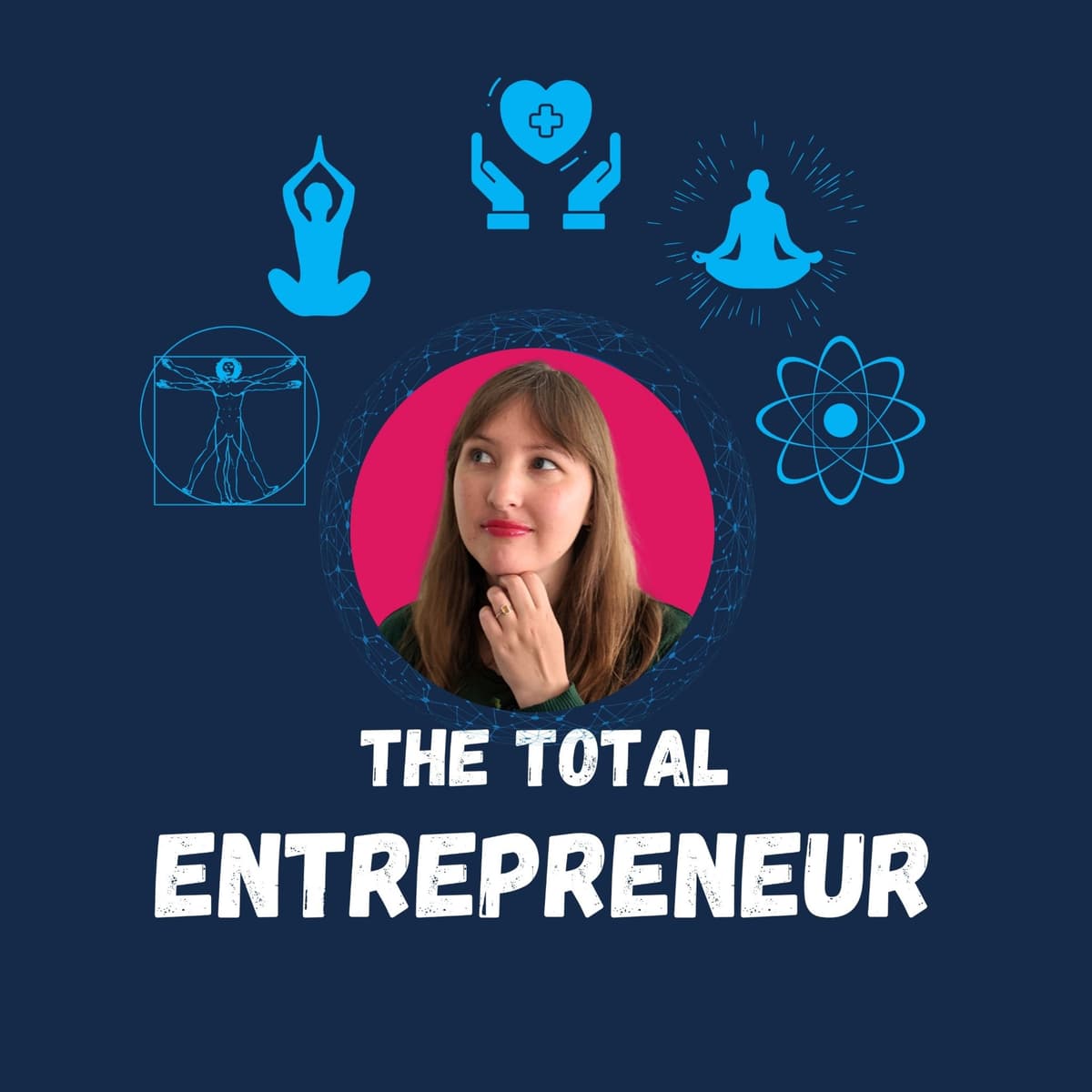
ADHD and Entrepreneurship: Unlocking Your Potential with Skye Waterson
with Skye Waterson
Feb 7, 2025 · 00:29:11
Part of our conversations on
Welcome to The Total Entrepreneur Mind, Body, Spirit, where we turn cutting-edge science into practical strategies for entrepreneurs. I'm your host, Dr. John Torrance, entrepreneur, Inc. 5000 honoree, and professor of entrepreneurial practice at Syracuse University's Whitman School of Management. Each episode, we dive into mental, physical, and spiritual health with expert guests offering actionable insights to help you thrive and perform at your highest level. Let's get started. Skye, welcome to the podcast. It's really great to have you.
Yeah, it's wonderful to see you again. It's wonderful to be here.
Yeah. So tell the audience a little bit about your background. So you were down an academic route, then you got a diagnosis and things kind of changed for you. So tell us about that.
Yeah, it's been an interesting journey. I went the classic academic route. I would say starving academic, that will become relevant soon. But, you know, I did, I, you know, looking for my passion. So I did a bunch of different papers and got a master's, got all the bits and pieces. And I burned out really hard between my master's and my PhD. I got a scholarship to the PhD and I just walked away and worked in a bakery. I was like, I can't do this.
That's great.
And eventually came back. But I thought to myself, okay, I need to figure out what's going on. So I went to my inclusive learning center. They're amazing. I just said, you know, what's, what is happening? Explain me to me, please. And they said, well, you definitely look like you have ADHD. And that was a huge moment. I knew about ADHD. I actually taught developmental psychology, but the idea of ADHD in adults was not that common at the time. And so this was a big, a big shift and I started researching it. Obviously that's what I do and learning about it. working, you know, teaching people in schools, teaching people at the university. And then when COVID hit, I went online and I found coaching and started doing it online as well and writing research, posting those articles. And it grew from there until today. I've been, you know, successful enough, and with your advice as well, been able to run a 6-figure coaching business. And now I focus on specifically people who are entrepreneurs, which is why it's so cool to be here.
Yeah, your background is really interesting for that. You know, you started out down a path and realized you needed to pivot, which I think is pretty common for a lot of people who get a diagnosis later in life. And I like that you work with young entrepreneurs who have ADHD and you've experienced the same thing, so you really know what you're talking about, which is really, really great for them especially. So you're working with young entrepreneurs, and when they come to you, what are they coming to you for? What do they need? What types of things are they struggling with?
It's a great question. So one of the things I noticed is that they already know the things, and it's not just young entrepreneurs. I think we've got a late diagnosis as well. So we'll get a lot of people in their, you know, 40s and 30s is actually the most, you know, the biggest area that I work in, but people, Usually they come because they are, they know the stuff, they've done the courses, they've done the marketing course and the business course and that kind of stuff, but it's just not clicking for them, there's a piece missing. And usually that piece is building ADHD processes to actually help unlock all of the information that they've learned.
Hmm, so processes. So give me an example of what a process might be like for somebody.
They would love to. Oh, I'd love to. I'd love to. So I guess the number, you know, the first process I have is, um, and you can just DM me on Instagram @unconventionalorganization the word prioritize and I'll give you this. But it's, um, it's essentially this idea of, okay, I'm overwhelmed and I need to figure out what I need to do. This is a really common struggle. People come to me with this all the time. And what we want to do is we want to say, yes, things like the Eisenhower Matrix are helpful, but when we look at the research, it's hard for us to organize our thoughts in our head all at the same time.
What's the Eisenhower Matrix? Can you describe that really quickly?
Yeah, okay, so that's a good point. So the Eisenhower Matrix is this idea of what is important, what is urgent, what is not urgent, what is, you know, not important, and you kind of put things in these little boxes, and that will help you figure out what you need to do today. So at the end of the, you know, this is basically a what do I need to do today, 'cause what we do in a day kind of explains the success of our business, right?
Yeah, you're right.
So what I, what I teach and what I've taught for a while now is the prioritization filter. And this is a little bit different because when we look at the research into ADHD, we see that we struggle with time blindness and working memory. And the working memory piece can make it hard for us to really look at something and say, oh, this is important but not urgent, and then this is urgent but not important. It's like too many pieces. So what I get people to do is I get them to brain dump everything, and this is the scariest thing you do in my program, is you brain dump everything actually, you know, empty your mind of all those boxes of tasks, and then we filter it. We go, okay, what has to be done today or there will be a significant negative external consequence, or, and you know, I'll feel bad doesn't count, and I said I would do it, but— I never really made a deadline, doesn't count. And then we do that for the next 7 days, and that gets rid of all the urgent stuff. And then the remainder of the stuff is stuff that's not important, or it's important but it's not urgent. And so from there we go in and we pull out 1 to maximum 3 things that you wanna do this week that would really move the needle, high ROI things if you're a business owner.
That's good.
And we put them in your week like you'd put a doctor's appointment, Add some dopamine. So it's, it's about the system of making something feel less complicated for the way your brain works, essentially.
Yeah, prioritization. I think if you lack that ability, it could easily lead to overwhelm and burnout, right? Because tasks just start piling up.
Mm-hmm.
Yeah, and you offered to, to send somebody a prioritization. How could they do that again if they're interested?
Yeah, so you can just DM me on Instagram. It's the best way to get hold of me. Unconventional Organization with the word prioritize, and I personally will send it to you and chat with you.
Really?
So, but it's, it's good because I think the reason I'm saying that is because I, I will— I love giving that one away for free because people want to know how to reduce overwhelm. Because like you said, with ADHD, burnout is such a huge problem. Like, when I talk to people, it's not a case of You know, did you burn out? It's a case of how many times? How many times this year? Usually people come and they've, they've really struggled with it.
Yeah. And have you noticed things that are— that work well for people just to, to get out of that? So if they're burning out multiple times, how do they recover? Because that seems like that's the key.
Yeah. Well, honestly, it's, you know, something I teach the whole process of. And I think the number one thing is, you Yeah, doing the prioritization filter really helps with overwhelm. Then we wanna go ahead and once you're overwhelmed, you know, once you've gone from overwhelmed to now you're focused, you know what you're doing, then people end up stuck. So then we talk through a step into focus routine, we talk about rewarding yourself for getting started. A lot of people don't know the research indicates, and it's still theoretical neuroscience research, unfortunately. But you know, there's some research to indicate that You know, when people who don't have ADHD start a task, they will get a little spike of dopamine that says, good job, you're starting a task, there will be a reward soon. And when you start a task and you have ADHD, your brain just kind of looks at you and goes, what are we doing? Like, why? Why is this happening to me?
Yeah.
And so thinking about your 5 senses, you know, what can you do in terms of touch, taste, smell, what can you stack? In order to give yourself a reward for starting, that's one of the things that I say helps, you know, a lot of these little adjustments to just make it flow better for you.
Now, is that because we just don't register the normal dopamine burst from starting a task, or we're just so desensitized from it, or, or why don't we get the same reward, the dopamine reward that, that somebody who's neurotypical might?
It's a great question. And neuroscientists are still arguing about it. But there seems to be an issue where we're not— it's not that we're desensitized to it. It seems to be that we are not getting it in some way. Either it is being processed differently or something, something in the neurotransmitters is just different. We can see that from the brain scan research that you see.
Yeah.
But exactly how that works, it's still honestly being figured out.
Yeah. So there— I know, and there's 2 types of ADHD. There's inattentive and there's hyperactive-impulsive. Do you notice a difference in your clients depending on their presentation of ADHD?
I love that question. No one's ever asked me that. Um, I think that there is a difference. I think if you have, you know, mostly hyperactive-impulsive, then you are more likely to have made a lot of impulsive decisions. So, you know, those are the people who come and they'll say, I lost everything and now we're back and we're doing it again. And so there's a lot of like that kind of thing. And sometimes honestly, I would say some of those people don't work with me at all because they have like brute-forced their way into being successful. And they say, oh, well, I might've had ADHD, but it's not an issue anymore. That's not true. Ask your friends. It's probably still there, but you know. But I see that a lot. And then the people who have, In Attentive, their issue is often— and this is a huge broad stroke, obviously everyone is different— but their thing can often be a little bit around the decision-making, around taking the action. That's where you can see the Creatives, there's a lot of perfectionism. They have these amazing systems, these amazing plans, but they just haven't actioned them yet because they don't know what the next step should be. That one is a little bit more of kind of working alongside somebody and helping them with that.
Yeah, knowing the next step, that's a really important part of early-stage entrepreneurship, especially with the young people that I work with. They've got great ideas, they can conceptualize things, they can even have a pretty good plan on how to promote what they want to do, but sometimes just what is that very next step? Like, what's the thing I need to do now to advance this agenda seems to be a big missing piece.
Yeah, 100%. And, and for me, this is where we get to talk about money, which is something that a lot of people don't love talking about, but I think is really important. Because I don't know if you've ever had this experience, but usually when I'm talking to somebody and they're new in their entrepreneurial journey, at some point they'll tell me that money doesn't matter to them. And then they'll tell me that this is too expensive.
Right.
But it's interesting because it's one of those situations where You know, people struggle with this idea of money, but I like to talk about money as it's a resource and it allows you to, one, understand where you're going, what's working, what's not working. It gives you that information. Also, you can use it to invest in your business, to support your community, to support your family. Like, it's a resource. You can use it how you want. But when we're talking about the next step, You know, somebody said this to me just the other day. They were like, I don't know what to do next. You know what, like, I don't have a boss. And I was like, you do have a boss. Your boss is money. Like, you—
Really?
Are you making what you need to be making to support the life and the people and everything that you wanna support? If not, where is the bottleneck? Look at your business. You know, where is— if you think about the theory of constraints, it's like, where is the piece that if you, you know, doubled everything, your business would break? And often, they're the bottleneck.
Mm-hmm.
So that's kind of— that's when we go through the processes and think about that. And obviously, it depends on what stage of the business they're at. But one of the interesting things, and I think the reason I find working with entrepreneurs so fascinating, is we have those— it's not just about the research, we also have the numbers. When we put the research and the numbers together, it gets really exciting.
Yeah, so, so when an entrepreneur comes to you, do they normally have a diagnosis already, or do they just suspect based on some feedback they've gotten or their lived experience?
It's really both. So I work with people who have ADHD diagnoses, and I work with people who just suspect they might have ADHD. Mostly I work with people who know on some level that they're struggling with executive functioning issues. That's the key, because we don't— obviously, you know, I don't do anything with medication or anything like that. So that's the area that we support anyway. And it's not as well researched as you would think. Like, there's no perfect definition currently in academia for executive functioning, um, which I was really surprised to find. Um, so there is a lot of complexity there.
Yeah. So what are a couple of Like working examples of executive functioning that you've seen?
Yeah, so the biggest ones that I work with are struggling with working memory. So people who feel like they constantly leave the stove on even though they've been told a million times, and now they just don't use stoves. I'm like that with candles, actually. And so, you know, that working memory struggle can be a big one. Time blindness. I was completely shocked when I realized that I struggled with time blindness because I thought everybody did. But this idea that your internal clock is a little bit off, it's hard for you to estimate how time works. And transitioning as well.
Mm-hmm.
If you have a day full of meetings and then you're trying to get work done and people are like, oh, well, you've got an hour here, just do that thing there. But that's not how it's gonna work for you because you struggle with transition time. Those are kind of the 3 biggest ones I see people struggling with.
Yeah, and I can relate to all of those, right? Especially the, you've got an hour to do something. But for me, it's almost impossible to do something meaningful in that hour that's wedged in between 2 other things. Because yeah, I need a little transition time. I need to think about what I just did, take a break, think about what I'm about to do, versus just pick up something else for an hour. So I'm sure that's pretty common in the people you work with.
Oh, yeah.
Yeah. Do you find that— do you have a lot of people that start projects but just don't finish them?
Yes, yes. It's actually a part of the process. You know, one of the things I do now when people work with me is I do lock them in for a minimum of 2 months because—
It's a good idea.
What happens— yeah, and I think initially I was like, no, but then I realized it's actually for the for the people because, you know, what happens is they start with me, they've got that rush of dopamine, they're really excited, and then the self-sabotage that's always come up comes up. And usually somebody will tell me that they've decided to switch businesses even though we've talked about the 5 Ps— your product, your process— we've like locked all of those things in.
Mm-hmm.
Or they want to switch careers, or some— something has happened and they're kind of like fighting it a little bit. And so often that's when people will say, oh, I don't know if this is a good chance to— maybe we'll see each other next week. And I usually have to be like, no, this is part of the process. Come and we'll refocus and we'll work through the stuff. Because I'm always— I'm so big on the experimental mindset. It's not that you have to be perfect or always succeed, but you have to be willing to come and say, this is This is how I'm feeling, this is what's going on. And then we can start untangling what's going on because one of the things we haven't talked about but is a big factor in ADHD is emotional dysregulation. And I'm not a therapist by any means, but I, it helps sometimes when we're talking to go, okay, this is interesting. Has this happened before? And then the stories come out.
Yeah. Well, it's a good point because we are total humans, right? So none of these things happen in isolation or in a vacuum. So yeah, talk a little bit more about that dysregulation. I think that's really interesting and I can relate to that myself.
Yeah, I think more and more we're sort of talking about this because it is becoming more of a factor in ADHD. Initially, when I started working with people, there was this idea of things like rejection sensitivity dysphoria and the idea that people with ADHD struggled with it, but there was no research on it that you could find, no academic research. But now it is coming to a head. You see people like Russell Barkley are talking more about emotional dysregulation. It's becoming, you know, something that's even, you see more in the research where people are saying, okay, this is interesting. I think if you have ADHD, you might have a quicker connection to your emotions basically. Coming in, right. Than maybe somebody who has the ability to put a pause in, you know, it's harder to put that pause in. And there's also more self-criticism from the research that we see. People are criticized when they're younger, they're doing things a bit differently, becomes self-criticism. And all of this can make it incredibly hard to run a business because that's all you do is get rejected.
Mm-hmm.
And receive criticism. Like, it's kind of the whole deal. Like, but that's how you win, right? You, you, the old adage, right? The person who wins has failed the most.
Right.
So that's often a conversation we have to have quite early on.
Yeah. So you mentioned maybe not having a pause button. So are there, are there things you recommend or things you work with your clients on to maybe not put in place a pause button, but, but somehow work around that or address that?
Yeah, definitely. And I'll say I'm not an expert in this. We've had a few experts on the, on our podcast, which has been helpful, and I know you've had lots of people on, but things like things like mindfulness, I know it actually really does help, you know.
Yeah.
And from— it depends, you know, if you have ADHD, you might not want to do mindfulness as much. So things like you could just go for a walk before you make a decision, or you could just step outside, like move away from the thing. Something I like to do is I like to free journal for like 3 pages, just write down everything that I'm thinking for 3 pages. I'm not huge on mindfulness in the traditional sense, that seems to work for me. So whatever works for you to just create a little bit of space and become aware of your thoughts when you are in a reactionary space before you're gonna like send that email or do that kind of thing can be—
Sure.
Honestly game-changing for your business if that's something that you struggle with.
Journaling has been really powerful for me. I've been keeping a journal since 1991.
Wow.
And for me, that has— and not every day, periodically, but yeah, like you said, it's just like free journaling. I dump some things down on the paper. There's no theme to it. It's really just whatever's top of mind. And I found that to be super helpful. Never been a great meditator, but the past couple years I've been trying. It's gotten better. I found breathwork a little bit more accessible to me, especially in terms of getting into what they call heart-brain coherence, which is a really great way to self-regulate. So yeah, even though I can't do like a 20-minute meditation, I can do 5 minutes of breathwork and feel pretty good after.
Yeah. And I think that's— it's nice that you say that because I think a lot of people get really intimidated, including myself back in the day, with this idea of mindfulness. And so if we think of it as like a toolbox of different ways to do it, and you can kind of pick whatever works for you and start there, it doesn't have to be, you know, no one's asking you to sit in a room quietly for 30 minutes. We all know that would, that would suck potentially. Right.
And then you kind of get into this mental loop, like, you know, I can't do this. I'm not good enough. Whatever. And then that just, yeah, that infects everything else. Right?
Yeah, yeah, for sure.
Yeah, great. Well, so talk a little bit about your own journey. So it's interesting that you, you got an ADHD diagnosis as an adult and you are a practicing entrepreneur and your business happens to be helping entrepreneurs with ADHD, which is such a cool, you know, synergy. So I'd love to hear a little bit more about what works for you. So when you're dealing with some of the things that you notice your clients dealing with, what do you do?
It's a great question. So I use all of my strategies all the time. I am not medicated. I just never ended up getting medicated. I had kids and then I decided, well, if I'm doing this, I might as well be as ADHD as possible. So I have a lot of things to talk about. And so a lot of this stuff really developed from my own experiences. I would experience something or, you know, a client would experience something and I would look at the research to see if there was anything to back it up and then build the processes from there, which has been really fun. But I think for me, like the biggest things that have helped recently, 'cause it's always, you know, there's things I've locked in and there's things I'm still learning, is one thing is movement every day.
Yeah.
Like getting some serious movement in every day. The research is there. Working memory support, emotional regulation support. I walk a lot. I push— I have 2 children in a stroller and I'm, you know, not necessarily in a position to just go off and do something. So I push them up the mount, they come with me. It's great.
Mm-hmm.
It's good weight exercise. And I go with my husband and we have a chat. So that's kind of— it doesn't have to be a whole thing. But it's just something like that can be really, really helpful if you can set up a routine. And then the journaling has been very helpful. And then in terms of the business development, one of the things that I like to go through with my clients is I'll figure out, we'll talk about their vision, we'll go all the way to 25 years, think about their long-term vision, get a sense of like, you know, 'cause 25 years out people start to think bigger, which is quite helpful.
Yeah.
They're like, well, surely by then. And then we go into, you know, 5 years, and then we think about, well, okay, what is the daily standard? And so for me, it's really important that they have a daily standard, and I have my own that I iterate around of things that if I did those every day, based on the numbers, based on the research, it would make my goals inevitable. And that, that is a huge helpful thing for me because it's, you know, there's about 3 to 5 things in that daily standard. We don't go, you know, massive. And it's like, okay, did I do those? Awesome, good day. Like, that's what we did today. And sometimes it's a terrible day and I get bad news and the rejection comes through or whatever it is. And so, but I still do the daily standards and those things are very helpful.
Yeah, that's, that's really good feedback because yeah, it helps you, it helps you have wins, right, on a shorter-term daily basis. But yeah, you're also doing something that you've already identified as something helpful for your attainment of your long-term goals. That's, that's really good.
Exactly. The reason I think people think about daily, they say often I get asked why daily, why not like a couple of times a week? But again, working memory struggles, time blindness struggles. Do you know what day it is for sure all the time? Like, I know a ton of entrepreneurs who don't. So if you just focus on the day every day, that seems to really help people lock in versus like once a week or something like that?
Yeah. So, so what do I need to do today? Or what have I said I'm going to do today? Yeah, I think that's important because we can sometimes get lost in the bigger picture or the long-term vision and not understand what we have to do right now.
Yeah.
And I can definitely relate to the movement. I mean, I just feel so much more centered if I have a movement. I, you know, I live part of the year in Costa Rica and for me, it's, It's being in the water and surfing. And that helps me so much, you know, just the focus on what's right in front of you, 'cause you have to focus. And I think just grounding, being in the earth and that sort of thing is really, really good, you know?
Yeah, definitely.
So good. So what else haven't I asked you? What else would you like to convey?
People ask me this. The thing I love to tell people is you'll probably already working almost as hard as you can work. A lot of times people will come to me and they'll say, I just need to white-knuckle it. I read this book about dopamine detoxing and I've decided I just need to go harder.
Exactly.
And I usually have to say like, okay, but you know that like you've already been like in this stage of like hyperfixate on something for 12 hours completely, you know, family's like, where are you? What's going on? You know, or you're just like, family, who has time for that? You're kind of in one of those 2 spaces, and then you're just crashing at that point, and then you do it again. And that is probably you working about as hard as you can.
Oh yeah.
So it's not about working harder, it's not about white-knuckling it, that's not gonna get you where you need to go. It's about understanding how your brain works and building the processes that are actually fun and work better, which is a crazy combination, but it's It's the whole wearing glasses that don't match your prescription sucks. It's not helping you and you're not getting more done. It's like, it's the same concept.
Yeah, no, well, one of the things I've appreciated about you is that you, um, you use a scientific and evidence-based approach to your consulting and coaching, which, you know, a lot of people do do that, but there's an awful lot of people who don't, right? They just sort of shoot from the hip and wing it based on their own So I think the evidence basis you bring to your work is really important for your clients. So that's, that's really great. And you mentioned the white-knuckling. And yeah, I agree, oftentimes that's 180 degrees from what you should be doing, right? More often than not, what you need to do is rest and recharge so you can go at it more effectively. Yeah.
Exactly.
Yeah. Well, Skye, if people are interested in learning more about you and your work and what you do, where can they find you? Yeah.
So you can find me, um, I am at www.unconventionalorganization.com. Uh, the best way to reach out to me to ask me for things is Unconventional Organization with an S on Instagram. And you can also listen to my podcast, ADHD Skills Lab. where we interview really awesome entrepreneurs and we also talk about research and we unpack some of the latest ADHD research in a fun way, I promise.
No, that's great. Yeah, and thanks for mentioning that organization is spelled with an S instead of a Z for our North American listeners. Yeah, great. Well, Skye, thank you so much. This was a great conversation. I really appreciate your time and I think you've given our audience Some some great tips that they can walk away with. So thank you.
Yeah, it's been wonderful. Ah, I don't know if you mentioned it, but you were my first mentor and hugely, hugely valuable. I would definitely not be where I am today without your support. So it's been wonderful.
Well, it's very kind of you. Thank you. Thank you so much for listening to the Total Entrepreneur Mind Body Spirit podcast. If you liked what you heard or heard something interesting today. Please give us a like, share a comment, or better yet, subscribe to the podcast. Thank you.
About This Episode
In this week’s episode of the Total Entrepreneur: Mind Body Spirit podcast, host Dr. John Torrens welcomes Skye, an expert in ADHD coaching for entrepreneurs. Skye shares her journey from academia to a successful coaching business focusing on ADHD. They discuss common struggles of entrepreneurs with ADHD, such as time management, prioritization, and emotional regulation. Skye offers actionable strategies like the prioritization filter, movement routines, and mindfulness practices to help entrepreneurs manage their ADHD symptoms and thrive in their businesses.
About Skye:
Skye Waterson is a former academic turned coach, podcast host, and founder of an international ADHD support service, Unconventional Organisation. After getting a surprise ADHD diagnosis in the first year of her PhD, Skye turned her struggles into research-based strategies. She researched and wrote over 50 articles with a combined readership of 250,000+ and then began her next phase of disseminating these strategies around the world. Invited to share her strategies with the New Zealand Security Intelligence Service (NZSIS) in 2022, Skye has supported late-diagnosed healthcare professionals, professors, lawyers, reporters, fortune 500 directors, and entrepreneurs. She crafted her vision for Unconventional Organisation after realizing how few personalized ADHD strategies were available for adults following her diagnosis. Skye has been a guest speaker on The Writer Files, The Productivity Show, Faster Than Normal, ADHD Disrupt, and the New Zealand Disability Employer's Network. Her podcast, the ADHD Skills Lab, became an instant mainstay in the ADHD community with 100k+ downloads and guests including the President of CHADD, Jeremy Didier, Author of Extra Focus with ADHD, Jesse Anderson, and Wimbledon TV Presenter Simon Mundie. For more on Skye, please visit unconventionalorganisation.com
Keep listening
More on Business
About the Host
Dr. John M. Torrens
5× Inc. 5000 entrepreneur, Professor at Syracuse University's Whitman School of Management, author of Lightning in a Bottle, and TEDx speaker on ADHD as an entrepreneur's superpower.
Browse all podcast guests →Book a strategy call →