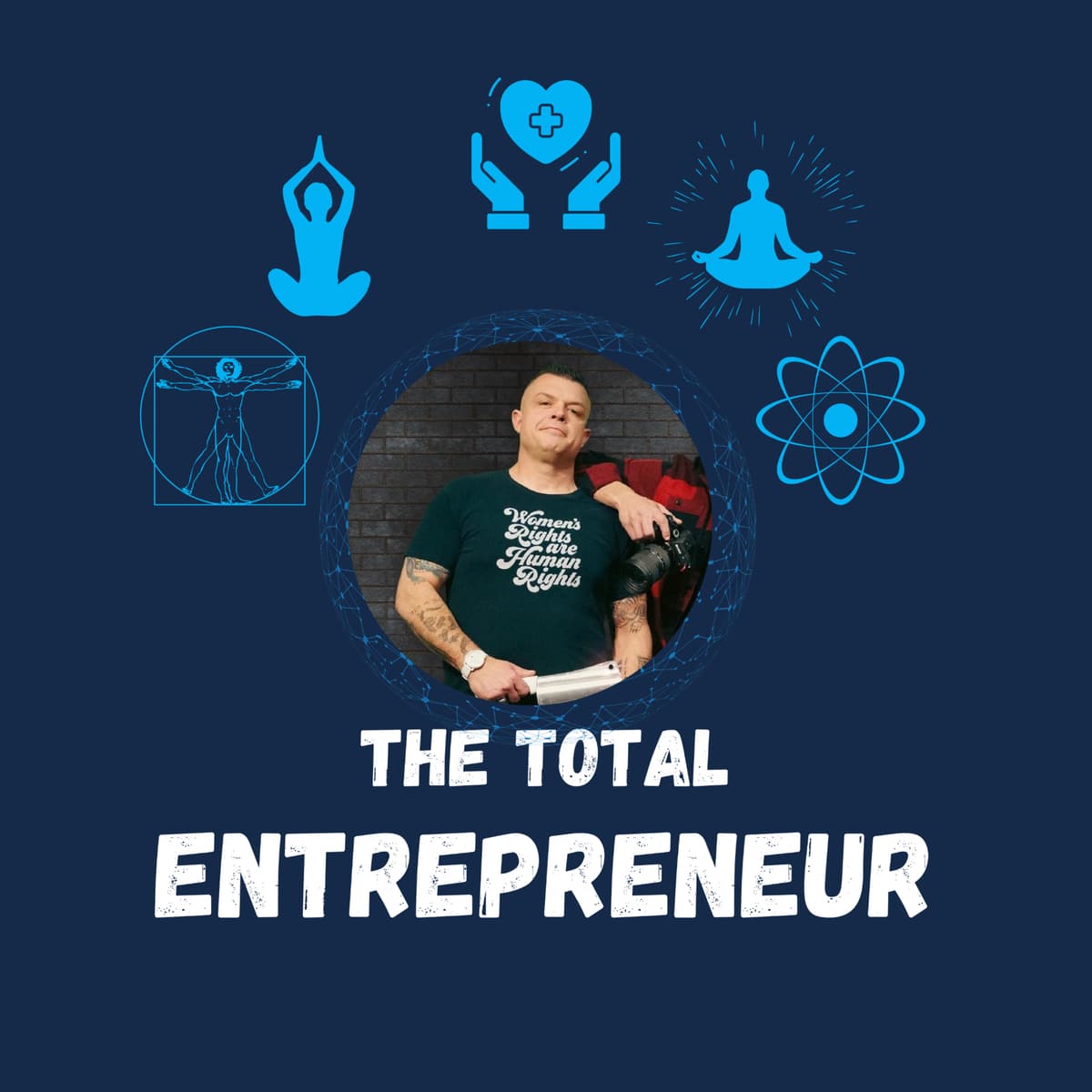
Building Community Through Food, Fun, and Fearless Entrepreneurship with Matt Read
with Matt Read
Dec 25, 2025 · 00:50:43
Part of our conversations on
Welcome back to the Total Entrepreneur Podcast. Today's conversation is with Matt Reed, one of the creative minds behind Spatchcock Funk, which is a syndicated show on PBS, and you can also find them on YouTube. He talks about what it's like building a creative business, working with the crew, working with the team, imposter syndrome, the next big thing. We just have a great, real, raw conversation. I think you're really going to enjoy it. And if anything you hear resonates, please drop a like, a comment, and also don't forget to subscribe. That is literally the simplest, best bang for the buck thing you could do for the show. Thanks so much. Welcome to The Total Entrepreneur, Mind, Body, Spirit, where we turn cutting-edge science into practical strategies for entrepreneurs. I'm your host, Dr. John Torrance, Entrepreneur Inc. 5000 honoree and professor of entrepreneurial practice at Syracuse University's Whitman School of Management. Each episode, we dive into mental, physical, and spiritual health with expert guests offering actionable insights to help you thrive and perform at your highest level. Let's get started. Matt, welcome to the podcast. Really great to have you here.
I'm excited, John. I love what you're doing and helping people get the whole person and the whole experience. So, thanks for having me.
Yeah, of course. Well, before we start, tell— what is Spatchcock Funk? Let's lay the groundwork here.
Alright. So, Spatchcock Funk, we view it as a community built around partying. So, it started out as a cooking show, but our media properties, so we're on PBS across the country, have a YouTube channel, all the social channels. We do live events, but basically, we use food and cocktails and partying as a way to bring people together. So, we've built this really strong community across the country. And, it's weird, and you know this from all your experience and running businesses, but our business is built on my and my partner Alex's personal brands. So, since we're talking business, I'll go to the grocery store and people will come up and want to take a picture. And, it's fun at bars because our show is about drinking, so I can be drunk and not worry about getting hassled. But, people come up and talk about it. We had a couple tell us that watching the show for their date night kind of saved their marriage. We've been invited to weddings in Colorado and parties in Oklahoma. So, it's really about creating this natural organic community so they feel like they're part of our extended social circle. And it's been a lot of fun. Scary, but fun.
Yeah, I know. I had a little chance to check out your website earlier and was scrolling through some of the episodes. And yeah, it just looks like you guys have a lot of fun while you're doing what you do. And I think that's one of the things I hope that young entrepreneurs get from watching this podcast or listening to it is that there's room for that. You should do that, right? You should be able to have fun and not literally kill yourself for the venture you're trying to start. Man.
You say that so well and you say it easily because you've experienced it. And I think when, not just when you're younger, I mean, I'm 47 and we, maybe I'm 48, I think I'm 48. We started this business, but having worked at ad agencies and taught, when you come up, they're like, I just have to get a win and get a big win and be successful. And they see that. So, you grind yourself out all the way, all the time and burn yourself out. And sometimes people are starting businesses in a field that they don't even love, right? For me, I have friends of mine, I'm sure you do too, that are accountants and they hate their job. And, there's nothing wrong with accounting, the world needs accountants, but find something you love to do. You can work harder at it and longer at it if you care about it. That's the first thing. And also, care about yourself in the process because if you break yourself down just to be successful in business, it's not even about enjoying the benefits of money and those things, it's about enjoying your life. And, I think that gets lost. We learn about the so-called hustle culture, #hustle. Everybody's like, grind, grind, grind. But, that really isn't accurate. You spend more time at work than you do anything else in your life, more than your kids, more than having sex, more than partying, more than anything that you like to do. So, take care of it, enjoy it too, but be careful about yourself. It's really important.
Yeah. And what you said about getting the big win, right? We see that a lot where they just need the big win and they get the big win, but then that's not enough and they realize that, right? So, then there's the next big win and the next thing and they're always reaching for the next thing. What I love about Spatchcock Funk and the things that you guys are talking about and doing and showing by example is that you can enjoy the moment while you're still looking for the next big win, right? It's the next big win isn't going to guarantee you happiness. You've just got right now to be happy.
Yeah, I— that next big win is a weird thing, I think, for every human, even in life in general, right? Like, I was looking forward to this podcast today, but earlier, And I was excited about this conversation, but I had a meeting with this tequila brand that we're hoping to do some business with. And that was a fun meeting too, but I had to remind myself not to think about the podcast and just stay in the moment in the meeting. So, we all think about the time hustling and grinding to get there, and then you get to this thing and you don't take any time to enjoy it. Alex and I, when we got picked up on PBS and in LA and these other cities, one day— we're sorry, my cat's going to join me. It's all good. He's a budding entrepreneur. They will— you'll sit there and you won't spend time and be like, wow, this is a really big deal for us. And they move on to the next big thing. But it's like doing drugs. And when you're doing things like that, you get this high and you're thinking to replicate it. If you keep chasing it that way, it's only going to destroy you. So why'd you get to that win in the first place? What you've done, I think, is really impactful. You've had a bunch of big wins and now you're spending a lot of that energy and passion teaching and doing things like this podcast. So, you can employ that like hardwired passion into something that's meaningful but also allows you to stay in the moment instead of, I mean, I'm sure you're probably gonna write more books and do other things like that, but it's still important to stay in the moment. And, that's the hardest thing for all of us to do.
It's one of the hardest things for me to learn too. When I was younger, it was always, it was the next thing and the next thing and the next thing. And, on one hand, that's good because it keeps you going and striving and achieving, But if you're not enjoying the journey, then that's problematic, right? Because you never really get to sit in it and enjoy it and, you know, just kind of celebrate what you have done. And I like when I see young entrepreneurs do that, and hopefully they'll start doing that more.
I, you know, seeing someone enjoy what they do is my favorite thing ever. Like, I was at an event last night and the bartender, they're making craft cocktails. And like she was using a tweezer to put coffee beans on top of this. And I saw her like take one coffee bean out and put the other one back in. And she didn't know I was watching her because she probably thought it was creepy, but she was smiling like, okay, this is the right one. And that small moment makes me happy. And the thing about our job that I love, like we did a— we shot one of our half-hour shows with a partnership with the Buffalo Bills and got to use their logos. And it was before a game. It was a beautiful day out. And we're just filming, partying, and it's kind of parts of it are scripted. But at one point, I had a chance to sit back and I cracked open a beer and I'm getting ready for the next thing we're going to shoot. And I'm just looking at like our crew and they're hanging out eating hot dogs, like having a blast. And I was able to tell myself, dude, this is my job. Like, is this real? So I think when you can have something once in a while, get that. But as much as you can, that to me is important.
So important. I agree. So talk to us a little bit about your journey, right? You didn't— you weren't born doing Spatchcock Funk. How did you— how did you get to this spot? Like, yeah, tell us a little bit about your history.
Yeah, it's fun. Like we tell people, like on our website, it's like, oh, we were drunk on a boat when we came up with this idea, which is kind of true. We— so my background is I got out of school, I lived in New York City and worked at Ogilvy, the big ad agency for a while. And then I moved back here and kept working ad agencies and I loved it. I ended up working at Mower where my wife is now the president and CEO, and Tara Keet, and I was the Chief Operating Officer at Digital Hive. But while I was there, I was— while I was at Mower, actually, Eric, who's a lifetime trustee at Syracuse, said, hey, we have to have someone go up and teach a class at Syracuse. And I'm like, I don't want to do that. College kids are stupid and annoying. He's like, cool, you're doing it. So, I went and I fell in love with it. It just brings me such joy to see people get excited about something. And, And unlike a job in the ad agency, like, no one's gonna listen to me, but like, you're talking to students, they're like, oh my gosh, and they're writing things down. So while I was doing that, my partner Alex, who works at ad agencies and he also was the creative director at Syracuse where he won an Emmy for the Rhapsody in Orange program, we've been buddies for a long time throwing great parties. And people are like, well, with his videography background and you guys love throwing parties, you guys should make a cooking show. So we would like, kind of like laugh it off. But when you have an idea as an entrepreneur and someone says, that's a cool idea, you kind of feel satisfied for a little bit and you push the idea off. So, when I was teaching at Lamoyne, which I did until this summer when I resigned to do this full-time, the students were— a lot of them wanted to be influencers, right? And having worked in ad agencies and digital agencies, I know the business really well, but I hadn't actually created something. So, it was a perfect time for Alex. I'm like, let's just try. So, we made a YouTube show and And we're like, okay, if we get like 100 views, we'll make another one. And that got like 400 views. And then we made another one and that got 800 views. So now we started doing it more often. And the local news channel here, the NBC affiliate from Sinclair Broadcasting was like, hey, we like this. Can we put this on like our weekly news show? And we're like, sure. So at that point, we started to build a business plan. Like, wouldn't it be cool to get a show, like a half-hour show on TV? So we had an idea to make a pilot and PBS reached out, WCNY, this guy Mitch Gelman, who's great, said, hey, do you guys want to make a half-hour show? And we're like, yeah, we have a pilot we're doing. And he's like, come on board and do it. And we were nervous because our show is built on authenticity. Like, it's raw. So, we were like, we make dirty jokes. We do different things that most people, I think, don't do. And we weren't sure if PBS would be cool with that. So, part of it, every show we talk about some form of social justice we care about. mental health is a big one. But the pilot, we were talking about breaking the gender pay gap and the glass ceiling, and we called it the Boss Bitch Brunch. And it was celebrating my wife becoming a CEO, an excuse to make a boozy brunch. So, the more we talk about things like body positivity and sex positivity, it allows us to make forking and spooning jokes, right?
Mm-hmm.
So, to our pleasant surprise, our goal was to have that people kind of embrace that. So, instead of leaning back, they would lean in. And You know, at times our show is viewed more by women than men, despite all the dirty jokes and it being pretty masculine. So we're achieving that, and that's what we're trying to continue to build upon. So stay true to the mission while still having a good time and, and creating new and fun different things.
I love that. And, you know, I think, I think there's, there's a lot of people who don't want to take everything so seriously, right? And they just want to have fun. They want to let their guard down, and they don't want to be offended by everything they're supposed to be offended by. So yeah, that's great to hear that that resonates.
Yeah. You mentioned people want some more lighthearted things in the world. We're living in interesting times and there's divisive stuff going on. But, what we're finding is the data shows everything's data-driven. People are yearning for just human connection. They want to just be around people that want to be around other people. And, that is really what we're trying to do. I think it's funny because it's a kind of a simple premise, but, you know, every human spends, you know, like hours a day on their phone. And, you know, you're in a classroom, but when you're not in your classroom, you're isolated from other people. So it's a good way to get as close to being around other people as we can. So it's basically like replicating real life is what we're trying to do. But it's tough, but fun.
Yeah, no, I'm sure it's a lot tougher than it looks when, you know, when the finished product is released. So how does, how did How did that process work? Like, so PBS reached out to you, or was there like a process you had to go through, like auditions or sending a demo tape? Or how does something like that even happen?
You know, it's funny when we— so we have investors in our business, and when we were talking to them, we're talking about our valuation and everything. And academically, I know how all this works. And they're like, okay, so what's the path? And we're like, there is no path. There's no like business model that you can follow for creating a media brand, whether Like Guy Fieri, who's one of the best in the world, he won a cooking contest show. And then, you know, Binging with Babish just makes YouTube videos and that blew up. So for us, there's no— like, you can— I'm sure you can send in tapes, but that's not how that worked for us.
We—
they reached out to us and said, hey, are you interested in doing this? And we said, yeah. And what they want to do— so it was through WCNY and Mitch Gelman, who's the CEO there. PBS, especially now with their federal funding being cut, is really desperate to find good programming, but each station operates as its own business entity. So what they hope to do is to take, get a show like ours, have it picked up by other PBS networks, and then eventually get sold to, you know, like HBO owns Sesame Street as an example. So they're like, we wanna see if other stations will pick this up. They did. And then we talked to other networks. So that's the way that we did it. Most people might, they might go through the process of hiring an agent and we've talked to agents. So for us, they came to us, we put something together, put it out there, and it's continued to grow that way. So, the problem with content in the world, and it's not a bad problem, people give young folks a hard time about their attention span. It's not that they can't pay attention, it's that they have so many options to get content from. Like this podcast, I've listened to your podcast on YouTube and on Apple Music. So, I mean, it's the same content, multiple outlets. So there's so much media in the world that when they're trying to create TV programming, it's hard to find the right things and everything's fractured. It's like the birth of cable TV. Like, is streaming taking over? Is cable dying? Is it not? So how they find content, it used to be like most recently, who has the most followings on social media? Then they give them a TV show. But we got a TV show before we got a bigger following on social media. So there's really no roadmap. So for us, my experience, Alex and mine, has been they reach out to us, but now like we reach out to We've met with big networks and talk and have conversations with those people. Sometimes they reach out to us, other times we reach out to them or through an intermediary. So, if someone's watching this and wants to do that, what they should do first is make good content. Don't worry about who's going to watch it. No one's going to watch it at first.
Right.
And, your first one is going to absolutely suck. I mean, I see myself, we're in 1.9 million homes over the course of a year. whatever platform we're doing. I see myself and hear my own voice every day. And every day I hate the sound of my voice. And I look at myself and I'm like, oh, is that what I look like? Even days when I feel like, you know, I have a good hair day. So it's like, first just make something cool and then worry about how you get it in front of people. It does not work the other way. That's where you see like the Hawktua girl, who actually I think is quite funny and charming. They rushed to get her somewhere. And all of a sudden she's playing in like crypto spaces and areas that is not her core competency, and then she fizzles off. So she had a shot and then didn't do anything with it because she wasn't prepared. So first, prepare your ideas and your cool content, and then worry about getting the people to see it.
Yeah, I think that's good advice. And yeah, you know, it's humbling at first when you're putting stuff out there, right? Because you're, you're, you know, you're putting everything into it, and, you know, like, you're literally getting dozens of people to look at it at first, right? But it does, it takes time, and I think consistency And for me, it's just been, you know, these are conversations I'd wanna have anyway. And if people are gonna watch it, that's great, right?
Totally. That point about like putting yourself out there, like, and the people that are watching this, and you got a lot of listeners, they're entrepreneurs, so they're already brave in spirit, which is great 'cause it's not for the faint of heart. But when you're creating media, like you wrote a book and it's a good book and you write it and you pour so much heart and soul and time into this and then it gets published and you're like, That's it? Like, what happens now?
Now what?
We make a show that takes 120 hours, man-hours across the board to produce a half hour of content. And then all of a sudden it airs and you're like, oh, okay, that was it. Like, so it's like being able to, to know that you're creating something. But when I think about like young people and when I talk to students about what entrepreneurship is, the cool, awesome thing that you like, like when we're doing a live event or our show airs somewhere, that represents maybe 10% of the time. Like if you were a football player, All we see is the awesome games on Sunday. We don't see the hours of classroom work and backbreaking time in the gym. So, most of your time is spent preparing for the game, not in the game itself. So, once you can kind of get your head around that, Taylor Swift is a legendary entrepreneur. She's a great storyteller, great songwriter. I don't have a ton of her music on my playlist, but there's some and I respect her game. And, all we see is her in these executive suites of NFL stadiums and on stage, right? But the bulk of her time is spent in an airplane writing music, in a recording studio hating what she's hearing. But all you get to see is the good stuff. We like young entrepreneurs and old entrepreneurs, I guess, like me, and you might do this too. We glorify and romanticize the bad parts of the job, right? Like everybody likes to tell the story about Derek Jeter in AA crying and calling his dad that he wants to quit, right? But no one wants to live that, right?
Right.
Like, I took a huge pay cut to do this. No, everyone wants to say it, but then you're doing it, you're like, oh man, I gotta decide which streaming service to cut. And that real part, once you can like realize, okay, and believe this is what this takes to get here, then it becomes easier from your mental health standpoint. Because without that, without having a good healthy approach mentally, every— it poisons the rest of your life. And that's the death knell of a business.
Yeah. And taking that leap is hard, right? And like you said, we glorify All the the hard times, right? Or we glorify when we see it in other people. But yeah, it's a it's a hard thing to do yourself. You know, however, once you once you've done it once or twice, you just kind of get used to it. And you know, I always I guess my my mental trick is just to keep going to the worst case scenario, right? So when I started my company for the first time, I was like, well, it's the worst case scenario. Like we'll we'll have to move in with my wife's parents or with my parents for a little while, and that would suck. But we'll live. And all right, if that's the worst case scenario and I can live with it. then let's just go for it. You know?
I know exactly what you mean. And my thought is like, people, everyone is afraid to fail and they fear failure more than they love success. So what you just said, and you said it much more eloquently than I think it, so you really just put that in a great context. Like, you know what the worst case is gonna be. For me, it's like being able to recognize failure. Like failure, she and I, like we go way back, right? We all fail more than we succeed. A great baseball player bats .300. That means they failed 70% of the time. So, understanding that failure is part of it is an important aspect because I don't know, I've wondered this about you when I was getting my MBA and you were speaking at one of the— I never had your classes, but you were at one of the cohorts we had. You come across very confidently but approachable, which is awesome. Anyways, You might not be one of the people, but most of us suffer from imposter syndrome, right? Your skill level's going like this, your confidence level's going like that, and there's this gap. So, being able to recognize when that happens, there will be days— we did work with Tito's Vodka and made content with them, and they're a $4 billion brand that we had just started. We had no business working with. And then, we're doing this live event and I come off of the stage or someone comes up to me at a bar and says, oh my God, my husband and I love your show. I have this sense of like, wow, it's working. This feels really good. But more than that, I'll like make something like, oh my God, is anybody gonna watch this? Or like, you know, we'll hear a no from a brand that might be a potential sponsor or a network saying, hey, you're not ready yet for that. And then you're like, what are we doing? So that, that being aware of that feeling is something that I think entrepreneurs, I think that sinks a lot of people. And if you can learn to like know that, that, that sucky part's gonna happen and be able to mentally like again, good mental health and be able to balance that, then you give yourself a real shot. But usually, I believe that most entrepreneurs or just most people in general, where they get beat is they beat themselves. They just fail and they give up when they shouldn't have.
Yeah. And I think anybody who's doing cool stuff is going to have imposter syndrome, right? I think it's just part of the human condition. And I get it all the time too. Like, no matter, no matter what I've done already, Sometimes I feel like, am I really the guy to be doing this next thing, whatever it is? And like you were talking about sitting there with the people from Tito's, it doesn't matter what, you know, you could be in a room with somebody else who's doing cool stuff and you're trying to pitch them or want to do something with them and you still think, you know, do I belong here? You know, have I done enough to be here? And I think it's those mistaken beliefs we have, like, I'm not good enough, I'm not smart enough, I'm not talented enough, I don't have enough money. Whatever it is you're not enough of, it just gets in your head and you got to You gotta take out that head trash, you know?
Yeah, that head trash is a great way to think about it. I think about the— we'll talk about cool stuff in a second 'cause you just sparked something in me. But, the first thing is though is for me, and my wife and I talk about this all the time, my wife is a baller. She's a CEO, she's super dynamic and just such an awesome human being. But, we talk a lot about how we talk to ourselves, like our inner monologue. I talk to myself sometimes and I would never talk to a friend like that ever. I forgot my flash drive. you piece of shit. Like, how are you not prepared for this? You know? And, and it's, it's trying to stop yourself from doing that. That's one thing. And I think that matters for all of us as humans to do that, whether you're an entrepreneur or not. But the other thing about making cool stuff, like, I mean, your, your business history is interesting because you've created businesses that have market and demand and supply and things that you can manage. And then you've also created content, like writing a book and this podcast. Creating content and creative stuff is a very weird animal because Your audiences, you know, you got to create something that you like and you hope that they like, but people's taste, like I— people don't like broccoli. Some people love broccoli. I mentioned Taylor Swift. Some people love her. Some people don't like her. And you have to also acknowledge that some people just aren't going to like the stuff you're creating. I'm not a huge country music fan. Most of my crew loves it. I'll go to country music concerts, but you're not going to find me listening to it. And it's not that I don't respect their ability to write songs. Great songwriters, great lyricists. Great musicians. It's just not my cup of tea, right? So creating something, when you put it out there, you have to know that not everyone is going to love it. And when people say that's not true, it's 100% true. I mean, no one is loved by everybody. You think about people in history that were loved, like Jesus Christ. This dude was around and there's a religion, like millions upon hundreds of billions of people have followed this religion. That guy got literally crucified. Right? Like, not everybody loved him. So, it's reminding yourself like, hey, like, this isn't gonna be for everybody and that's okay, but you've gotta be okay with it first. And I think that's something that people— I don't know if you've experienced that, like, with your book. Like, I'm certain of this, that someone has read your book and been like, eh, I don't get it, or like, I totally disagree with what he's saying. But other people, more than not, since it sold a lot of copies, were like, oh, cool, and they're recommending it. So, it's being aware of the fact that you are not gonna please everybody and it's hard. Like, I tend to be a bit of a people pleaser because I want to see people be happy and I want to, you know, engage with them. So, it's really tough when, I mean, when you create content. We've gotten comments like, this guy's tattoos are fake, which they're not. Someone once sent us an email that was like, I've watched every episode of this show twice and I hate it. It's, if I want cliché jokes and bad recipes, I'll keep watching it. We're like, well, thanks for the views. I mean, you watch every episode twice, that's cool. So you're, you know, you've got to know that that's going to happen and it's, it's hard, but it's true.
Yeah, it, I mean, yeah, you've got to just either have a really thick skin or just agree not to look at comments and that kind of thing because yeah, people are all over the place. And of course when they're anonymous, they can be really mean and that kind of thing, right? Yeah. I just try to, I try to avoid that and just think, hey, I'm, I'm doing stuff that I would like. I think there's enough people out there who kind of like the same things I like. But this, this particular podcast, you know, has such a broad spectrum between mental, physical, and spiritual health. So, you know, I'm talking to like biotech people and biohackers all the way over to like the consciousness and woo-woo manifestation people and then everything in between. So it's natural that I'm going to get some people who resonate with some content and just hate the other stuff because they don't believe it or like it and vice versa, you know?
Yeah, I do. And if you go back and look at like on your, on the YouTube page, you see all the different, just looking at the mosaic of tiles of the people there. It's a wide range of things. But again, that's what you're trying to capture. So, you know, you're going to have some leakage there, right? You're always going to have like the— I don't know why I'm on this kick, but like Taylor Swift just dropped this new album and I talked to a friend of mine and she said her and her daughter are diehard Swifties. And I'm like, what do you think of the new album? And she's like, I really don't like it, but I still love her. So like there are people that are still going to like consume the content. They might not like certain versions of it or certain episodes, But you mentioned not reading the comments, and I think it's a weird world for entrepreneurs now, and it's the only world that I've lived in, so I was kind of born in it from this standpoint, is data. The use of data is incredibly valuable, and the use of AI is super valuable too. So, I say ignore the comments, but I don't know, I think you should— for me, we read them and we respond to all of them because we want to create this 2-way dialogue, but the data is where you find out really where you are. So, we had a brand partner, we still have this brand partner, and when we first met with them, they're like, we're interested in this because it's cool, but we think it's too masculine for our brain and our brain is very feminine. And we're like, totally get that, but here's our data. And the data shows that this stream actually is 65% women. And they're like, oh, is that data real? We're like, unless YouTube and Google are lying, yeah, this is real data. So, the data can— I mean, my students would always make fun of me because of how bad I am at math and I wasn't a math or an economics professor. But, the numbers and data won't lie, and people don't want to see that. I work out 6 days a week and I work out hard, and that's because I drink and eat a lot, so I just basically stay the same shape. But, when you're trying to lose weight, we're afraid to look at the scale because we don't want to see the results. But, if you really want to be successful, you've got to look at the numbers, and that will help kind of make decisions. And, to me, it's one of the most interesting and sometimes scariest part of Yeah, absolutely.
I mean, yeah, you need your customer feedback, right? So with you and your crew, right, like, I'd love to hear a little bit about your, your creative process. Like, how do you, how do you pull together an idea for an episode or a show? How do you execute it? What are some of the things that happen behind the scenes before anybody tunes in?
Yeah, I love talking about this. We have this awesome crew that we work with. So And, they all contribute to the creative process. And, we are hiring a social media manager right now, but all of our people that we employ actually have cooler and better jobs than what we're doing. They just like hanging out and they like our show. So, our sound and drone operator actually does work for the WWE for all WrestleMania and those things. One of our creative directors and shooters, but he's really our director, Jeremy, this guy just made a TV commercial for Google and has this awesome motion graphics business. So, They like— we just like hanging out together. We like the content. So, we're very blessed in that regard. But, the creative process, we want to come up with ideas that are fun and that we can be edgy and incorporate the social justice themes. So really, we get our crew together, which is my wife and Alex's wife and Jeremy and our buddy Nick who he's a big creative part of this process, our overall producer of things. And, we come up with ideas. So, we want to do a horse racing theme party. So Nick's like, I'm like, I can't come up with a good name. And he's like, Talk Derby to me. And we're like, yes, that's the name. And in those meetings and ideas, a lot of things that I think are, I tend to be very aggressive and push the envelope. So a lot of stuff will get pulled back, but we have these meetings where things that probably would not fly on television get the creative process going. So for me, one of the most, the best part I think probably is the parties and everything, but maybe the best part too is that time with each other, just throwing ideas around. Like my wife, and I'll admit this only because she's not here right now, a lot of jokes actually are jokes that she came up with. And people are like, oh my gosh, you're so funny. And that joke was great. And she'll be like, I wrote that joke. And I'm like, she did write that joke. So it's a fun process. It's collaborative. And it takes a couple of weeks just to come up with the ideas for the episodes. And then we script out some ideas and some jokes. Then, we meet again and see where we go. And then, each episode when they come up when we're planning it, then we dive into the real details of it. So, because we're considered reality TV, non-scripted, but it does involve scripting and planning and those type of things. So, that's how we do it. But, we're also developing this production house where we might— we're working to produce other shows and we're talking to people about that. People either want to pick up some content or people that we might want to work with and make them. So, that process might be different. But we also own all of our intellectual property. So PBS, WCNY, they don't own any of it. But when we keep growing, they get percentages of our net profits. So everybody, everybody's happy in that regard. But because we own it, we are really fortunate enough to make all of the creative decisions. So the process I just described is ours. However, when we've worked with other people or sponsors and you talk to other networks, they might say, hey, this is cool, but no more of this joke or whatever. So then you got to decide in your creative process, what do you do and what don't you do?
Yeah. So that is really good that you own that and you, and yeah, and you, you just, you drive that process. That's, that's, that's really good. Yeah. So what are, what are some highlights or some of your favorite moments from the show?
Man, you know, there's, there's so many that just make me super happy. Um, I, a couple of ones that I think are cool is we have some friends that like our, we bring different friend groups for these parties. Some of them we have 100 people at, some it's like more intimate. There's at least 3 couples that are dating that met at one of our events that didn't know each other, friend groups that have formed from that. So, at the meta level, it's this cool proliferation of good people hanging out with good people. But, some really special moments, the Bills game was awesome because of the experience that people had, but actually my favorite part of that was the day before we were in Buffalo setting up. So, our crew that I just mentioned, we went out to dinner the night before, we ended up doing karaoke. And it's like midnight, we're having drinks, and I've got to be fresh and be on camera. And at one point, I'm like, we got to go to bed. But it was just so fun. We shot at Beacon Skiff and we used their huge Airbnb and we threw an absolute huge party. But the night before, our crew, we took their ATVs and we would hide all around the apple orchard and use a drone and play hide and seek while we're drinking beer. So like, to me, those moments of being together while we're making the content, that's probably without a doubt my highlight, you know, like that, that part of the experience. And I hope everybody, like, when you're doing stuff that you work on, there are hard parts. Like, I hate, you know, reviewing edits and doing the sales process. Like, when you're writing your book, you didn't like editing it, I'm sure. And like, when you're running your businesses, you didn't like auditing the books. So, there's gonna be parts you don't like, but if there's parts that you love, then you're in the right path.
Yeah. No, I definitely agree with that. And it's, Yeah, having fun while you're doing the thing is important, right? Like we kind of started talking about at the top. So what are you excited about? Like, what's— I mean, you know, because we talked about, you know, the next thing and the next thing, right? So we know you love what you're doing and who you're doing it with. Yeah. Despite the times that are hard. So what's next and what's cool and what's really getting you excited?
So what I'm excited about is also what I'm scared about. And I think every day as an entrepreneur, I'm both exhilarated and terrified. Something cool will happen. We had this great creative meeting the other day with a brand we might do some work with. And then, later on in the day, we're talking to our investors and they're like, hey, we need to check on the life insurance. If one of you dies, we get recouped our full funds. I'm like, ugh, I don't want to think about that. But, going forward, it's kind of like the world is our oyster in that we have a lot of opportunities. So, we're talking to different networks and things. But, what I'm excited about is continuing to grow the brand. And I know that's a generic answer. So to be more specific, we're like, we're building a studio right now in Syracuse. We got a grant from the, from the county, Onondaga County. And then we're putting money in and so is the people that own the building and the Gerhardt's Restaurant Supply building. And we have Tommy Lincoln, who's a locally famous artist doing a big graffiti wall. Actually, he's doing that right now. So opening that's going to be cool. And we're having— People hire us to go do live events like in Albany and in Ottawa. We talked to someone in Ottawa about doing an event up there. So, it's really the growth of the business and seeing other people genuinely connect with it is what I'm most excited about. That's really kind of where everything is in the good part of it. I'm not excited about the bad parts that go with that and the risk, right? So, but it outweighs it. And, I think if you don't have that risk, those other things wouldn't be as exciting.
Right. Yeah. Just knowing that there's a downside to avoid, right? For sure. Well, that's cool. You're building a studio. That's amazing.
Yeah. Yeah. We're excited about it. And I think like we do every year, we do like a big party and usually it's for like a nonprofit or for something else we believe in. And we like one of them, we had 200 people show up and we were giving out real like tattoos, like flash tattoos. And 40 people out of the 200 that were there got tattoos, which is wild. And a lot of them for the first time. And seeing people come back and be like, hey, when's the next party? And like, my husband couldn't believe I got a tattoo. So that going forward is doing more of that where people live in the brand. And the studio will give us like an actual headquarters. Like I'm in my house right now, which is cool. My house is beautiful because my wife is super, has great taste, maybe not in husbands, but in furniture and stuff. But it'll be cool to have our own space. And it's weird because you mentioned the bigger thing coming up. What's the next big thing? At first, we had a logo and then you saw people wearing our shirts out, which that's cool. And then, you're on TV and that's cool. And now, a studio and that'll be super exciting and then we'll be looking for the next big thing. So, this conversation is reminding me to stay in that moment. I'm going to go down there a little bit later today and just be like, I can't believe this is a thing right now. So, it's exciting. And, I really appreciated you asking about this. It makes me feel good. Because I've been in it like you every day in it. So it's good to be like, oh, this is, this is actually cool.
Take that beat to appreciate and realize where you are, right? Yeah. So what about like a time that you can reflect on where you're like, it didn't go the way I wanted, or just a regret or not? Not a regret because I don't personally, I try not to have any. You just look at the hard times and say, hey, I learned something from that, right? So I can't erase it. But yeah, what maybe a mistake or a thing that you wish went a different way and how did you deal with that?
Man, a lot of mistakes. And I try to avoid regrets. Most of the regrets are like things that we didn't do. But I, you know, when I look back, the learning points. So when we first worked with a big brand, we finally got their attention and they're like, yeah, you know, we're interested, let's work together. So we're like, cool, here's our idea. And they're like, that's awesome. So we're like, oh my God, this is so exciting. And they're like, how much do you guys want for this project? So Alex and I were like, What do you think? What do you think? We're like, how's like $7,000? And they're like, oh man, definitely. We thought you were gonna say $50,000. And we're like, okay. So the next time we worked with that brand, we were like, they're like, what do you think? We're like, how about $50,000? They're like, how about $25,000? So a lot of mistakes that I've made, and Alex is better at this than I am, is from the pricing standpoint. When I'm working for an agency or someone else, it's easy to price it because it's not me, right? So that's one mistake. Another mistake too, is not sticking with your gut feeling and having faith in like your idea, right? So, when we first got on TV for our new segment, and CNY Central has been great partners, someone else was interested in talking to us about the same thing. And they're like, you guys, you need to change the name. And we're like, okay, we just got to get on TV. We'll change the name. And we would do that now if it was like a big brand and we have already established this. But We stuck to our guns and ended up— it ended up working out. So there's been a lot of times though where I've like had an idea for a joke or something that I thought would be really engaging and make the audience feel like emotionally connected, um, and make— because you want to make people feel valued and respected— and then not used it, and then later on feel it fall flat. Or a video that we thought would be really great wasn't, and most of the time I look back and it's because I held something back.
Mm-hmm.
So that is often the biggest regret. So pricing, not trusting your gut. And the third one though is also like incorporating the right people. Like, no, like have people that you trust because if you don't, and we have a partnership. So other entrepreneurs that are on their own, I worry for them sometimes because then you get stuck in your own echo chamber. So being able to trust people and if you trust them, then you can bounce those creative ideas off it and push each other. So So, those are 3 mistakes I've made a mis— I've learned from. And, I don't regret, like you said, but I wish I could go back in time. Maybe I do, maybe I wouldn't. Maybe I would, then I wouldn't learn the lesson. But yeah, it's always a learning process.
So, actually, so you mentioned the name and I forgot to ask you that earlier, but what's the origin story for the name Spatchcock Funk?
So, originally, we wanted to have something edgy and fun and cool and culinary and party-ish. So, one of the original names we actually had was Sex, Drugs, and Lobster Rolls, but we knew that was never going to get— that wouldn't get picked up. So, we wanted to have something that combined what the show is about. So, something that was culinary and edgy like spatchcocking a chicken or a turkey, like you rip out the backbone, crush the sternum, and it allows it to cook more evenly. But one, people often like, is that a dirty word? We're like, no, get your mind out of the gutter. But, we wanted that type of approach.
Yeah.
So, a badass culinary term. And, we also love arts and culture and creativity. So, the funk actually, the word funk, we took from the Rage Against the Machine song Renegades of Funk, which is actually a cover of Afrika Bambaataa's song. But, that's the combination. So, something cool, hard, edgy music, something fun. And, at first, the name, people are like, I don't know if this is going to work, and we just pushed through it. But, when I think about naming a business, even though I worked at Eric Mower and Associates and Eric Mower is a dear friend of mine, he's one of the investors in our business, He's such a great man. But I was like, it sounds like we work at a law firm. Like we should call this thing like Razorfish or something. But which is also a cool name of another agency. But naming it is interesting. So like Pearl Jam, originally their name was Mookie Blaylock, but the NBA was going to sue them for that. That's why their first album is Ten after that band. Or I think about like Wu-Tang Clan, their big like seminal album was 36 Chambers. And, the album 36 Chambers, people think it's referring to guns because they're a hardcore grimy hip-hop group, but it's not. There are 9 members and there's 4 chambers of your heart. So, 36 Chambers meant we have a lot of heart. So, when you have a name behind the story and behind the brand, I think that to me, that resonates for me as a consumer of coolness. So, we wanted Alex and I want to be able to create something similar to that. With Alex as the editor and creative director and producer, you'll see his like pop-ups, but he pays such attention to these small little teeny details that sometimes I don't even— I'm not even aware of, but he is, but some viewer will. So that type of thing with the name and everything else is we want to make sure there's a, there's a cool story behind everything.
Yeah, that, that makes sense. I was always wondering. Yeah, because naming for me is always hard too, whether it's a business, a website, a book. a podcast, a boat, you name it, right? It's hard to come up with a name. So, yeah.
That, the naming thing, it's a fun thing to do with your friends, like whether it's a boat or anything like, and I used to do this with my students that were learning creative advertising because to me, I love doing taglines and names, right? But it's hard, like you said. So what we do, our friends, all the time is we practice that. Like we have to name episodes and we always wanna have like, we had an off-roading episode called On All Fours, right? And we're Clambake 1 called In the Raw because we have to have the dirty innuendo in it. But to practice for that, like, we'll be at a, like, out having drinks or barbecue and be like, okay, everybody has 10 minutes. What would you name your hip-hop group? And then you'll hear like fun. And then that dialogue starts. So the naming process can be fun if you're used to doing it, right? So just keep practicing it. And to me, like with you, with you, you are constantly, I'm talking about you, John, specifically. You teach, so you give lectures. You have this podcast. You've done a lot of appearances. So, it comes across as very skilled and polished, but partly that's true because you do it with regularity, right? And, it's something that now is naturally just a natural skill set. But, if you had taken 3 months off from any of those things, it's going to be rusty at first. So, the naming process, being creative, I think if you are creative, if you are a writer, you need to write every day. I don't care if it's a paragraph a day, but That, that to me is, is how that can get easier, or at least more fun.
Right. Just the repetitions and exercising that muscle, whatever that muscle is. Right. That's a, that's a good point. Yeah. So last thing I want to ask you is, you know, in creative endeavors, sometimes it's hard, or at least for me anyway, to imagine how you, how you raise money from investors for that. What, how did you go about that? What was the process? Because I, you know, at Syracuse, we just launched the Center for the Creator Economy. Which we're super excited about. We're going to be, you know, running students through Whitman and Newhouse and some other schools and, you know, teaching them about the business of being a creator. And part of it, I'd imagine, would be capital raising. So yeah, really interested in hearing how you went about that.
Yeah, I'll tell you, and I'm excited about that center launching. Actually, my friend Carrie Welch sent us an invite and we're going to go to the grand opening because I wish that existed when we were starting this, you know. 5 years ago. But the capital raising is very difficult from a creative standpoint because, like I mentioned earlier, there's not an existing roadmap. So we had to— the first thing you've got to do is, in my opinion, as an entrepreneur and as a teacher of it, is, you know, we knew what our differentiator was. We knew what the MVP of the thing was. We knew that we had something that was real and functional and proof of concept. So we didn't have to worry about any of that stuff because the investors would see that, obviously. They wouldn't have taken the meeting if they didn't think there was something cool about it. The problem that we had was the valuation, right? Because our— look at our run rate. So we're on PBS and like at the end of the year, make a couple hundred grand, maybe it all— we put it all back into the show and we're taking in this money, but we have side jobs. So how do we prove that this company is worth a few million dollars without a product? With— and with advertising sales, the problem is cash flow. It's called sequential liability. So the station's going to pay us. Because the ads run, but they don't pay us till they get paid. We're fronting the cash to produce the show. So cash flow is an issue. So the first thing was valuation. And in a creative sense, unlike if you're opening a record studio or one of those things or a production house like ours, how we did it was as follows. And it's not a great science. And even our investors, after they signed on, they're like, you know, this is kind of bullshit, right? And we're like, I mean, yeah, but this is the best we got. So We looked at a bunch of people that are doing what we want to do. So, we use Guy Fieri, who I mentioned, Molly Yeh, who is an awesome blogger. She has a show on Food Network. Her show, sometimes I feel like ours is a more masculine version of her show, and Binging with Babish and Matty Matheson. So, we took a wide range of these people and first distilled down how they got there. So, Molly was a blogger, Pioneer Woman, makes a ton of money. She was a blogger. They got picked up into a show. Guy Fieri won a next, I think, next Food Network star. Binging with Babish started a YouTube channel. So we're like, here are all these different paths. Well, we already have a show now. So if you look across this, the potential we could make is anywhere from, out of the people I just named, like their lowest annual revenue from our research was $1.5 million up to like $80 million annually, which, you know, that'd be pie in the sky. So we're like, based on this, we think our company right now is worth, you know, $4 million, right? While that's wildly speculative and the investment in our business is very risky for our investors, we know that and they know it. So acknowledge it upfront, like, hey, this could make a lot of money, but failure is not only possible, it might be likely. So if you're going to create something, the way to, in my experience, but I can say this now, not academically, I can say it from factual experience, is the key is getting the investors to be excited about the idea itself and the person doing it, right? Like, Alex is like my best friend and a great human being. So like, that helps. And they have to buy into the idea because creative fields, like, like if you think about some of the best creative things in the past 30 years, like, I don't think J.K. Rowling, I don't agree with her as a human being, but she wrote some cool books in Harry Potter. She got thousands of rejection letters. If you go into Squid Game, which became a global phenomenon, I love that show. That dude got turned down by everybody. And, you know, now it's huge. So, So, you have to find investors to buy into it. They've got to believe in what you're doing. That's the first part. The valuation is going to be always going to be the most speculative thing you can do in the world. Like Post Malone, when he first came out, if you're like, hey, I'm a white dude with tattoos on my face and I'm going to rap and do grimy hip-hop and then I'm going to do country music, you'd be like, dude, get this guy out of here. So, the 2 tips is find a way to find any way to justify some kind of valuation. But also find investors that are going to believe in what you're doing because creative stuff like might work, it might not. So that's really the focus.
Yeah. And you know what you said about them believing in you, right? It's anybody who's invested in new ventures, they, they'll tell you it's about the team and believing in the people, right? Because you could have, you know, 5 different teams trying to do what you're doing. But, you know, which is the one that's going to execute and really make it happen, right?
Yeah, the thing about the teams and it's not who you know, it's who knows you, that stuff is all true. But knowing, like you just said that beautifully, and I think about this a lot though, if you're going to create content, whether it's a book or something else, unless you've invented something like you're Einstein, right? You're not doing anything radically different. We're making cool shows and throwing parties. Other people make great food. They're better chefs than me, way better. There are people that make better drinks than I do, but the differentiator we think and our investors thought and our audience thinks is this friend group, our personal style. So whatever your thing is creatively, you have to show me what's different because creative trends are like Sabrina Carpenter is, I love her music. I love her dirty lyrics and I like her message about body positivity and relationship health. But she has this music style and the dirtiness that that's her signature style. Since she got big, you see like, I think it's Alexa Rose. She sounds cool too, but you see people start cop— like basically copying it. And I don't, I'm not trying to throw shade at anybody because we've made things that we saw that people were making. So you've got to prove to yourself and to others that what you're doing is going to be unique. Like your experience that you've had or doing this podcast, the thing that you bring to the table is in addition to being obviously well put together and successful, the business is you bring a human connection to it that makes it different, right? That's the differentiator to me. So if you're going to do the creative stuff and you've got the right team, make them know that you're not swappable with somebody else. And that's, that's the first, the first big thing to get out of the way.
I agree with that. Well, Matt, if people are interested in learning more about you and the show and what you do, where could they go and where can they find you?
I appreciate you asking because we got, we gotta, we gotta promote this thing. Um, we're on PBS, uh, cities across the country, but you have to check your local stations for that. So, you know, it airs on Saturdays in New York, but, you know, Thursdays in LA. So, um, first check your PBS station because PBS needs all the viewers we can get. Second, we're on YouTube. So Spatchcock Funk, please like, subscribe. Um, you can see all of our half-hour shows, all our 5-minute segments are all on there. And on Instagram, TikTok, all the socials. So, we're trying to be everything everywhere and hard to do, but we need the viewers. So, let's go get them.
It is hard to do, but I think you guys are crushing it. So, thank you so much for being here, Matt. I enjoyed this conversation. I think everybody's going to get a lot out of it too. So, thank you so much.
Thank you, man. I appreciate you so much, Jon.
Thank you so much for listening to the Total Entrepreneur Mind Body Spirit Podcast. If you liked what you heard or heard something interesting today, please give us a like, share a comment, or better yet, subscribe to the podcast. Thank you.
About This Episode
What happens when great food, bold ideas, and pure joy come together? In this episode, host Dr. John Torrens sits down with Matt Read, co-creator of Spatchcock Funk , the cooking show that mixes food, cocktails, music, and community into one unforgettable experience.
Matt shares how embracing the journey—messy moments and all—helped him push past imposter syndrome and stay rooted in authenticity. He breaks down the creative process behind the show, the realities of raising capital for unconventional ventures, and why having the right team can make all the difference.
A fun, inspiring conversation for any creator or entrepreneur who wants to build with heart, trust their gut, and actually enjoy the ride.
Episode Chapters:
00:00 - Introduction to Spatchcock Funk
07:32 - The Journey to Spatchcock Funk
11:19 - Creating Authentic Content
13:47 - Navigating the Media Landscape
19:04 - Embracing Failure and Imposter Syndrome
24:32 - Navigating Criticism and Audience Expectations
27:36 - The Creative Process Behind the Show
30:50 - Highlights and Memorable Moments
33:00 - Future Aspirations and Growth
36:24 - Learning from Mistakes and Regrets
39:00 - The Story Behind the Name
43:34 - Raising Capital for Creative Ventures
50:26 – Outro
Keep listening
More on Business
About the Host
Dr. John M. Torrens
5× Inc. 5000 entrepreneur, Professor at Syracuse University's Whitman School of Management, author of Lightning in a Bottle, and TEDx speaker on ADHD as an entrepreneur's superpower.
Browse all podcast guests →Book a strategy call →