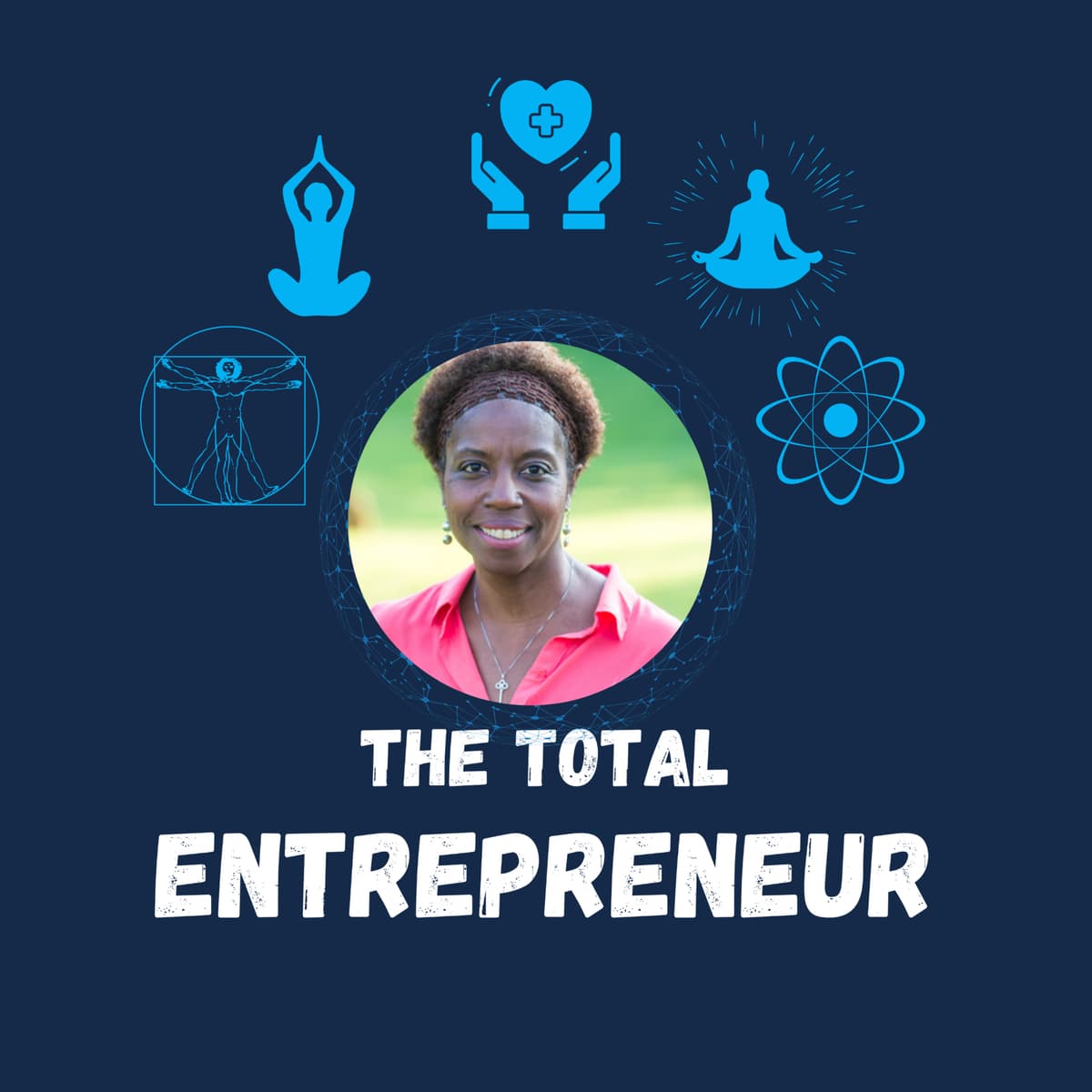
From Burnout to Balance: Reclaiming Wellness with Dr. Lynise Green
with Dr. Lynise Green
Nov 27, 2025 · 00:46:36
Part of our conversations on
Today, I have a great conversation with Dr. Lanise Greene, and she is a mechanical engineer, but also a naturopathic doctor, women's health expert, and founder of Well With Elle, which is a wellness platform dedicated to helping women balance their hormones, improve metabolic health, and build energy through holistic, sustainable methods. And we have a great conversation about traditional medicine versus holistic medicine, stress and burnout. She talks about her story of going from burnout to helping other women avoid burnout. It's a really fun conversation. I think you'll like it. So, listen in. And if you like this conversation and it resonated with you and you like the other conversations you've heard on the podcast, please give me a like, subscribe. It really helps us get it out to more people. So, thank you. And I hope you enjoy the conversation. Welcome to The Total Entrepreneur, Mind, Body, Spirit. where we turn cutting-edge science into practical strategies for entrepreneurs. I'm your host, Dr. John Torrance, entrepreneur, Inc. 5000 honoree, and professor of entrepreneurial practice at Syracuse University's Whitman School of Management. Each episode, we dive into mental, physical, and spiritual health with expert guests offering actionable insights to help you thrive and perform at your highest level. Let's get started. Dr. Lanise Green, thank you so much for being here. Welcome to the podcast.
Thank you for having me.
As I was prepping for this interview, I noticed that we have a similar philosophy on the way we work with people. So it seems like you're working with people who have had success and now need to prioritize themselves. Is that right? So what do you say to people who say, well, you know, I've gotta, I've gotta work really hard. I've gotta grind because I've gotta succeed. And once I achieve this level of success, Then I can turn my attention inward. Then I can focus on myself and do all the self-care I want.
Yeah. So that's the myth, right? That's the thing we've all bought into is, you know, when it's all done, then I'll take care of myself. And so what I try to share with people is that while what they're doing currently may feel successful, it might even look successful on paper, generally it's not sustainable. And after some conversation and helping them to sort of have some aha moments about how they're feeling, their energy, their habits, right? Are you eating? Are you sleeping? Then kind of share with them, like, imagine how much more successful you could be if you were well-rested and you weren't suffering from decision fatigue and you actually ate lunch and fed yourself and had some energy. And so Sometimes that helps to make the switch and go, I guess I never really thought about the fact that I've been doing this but running on empty for so long. So, yeah.
Yeah, I get that a lot. And people just say that they don't have time to worry about themselves because they're in the thick of it or in the grind or they've got to work, they've got to hustle. But there's wisdom and actually a tangible ROI to reversing that, flipping the script.
Yes.
And gaining from prioritizing yourself. So, could you talk to us a little bit about some of your, some of the things maybe you see most in your clients, whether it's sleep or nutrition or exercise, like what are some of the things that usually hold people up?
Yeah, so nutrition definitely is one of the top things that I see with entrepreneurs, with busy leaders, with busy people in general, is that we just don't make time to eat. And we don't, when we do eat, we're not being mindful of what we're putting into our body. So I liken it, you know, sort of to taking care of your car, right? And there's certain things that you do to make sure that your car is running optimally to get you back and forth to work and all the things that you have to do. And you wouldn't expect your car to perform optimally if you put water in the gas tank or sugar in the gas tank, or you never change the oil, you know, or you just— Ran it constantly, you know, and it overheats. You wouldn't expect your car to do that. So you take really good care of your car. You're mindful of what you put in it, but you're asking the same things of your body, but you'll put anything in your body and expect it to work well and kind of be upset with it when it doesn't. Nutrition, food is definitely one of those, what I call pain points, that I see oftentimes. Sleep is another one, you know, and that comes with that. that hustle and grind culture mentality that, you know, I'll sleep when I'm dead, or, you know, I'm fine off of 3 hours of sleep. So that's also a big one. And understanding not just the physical, but the mental impacts of not getting enough sleep and how that plays out, you know, in your professional life, I think is a big one. I think another one that's really big is misalignment with values. And I see this again, a lot in entrepreneurs, a lot in leaders, C-suite leaders, where they are so focused on productivity, meeting the KPIs, meeting, you know, meeting the numbers and the metrics, but they're building a business that is around output and not, it's not tied to their values. So sometimes they are making decisions, doing things from a place that it doesn't, you know, they feel the little like, I'm not really sure about that, but they go for it, you know, and just learning to understand what your core personal values are and how you align that to the way you work, the way you do business, the way you manage your business relationships can really infuse your work and your business with a different kind of energy when it's not just all about, again, about the numbers and the metrics. I think those are some of, some of the big things that I definitely, definitely see. And decision fatigue. I think, I think everybody suffers from that. So.
Yeah.
Yeah.
You mentioned everybody running their businesses and even their lives based on outputs and KPIs. And I often wonder, and I talk about this sometimes too, is, you know, what if we took that same intensity and applied them to the KPIs of our bodies, right? So how well are we sleeping? How much REM are we getting? What's our nutritional input? Are we buying whole organic foods? Are we eating real food? Are we moving daily? Like, so getting those KPIs and now we have ways to track it, right? So Yeah, to me, that seems like that would be a better set of KPIs to track.
Yeah, I love that. Key performance indicators for your body and for yourself, right? Something that we just, we don't think about, you know, we just expect our bodies to perform and show up and do the things we're asking it to do. But we don't give it the same attention of, you know, what we're putting into it as we do our businesses with. Absolutely. Yeah.
And you speak about this from a place of authority and experience. So could you tell us your journey on how you got to this?
Yeah, I sure can. So I started my professional journey, my first degree is in mechanical engineering. So I have a bachelor's in mechanical engineering. And so I did that work, engineering, program management of large software development programs. I worked on the decennial census software. So every time you take your census, Thank me for that. I did that for quite a while and actually went through a couple of iterations of burnout myself, just climbing the corporate ladder and thinking like, this is life, this is it. I was in the grind before the grind was even a thing and found myself burned out a couple of times. And at that time, this was years ago, burnout really wasn't a thing. I didn't have resources or support to figure out like what was going on. How do I get myself back up and how do I not do this again? And so, you know, going through that and trial and error, things not really changing and going through it again. And then somewhere down the line through some other twists and turns in life, I actually went back to school and got a doctorate degree in naturopathy. So holistic medicine. And then did postgraduate work in— nutrition and stress management, and, and the things started to make sense all of a sudden. And so working in that space, I had so many clients. And at the time, I was really focused in nutrition, and I still do quite a bit of nutritional consulting. And I used to say, if I could just talk to people about food, that would be so wonderful. But it was all the things going on that stopped people from making good decisions about what they were eating. how to get themselves back up and running more optimally. So yeah, it was definitely a lot of my own personal ups and downs that led me to the work that I do now.
I think that's important because you've lived it, right? You're not just talking at people about this experience. You've been there and you felt the results. So talk to me a little bit more about your doctoral degree. I think that's really interesting.
Yeah. So doctorate in naturopathy, it's a pretty broad stroke, right? Because you study a lot of different things. Some that are a little far out there, and some that may feel a little more grounded to people.
What's an example of something that's far out there? I like the far out there stuff.
I do too. So some of the maybe not too far out there things are things like Bach flower essences and Yeah. So, which honestly are incredible therapies that you can use with people for emotional grounding. That's a whole nother show, but flower essences. We study, you know, different types of bodywork, shiatsu, and other types of energetic bodywork that happens. Oh my goodness. Yeah. There's a lot of, a lot of things in the naturopathic world. For me, I am, I'm a foodie, right? And, and when you're studying all this stuff, and I'm trying to figure out, okay, what am I going to do with this information that I've learned? I kind of had to go, where's a good entry point, right? Because you don't always want to start with the far out stuff, because people will be like, no idea what you're talking about. So I thought, I'm a foodie, people have to eat. This is a good space, right? So we're gonna—
Yeah.
We're gonna go down, down the nutrition route. And so I really did, like I said, a lot of postgraduate work in varying aspects of nutritional consulting. So, like, metabolic typing, really understanding how your body metabolizes food. So, even if it's, like, the best, you know, Kobe beef steak or something, if your body can't metabolize it properly, doesn't matter what you're eating, you're not getting the energy out of that food. Really understanding food and healing. So, how— You know, food is medicine. And so how what you eat really helps your body to rejuvenate and to heal and to have energy. So I did a lot of, a lot of food work in varying areas and have had really great success with helping people, you know, deal, deal with health issues, with physical health issues, as well as, you know, getting their energy up for leadership. Just in focusing on food a lot of times can make such a huge difference.
So when you're studying naturopathy, is it naturopathic medicine or— so I'm trying to figure out like what the— is it a 3-year degree or I'm just trying to— for people who are interested in this type of thing, I mean, I am very interested in it, but I'm probably not in the point in my life where I'm going to seek another doctoral degree. But yeah, for people who are interested in this, how long does it take? Where do you go? How does one study this?
Yeah, a couple. There's a couple of schools. I went to Trinity College of Natural Health. There is another pretty well-known school, Bastyr, that you can get a naturopathy doctorate degree in. And they're a little bit different in the way that they approach. The Bastyr degree is more, it leans a little bit more into the allopathic world. My degree is traditional naturopathy. With traditional naturopathy, you really work with, you learn to work with the body. It's not not invasive. So we're not, we don't, you know, learn to enter the body, I'm going to say. Right, exactly. We don't, we don't do that kind of stuff. The degree I believe that you get from Bastyr, like I said, it leans a little more into some of the allopathic areas. And so they do do things where they actually enter the body, they learn to do things like that. But a traditional naturopath, which is what I am, we We learn to work with the body. We learn to understand how to listen to— because your body's always talking. So how to listen to what your body is saying and to help you to interpret that language and, you know, and work with the body. The degree itself probably takes about 2, 3 years to complete with all of the dissertation and, you know, everything else that needs to happen. Yeah, it's been, it's been life-changing for me that it just really put me in a position to really and make them very simple for people to understand so they can go, oh, that's what's going on with me. Now I can— now I understand, and now let's do something about it.
Yeah, I was going to ask about engineering and naturopathy, but yeah, it seems like that is a pretty good fit. So is it a— is it a blending of ancient wisdom and philosophies, maybe Eastern medicines with current Western medicine, or is it— does it lean more Eastern, I guess, if that's a good way to describe it?
Yeah, I think it— I think a little more Eastern, a little more holistic. So, right, allopathic medicine, so Western medicine, tends to focus a lot on what I'm going to call after the fact, right? So after something has gone wrong, what do we do with it? How do we address it? Naturopathic medicine really looks more at root cause and understanding why something is going on. And I think there's, you know, certainly there's room for both. Because I tell people, there are some things where absolutely, if I get hit by a car and I'm laying in the middle of the street and my leg is on the other side of the street, don't start giving me herbs and take me to the emergency room, get me sewn back together.
Don't meditate over me. Yeah.
Right, exactly. None of this, right? But once you've put me back together, okay, now let's look at the more holistic side. What do I need to heal? What do I need to regenerate myself? So there's There's room for both, but yeah, naturopathic medicine definitely tends to lean more into root cause, understanding why things are happening and getting to the bottom of it. Yeah.
That's why I go to a functional medicine doctor. I think it's more in line with that. Yeah. It seems like it's the difference between reaction and being proactive. Right. So if you go to the regular doctor, you usually go there because you're, you're feeling diseased or ill already. Right. But wouldn't it be great if you could prevent that in the first place? Right. Yeah. Well, actually, why don't we talk a little bit about your, your work with corporations? Because one of the things I'm curious about is, is whether or not corporations, quote unquote, get it right. So, I mean, everybody kind of understands that, you know, you have to have healthy people to have a healthy company. And I, you know, when I teach my students in entrepreneurship, I say you've gotta be a thriving human in order for your company to thrive. So, I would imagine that companies get this, but then. in the face of budget constraints and realities, this could be one of the first things to go because it's a really hard thing to quantify an ROI. So I was wondering what your experience is with this.
Yeah, it's, it's exactly that. I think anecdotally, I think with good intention, I think companies understand people need to be healthy in order to come and do the work that we're paying them to do. But I think organizationally, again, you're caught up in And so we're always talking about ROI and KPIs and all the other acronyms, you know, that come from the financial world. And wellness is such a— it can feel just intangible. And so how do you put your hands on it? How do you, you know, how do you affect people's wellness at work? And it's interesting, I, you know, I've worked in corporate wellness for quite a while. And I see the same things that corporate wellness programs, the ideal individual. In my head, if I could design the ideal corporate wellness program, and you understand this also well, right? I think about how a college is put together. And I always say wellness shouldn't be a program, it should be the way that you do work. So if I think about a college, right? Some colleges have wellness programs for their students, some, you know, some don't. But just the way that a college operates, that a university operates, it operates to support the well-being of their students. So you have financial well-being, right? We've got loans and we've got grants and you've got work-study. You've got things to help them financially be well. You have physical well-being. So you have, you know, dormitories that they sleep in, you're feeding the students, they have activities, they have sports that they can get into. You have social well-being. You've got clubs and organizations and fraternities and sororities and all those things. You have intellectual well-being because that's what they're, you know, that's what they're at a university for. So you have all of these things that are part of the way that an organization, that a university works, that are completely there to really support the well-being, the thriving of that student. But you don't call it a— you don't call your university a student wellness program, you call it a university. And so I feel like in corporate wellness, we don't lean into the operation and the structure that is there, that is in place, I think, to support the thriving of employees. We sort of pull it out and we go, no, wellness is all about, you know, a lunch and learn and a stress management webinar. And it's like, no, wellness is about the EAP program that you have to support them and the career development programs that you have and, you know, all of these things. But you just don't talk about it that way and you don't lean into it that way. So, you know, in that respect, I think it's really a disservice to the employees because, again, you speak to people and I like to think about Maslow's hierarchy, right? We don't talk about their fundamental functional needs. We're at the top of the pyramid going, you know, eat healthy, sleep, you know, perfectly, make sure you're working out. And these are people who, you know, are stressed about food insecurity and, you know, all of these things, their basic needs aren't met, but you're asking them to perform at the top of Maslow's hierarchy. And it's just like, Mm-hmm. That's why this is not working for you. So they can't get to those things yet because they're trying to make sure that those fundamental things aren't in place. So, yeah.
That's a great point. And I hear that sometimes even when I'm working with young entrepreneurs and trying to explain things like this about taking care of yourself first, sometimes you get the feedback, well, hey, it's easy for you because you're already there, right? Like, you've gotten to where I'm looking to be. So, yes, you can focus on your sleep and eat well and exercise and all that kind of thing. But I guess the, the point is getting society, getting corporations, get— getting business, getting everybody to understand that if you just reverse it and focus on self-care first, there's a lot to be gained. So I was wondering if, if you've seen that in action, like, do you have examples of people that have been able to do that and really come into themselves in a way that's much more healthy and powerful and effective?
Yeah, absolutely. So I think, You know, I have people that I have worked with who have realized like something has to change. You know, they love their work, they love what they do. But the reality of how they're showing up, how they're feeling, it's like, I can't ignore this anymore.
And when they, when they show up, is it usually, is it like a stress response? Are they gaining weight? Are they like, what are the, what are the things you see? Or what are the main complaints when they show up?
Yeah, a lot of stress, a lot of fatigue, like fatigue.
Yeah.
Fatigue that is not resolved by a good night's sleep. If they're getting a good night's sleep, it's not resolved by a long weekend, by a vacation. They realize that they are drained. They are physically drained. They are emotionally drained. They are there but disconnected. Like they're just not feeling connected to what they're doing. They're going through the motions. So that fatigue shows up in a lot of different ways. And I think it's also the spillover from work or from business into home. So not only are they feeling disconnected from work, but they're home and they're not feeling disconnected to their partners, to their kids, to their church, to these other things that give so much meaning and value to life and just fulfill everything just feels off-kilter. You know, they're, they're snappy, they're, they're easily irritated. Just—
Been there.
Yeah, yeah, right. Yeah, it all comes crashing down. And I think a lot of people feel like it's, it's either or, you know, it's, it's either I can work or I can, you know, have family life or whatever. You know, we've talked to people, we've for so long talked about work-life balance, like they're two different things. Like somehow there's work and then I have my life, like work isn't a part of my life. And so I really try to help people learn to make small shifts and really, really get into that mode of work-life harmony. So like an orchestra, right? There's all kinds of things going on. There's all kinds of instruments happening, but they learn to work together and they make room for each other. And sometimes some are playing louder than others. Sometimes some are sitting quietly, letting something else You know, so not always feeling like everything's got to be 50/50, or I can always give 100% at work and then always give 100% at home. There's just going to be days you can't. And you really just have to learn how to make it flow together and integrate your life and not try to, you know, separate it into these 2 very discrete things. So.
Love the analogy of the orchestra. Because one of the things I feel often and talk about is that it's hard to imagine balance in the course of 24 hours, right? Because then you think you have to get every part in within 24 hours, right? I've got to do my morning routine, I got to get a walk in, I've got to work, I got to see my kids, I got to connect with people I love, and so on. But kind of like a movement in a symphony, right? You've got an allegro movement where it's, you know, maybe really fast and a little chaotic. It gets loud here and there. And then you've got the adagio where it's a little more slow and chill. So instead of thinking in the course of one day or a 24-hour period, maybe look at it longer term, which is how I've come to view it, right? So I know like there are certain seasons or periods where, you know, I got to give some things up because other things look more important. Like in for the fall semester, for example, when I do most of my teaching, it's, it's just busy and chaotic and some things I have to give up. But then when that season's over, I can adopt the things that I used to do before the fall got chaotic. So I think if people maybe give themselves a little grace and just the permission to say it doesn't all have to happen in one day, it could happen over this defined period of time, maybe Maybe that's just a different definition of balance. Does that make sense? Or do you feel that?
Oh, absolutely. So absolutely. So, and I think you said the magic word, giving yourself some grace, and just being realistic about, you know, the demands on our time, whether that's from work or from family, and, and just know, you know, but again, we get in this, like, we can do it all, we can have it all, we're superhuman. And then you set that expectation for yourself. And if you don't do it all, you feel like, oh my God, I'm a failure. You know, I I'm not kidding.
Everybody you see online is doing it perfectly, right?
Yeah, you know, in that snapshot moment they are, you know, but life is, it's not a snapshot.
It's right. And they're not, right? Yeah, everybody, everybody has their struggles, right?
Absolutely. And, you know, they're not posting their struggles on Facebook. They're posting those, you know, those perfect moments. And yeah, you, man, that's a, that's a trap that you can get caught up in is social media and, you know, just looking at everybody's perfect life. But, you know, like I I said, that's a moment. You didn't see the other 24, you know, 23 hours and then, you know, minutes of their lives that were crazy. You saw that one little picture and thought, wow, you know, I want that. But—
I think we are often much harder or meaner to ourselves. Right? You know, I heard somebody say, like, if, you know, if you, if you talked to your friends the way you talk to yourself in your head, you just would never hang out with yourself, right? You would never, you would never adopt that person as a friend because it's sometimes so harsh.
So, yeah, absolutely.
I think a little grace is definitely important.
Definitely.
So, for you, I mean, you're busy, you've got a business, you've experienced it in the past. It must be in the back of your head that, hey, I've got to manage myself because I don't want to go down that path again. So, what are some of your go-to strategies or what do you include in your day to maintain this balance over the long term?
Yeah. So, definitely, like you said, I have lived it. I'm not exempt, right? Just because I help people to figure this out, like, I still have to live it every single day because, you know, we're all a couple days away from burning out sometimes. So, you know, some of my, um, go-to strategies, um, they start one with sleep. Like, I am very fortunate that I sleep really well, but I make a point to do that, and I get to the end of my day usually around 9:30, 10 o'clock, and just decide I've created a boundary that says I've done enough. I've done enough for the day. And, you know, whatever I haven't done today, I can do tomorrow. And if tomorrow doesn't show up, there's probably bigger things going on in the world than what I didn't get done today. So I'm going to be good with it. So I make a point to get sleep during the course of my day. One of the things that I do, which is Small but really powerful. I have learned to pause, just to stop sometimes. And that stop might be, you know, a minute just to, you know, in between meetings or in between clients to just sort of stop and breathe and do nothing and close my eyes, get away from the computer, get outside for a second and get some sun on my face. And then just, okay, on to the next thing. Sometimes the pause is longer. Um, I think a lot of— one of the things that busy people, successful people find challenges is sitting still and doing nothing, right?
Guilty.
It's like you're sitting there like, there's got to be something I should be doing, right? So, but I've learned to— and it's taken time. I don't want to make it sound like this was easy, but I have learned To do nothing for you know maybe just for short periods of time. So that's that's another one of what I call my power moves. I try to be mindful of drinking water, which is just huge. Being dehydrated is just not good for so many reasons. So I keep water available all the time. Big water thing sitting on my desk. Those are kind of some of the small things that I do. I've learned and again this was not something that came easy for me to create boundaries. Which, wow, that was a big one, right? Because you want to be there, you want to support everybody in the world, but you know, you can't take care of other people or support other people, contribute to other people's lives if you're not taking care of yourself. And so I needed to create, learn how to create really healthy boundaries with people, learn that no is a full sentence and it's okay. And the world still spins when I say no. That was a big revelation.
Yeah.
But it does. So.
Yeah.
Yeah.
Very empowering to be able to say no, right? Yeah. And I think especially when, when you're younger and you're kind of, you're just starting your career, you feel like no is the kiss of death, right? You have to, you have to say yes to everything so you're in the right position to make the most of the next opportunity. But yeah, I think you're right. It is, it is a power move to be able to say no and, and slowing down. What a, you know, what a benefit that is once you can do that. Interestingly, none of the things you said cost anything. I mean, maybe water if you got to buy it, right? But like, it's, you know, slowing down, pausing, getting some sleep, or getting good sleep and water. None of these things are expensive. You could do this without spending any money.
Absolutely. So, absolutely. So, so much of wellbeing is not, you know, it's habits, you know, which are habits. I mean, we're gonna Have habits anyway. There are things that we do routinely. We have habits. We just have to make choices, and a lot of times when we're when we're thinking about making changes to what we do, we think about what we what we're losing, you know. And so again, it's that shift in mindset to what what can I add to my day that's going to be beneficial for me? So not like what do I have to take away? What can I have? What can I Eat, you know, but what can I add? And if you approach it from the other side of that coin, if you continue to just add little things, you know, it doesn't have to all change overnight or over a weekend, but a little something here, a little something there. As you're adding, what you find is the things that aren't benefiting you, there's just not room for them anymore anyway. So you didn't have to really like take them away. You just added stuff that took up the space. So just that little change in mindset sometimes can make a huge difference. But yeah, most of wellbeing, it doesn't really cost you a whole lot. You know, sometimes you need the support, you know, you need the help of a coach or somebody that can help you think through and give you some accountability and some support and encouragement. But yeah, there are small things that you can do today, right now, some of the things that I mentioned that can make a huge difference. A huge difference in how you're feeling. Yeah.
And it doesn't have to be a stack of expensive supplements or expensive red lights or things like that. Right. And I think people, people fall into that trap of they, they've got the echo chamber on social media. So they're, they're seeing the same things that they've always seen and they don't open themselves up to new things that could be helpful. But yeah, I think it's just the, it's the small, subtle habits. You know, it's those epigenetic factors, right? The things that will, that if you do them for a long time, They'll, they'll compound. And I think it's a good— for me, it's a good analogy. It's like saving, right? You get the advantage of compound interest. Likewise, with your daily health habits, they compound over time.
Absolutely. Yeah, absolutely. So yeah, and we have choices. You know, sometimes we don't think that we do, but you always, you always have it. Even if the choice is like, am I going to have water or the soda? You always have a choice. You know, you always have a choice.
That's a, that's a great point. And now that you say it, I, you know, I find myself doing that is like when I travel, right? You know, airport food, for example, is, it's getting better, but for me it's really difficult. So it was a couple weeks ago I was traveling and I was, I was a little bit hungry and the food choices were minimal cuz it was kind of late. And I thought, okay, I'm going to either eat this and be temporarily satiated, but not feel good later and probably have a bad night's sleep. Or I'm just gonna feel a little bit of hunger. I'll get over it and maybe my body can go through a little fasting and rejuvenation, and in the morning I'll have something good. And that was the choice I made. But that's relatively new because usually when you're hungry, you have to satiate. And even if what you're eating or offered or have the choice to eat isn't that good, you know. So I think that's a really powerful comment about you have a choice, even if it doesn't necessarily seem like the choice you want to make or would normally make. You still do.
Yeah, yeah, absolutely, absolutely. And sometimes, you know, you have to make and I've got all of these grocery stores like right at my doorstep, that it is that easy for other people, right? So I never want to make that assumption of sort of imposing my life and my things on other people. But wherever you are, you know, you have the choice. You know, I've worked with people who, you know, their primary place of grocery shopping is like the Dollar General, you know, because that's where they are.
Yeah.
Yeah, that's what they have. You know, people who are in food deserts where they don't have access to a lot of fresh food and fresh vegetables. And so, you know, I can't judge. Okay, we're in the Dollar General. What's the best we can do in here? You know, let's start from where we are and acknowledge that. And as we can do better, you know, we do. So, yeah, you know, but even in the Dollar General, you have choices. You got choices.
Oh, for sure. Yeah. And hopefully we're coming to a point where companies are going to either be pressured by consumers or regulatory agencies to, to make the food that's available more healthy and less processed and less poisonous and things like that. You know?
Absolutely. Absolutely. So, yeah.
So I'd love to get your take on, you know, just some of the things that Mother Nature has provided for us from the beginning of time. You know, things like your experience or your knowledge about things like the benefit of sunlight early in the morning and in the afternoon, the benefits of grounding, just touching the earth. You know, things like— or being in nature. As a naturopath, I'd love to hear your perspective on those things.
Yeah, absolutely. So I think you touch on one really big thing, which is sunlight and just being outside, right? We are a society of people that we are sitting in front of our laptops, sitting for long, long periods of time. And I know I've been, I've been guilty of it where, you know, I have days sometimes where I'm like, I don't think I've been outside for 2 days. It's just like, oh my God, what am I doing right now? Especially if I'm working remotely or working from home or something. It's like, wow, this is not good. So the benefits of sunlight for mood, for health, for immunity are just phenomenal. You want to get outside and just get some light on your face. It normalizes your circadian rhythms. It does All kinds of wonderful, you know, wonderful things for you, and it gives you, you know, that opportunity to pause and get away from what you're doing for a minute. Breathe some fresh air. I think, you know, grounding again, just getting outside. A lot of people are, you know, maybe not familiar with or not convinced of just the power of getting outside barefoot in the wet grass and all of the the energetic things that that can do for your body to help just restore balance to your body is super important. And I think, you know, just in general, just You know, we talked about seasons and about rhythms and giving yourself grace and, you know, that harmony. Like, if you just look at nature, that it does what it does and it has its seasons. It has its seasons of thriving, of coming to life in the spring and thriving in the summer. It's starting to slow down in the fall, resting in the winter. And even, you know, You don't necessarily have to break your life up into quarters. You know, it could be a month, it could be a week, it could be a day, but understanding that we work in that same rhythm. And so give yourself the grace to sometimes just rest and plan and think about, and then come into a season of, okay, I'm going to start to spring forward and to bring things to life. And then they're here and now I'm hustling, right? I'm summertime.
Mm-hmm.
I'm really doing it. And then I might need time to sort of, okay, let me slow down, think about what I'm doing, refocus. I get through my fall and my winter. We have those same seasons. We live those same seasons every day, probably, you know? So just getting out and seeing how nature does what she does and going, it works, you know? It works in the grander scheme of things.
Yeah.
How can I apply those same kind of principles? What lessons do the seasons teach me about how I can work with the rhythms of life, the rhythms of nature within myself to really find that balance and that harmony and to be able to bring my best self to the table every day.
Back to basics, right?
Back to basics.
Mother Nature.
Yeah.
So I want to ask you one last question. I wanted to talk to you a little bit about your work with women, successful women. And to me, it seems like there's even added stress there just because of everything that women in the workplace have to deal with. So yeah, we'd just love to hear a little bit of your perspective on working with them?
Yeah, so we are, we're a special group. We are a special group. And not that, that men don't have a lot that they carry, they absolutely do. But there is a lot of invisible labor, I'm going to call it, that women carry differently, and perhaps more, more so than men do. You know, we are— when we are in workspaces or building a business, we are focused on those things. But we are also still, again, when we talk about work-life and pretending that those 2 things don't exist, like, we bring all of that with us. You know, if we have kids or we have partners, something goes on at school, they're calling mom. So, I can't go to work and pretend like I don't have kids, I don't have a family, you know, I don't have to figure out what's for dinner, or did I make the doctor's appointment for somebody? All of that I bring with me. And not that men don't. Again, I think as women, as the nurturers of our families, we're kind of the glue. A lot of us, we're holding it together. And so, but we work in places that don't necessarily acknowledge that, right? we're supposed to be on 100% all of the time. When we talk about cycles, right, there are cycles that women have every month that men don't. And as a woman, I can tell you, I'm generally not 100% during that cycle. But guess what? My work is not concerned about the fact that I, you know, hormonally— I mean, this is physiology. It's not something I can help. I'm not necessarily at my best, but I'm supposed to show up at 100% and be that person still with no acknowledgement of my natural rhythms that I go through, whether it's a monthly cycle, whether it's menopause, and all the things that happen in between. Yeah, let's just throw that out the window and not account for that. You need to show up, you need to be 100%. I don't care if you I have pregnancy brain or whatever. I need you to— And so there are a lot of things that women deal with differently, I'm going to say, and have to address differently than men do. And so we've gotten to this place where we are wearing our superwomen capes. We've got the S on our chest and the cape is flying. And I decided years ago, my S was peeling. holes in the cape. Like, I can't do it anymore. Because I wasn't well. You know, I realized I wasn't well. I wasn't healthy. And it looked really good on paper. I was getting, you know, at the time, still in corporate America and getting the accolades, getting the kudos, getting all of that. And I was miserable. And I thought, you know, if I die tomorrow, they're going to be like, God, that Lanise, she was really great. Have we posted her position yet? And they're going to keep moving. So I just needed to take care of myself differently. And I find, like I said, women in these structures that were oftentimes built around men, they have a hard time. They have a hard time bringing their authentic selves to the table. Because if I am an assertive woman, all of a sudden I'm bossy, I'm aggressive. If I'm an emotional woman, oh my God, don't do that when you're in the workplace.
Right.
So now I've got to narrow myself down so I can fit into this thing, but I'm losing parts of myself. I'm having to cut off parts of myself so I can fit into this structure that might not have really been created to support me as a whole person. So how do I try to bring my whole self to the table and not feel fragmented when I'm at work? Yeah, we women, the work we do, it's very different. It's very different. We have some different obstacles that we deal with, but they're not insurmountable. I think we just have to be aware and, and we can't necessarily look for the systems to fix it for us.
Right.
So we have to figure out how do we navigate Yeah, of course.
Who have been some of your major influences? Like, who are you reading now? Or who do you, who do you get inspiration from?
So it's interesting. I just finished reading Atomic Habits, which I thought was really good. I actually read that while I was on vacation. So it tells you about my vacations. I read Atomic Habits. And I read The Courage to Be Disliked, which was pretty, pretty interesting. Yeah, pretty interesting. I haven't— well, no. Yeah, I read a little bit of everything. Neville Goddard, Emmet Fox. Yeah, I'm reading, you know, philosophical stuff, but I'm also reading, you know, nutritional stuff. I'm reading stuff about stress. I'm reading stuff about energy and personal energy and how to do so.
Yeah.
My reading, I am a I'm a voracious reader. I love to read. I love to learn, but it's all over the spectrum of things that I could be reading at any given time. Yeah.
Well, that's great. I mean, yeah, I think that just kind of contributes to a well-rounded overall person, right?
Yeah, absolutely.
Yeah. Well, Dr. Greene, thank you. If people are interested in learning more about you and the work you're doing, how can they find you?
Yeah, certainly. Well, first, thank you for having me on your show. If you're interested in learning more about me, working with me, or understanding how I work, I have a website, wellwithl.com, all one word, I guess they say. wellwithl.com. You can learn about me, learn about working with me one-on-one. I have online programs, self-paced, because everybody can't, you know, fit it into their harmony, right, to just set time aside. So sometimes they want to get it in in the middle of the night. That's fine. I have some online programs and resources that are available, but you can find all of that on wellwithl.com. I invite you to reach out, schedule some time, see if there's something I can do to support you, because that's what I'm here to do. So.
Thank you so much.
Thank you.
Thank you so much for listening to the Total Entrepreneur Mind Body Spirit podcast. If you liked what you heard or heard something interesting today, please give us a like, share a comment, or better yet, subscribe to the podcast. Thank you.
About This Episode
What happens when a high-achieving engineer trades exhaustion for empowerment? In this episode, Dr. Lynise Green, a mechanical engineer turned naturopathic doctor, shares her transformative journey from burnout to balance, and what it really takes to sustain success without sacrificing health. She unpacks the importance of self-care, nutrition, and boundaries, offering practical tools to help women and professionals thrive in demanding environments. Dr. Green also explores the healing power of nature and how true wellness begins with reconnecting to ourselves.
This episode is a must-listen for entrepreneurs and leaders ready to create harmony between ambition, purpose, and well-being.
Episode Chapters
00:00 - The Myth of Self-Care Post-Success
04:17 - Nutrition and Its Impact on Performance
06:48 - The Journey to Naturopathy
09:33 - Understanding Naturopathic Medicine
12:15 - Corporate Wellness and Employee Well-Being
14:45 - Work-Life Harmony vs. Balance
17:11 - The Importance of Self-Care in Leadership
26:47 - The Importance of Self-Compassion
28:09 - Strategies for Maintaining Balance
30:18 - The Power of Saying No
31:59 - Mindset Shifts for Well-Being
33:28 - Making Healthier Choices
36:04 - The Benefits of Nature and Sunlight
39:54 - Challenges Faced by Women in the Workplace
44:25 - Influences and Inspirations for Personal Growth
46:19 - Outro
Keep listening
More on Business
About the Host
Dr. John M. Torrens
5× Inc. 5000 entrepreneur, Professor at Syracuse University's Whitman School of Management, author of Lightning in a Bottle, and TEDx speaker on ADHD as an entrepreneur's superpower.
Browse all podcast guests →Book a strategy call →