RSD rarely shows up as visible emotional breakdown. In entrepreneurs who have spent years building armor around their vulnerability, it tends to look like reasonable professional behavior. Caution. Thoroughness. High standards. Selectivity.
Look closer. The patterns below are RSD in action. Most ADHD entrepreneurs recognize themselves in more of these than they expect.
In Sales and Business Development
| What it looks like | The RSD driver |
|---|---|
| Avoids making cold calls or outreach | Fear of rejection before it happens |
| Underprices the offer | A lower price reduces the sting of no |
| Over-prepares for pitches to the point of paralysis | Trying to eliminate any reason to be rejected |
| Folds on price negotiations | Rejection of price feels like rejection of self |
| Does not follow up after proposals | Following up risks hearing no |
| Quits on prospects after one not yet | Cannot tolerate the discomfort of sustained pursuit |
The underpricing pattern is worth particular attention. It is easy to rationalize as market research or competitive positioning. The actual driver, for many ADHD entrepreneurs, is that a lower price produces a less painful rejection. If they say no to $500, that hurts less than if they say no to $5,000. The business pays the price.
In Leadership and Team Dynamics
| What it looks like | The RSD driver |
|---|---|
| Avoids difficult feedback conversations | Conflict triggers RSD in both directions |
| Hires slow, fires even slower | Both involve rejection dynamics |
| Overreacts to team criticism in meetings | Even constructive input triggers flood response |
| Becomes controlling when anxious | Control reduces exposure to potential rejection |
| Seeks excessive reassurance from team | Needs constant confirmation of approval |
| Reads neutrality as disapproval | Blank face or silence interpreted as rejection |
That last row causes enormous damage in teams. The ADHD entrepreneur reads a neutral expression as disappointment, a quiet meeting as tension, a brief reply as anger. The team is just having a normal day. The leader is managing what feels like a crisis. Decisions get made, conversations get avoided, and relationships erode based on threats that were never there.
In Strategy and Decision Making
| What it looks like | The RSD driver |
|---|---|
| Avoids entering competitive markets | Fear of being publicly measured and found lacking |
| Delays launching products or services | Unlaunched work cannot be rejected yet |
| Abandons good ideas after first pushback | One piece of skepticism triggers full abandonment |
| Over-pivots business model | Pivoting away from rejection rather than toward opportunity |
| Will not share work until it is perfect | Perfectionism as rejection armor |
| Paralyzed by investor or board meetings | High-stakes evaluation environments are RSD minefields |
The launch delay pattern destroys enormous value. The product is ready. The service is solid. But putting it into the world means it can be judged, and judged negatively, and that possibility is enough to keep it in permanent revision. Perfection becomes the excuse. RSD is the reason.
In Personal Brand and Content Creation
| What it looks like | The RSD driver |
|---|---|
| Does not post consistently on social media | Fear of public criticism or poor engagement |
| Deletes posts that get negative comments | Cannot tolerate the emotional exposure |
| Will not publish podcast or video content | Public visibility is a rejection invitation |
| Writes and rewrites without publishing | Perfectionism driven by anticipatory RSD |
| Dismisses positive feedback while fixating on criticism | Negativity bias amplified by RSD |
This category is particularly relevant if you are building a personal brand or thought leadership platform. Content requires consistent public exposure. RSD makes consistent public exposure feel like repeated invitations to be attacked. One critical comment lands like ten. One piece of silence where engagement was expected lands like rejection. The result is inconsistency, over-revision, and a platform that never gets the traction it deserves.
The Paradox at the Center of It All
Here is the core tension for ADHD entrepreneurs with RSD.
Entrepreneurship runs on exactly the activities that RSD makes most difficult.
| What building a business requires | Why RSD makes it hardest |
|---|---|
| Selling, asking repeatedly | Sales is relentless rejection |
| Raising capital, being evaluated | Investor scrutiny is peak RSD territory |
| Publishing content publicly | Every post invites criticism |
| Receiving feedback to improve | Feedback feels like personal attack |
| Pricing confidently at value | High prices produce more painful rejections |
| Failing fast and learning from it | Failure triggers shame spirals |
| Building a personal brand | Visibility means exposure to public judgment |
This is not a skills deficit. The ADHD entrepreneur often has the skills. The nervous system is running interference.
The business development skills are there. The RSD makes calling feel unbearable. The strategic thinking is there. The RSD makes sharing it feel dangerous. The content is there. The RSD makes publishing feel like standing in front of a firing squad.
Naming this accurately changes the intervention. You are not working on courage or discipline. You are working on nervous system regulation.
Go Deeper
The ADHD Founder Playbook, closed. The button opens it to its title page, then turns to the back for a word about the author.
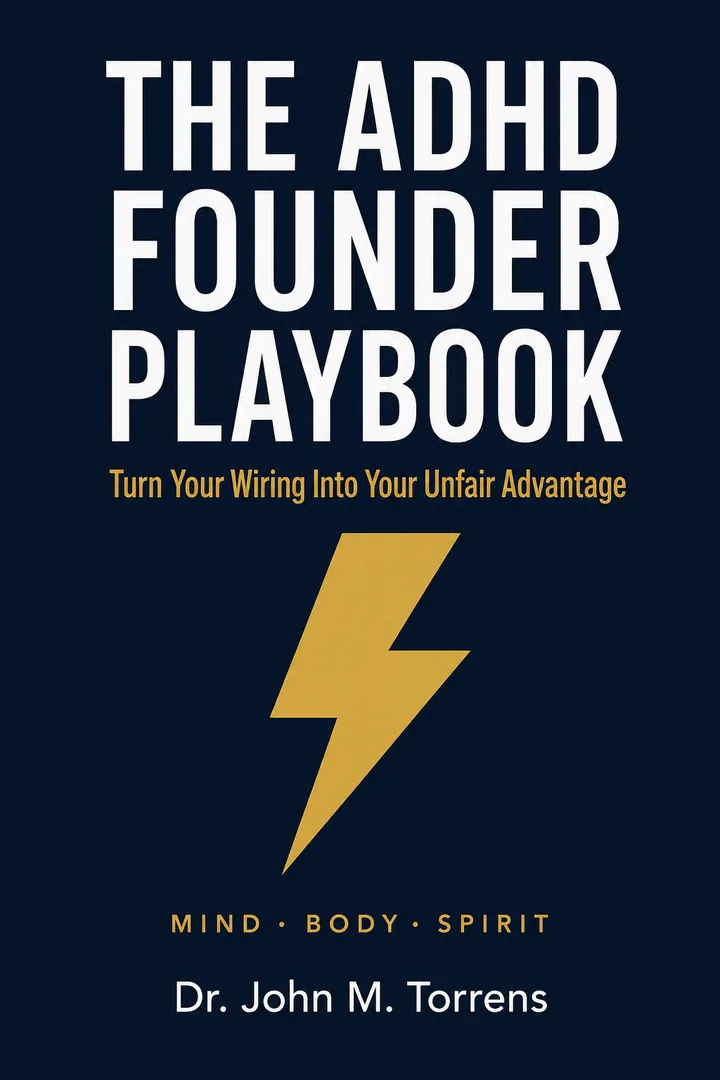
The ADHD Founder Playbook
The playbook turns this into a protocol: an 8-week field guide built to work with your wiring, including the Founder Snapshot assessment that tells you where to start.
Get the Playbook — $17 →This is part two of a three-part series on Rejection Sensitive Dysphoria and ADHD entrepreneurship. Read part one: The Emotional Pattern Quietly Running Your Business, and part three: Managing RSD.
Dr. John M. Torrens is a Professor of Entrepreneurial Practice at the Whitman School of Management at Syracuse University, author of Lightning in a Bottle: How Entrepreneurs Can Harness Their ADHD to Win, and host of The Total Entrepreneur: Mind, Body, Spirit podcast. He coaches ADHD entrepreneurs through Entrepreneur.ing.
Privacy · Terms · Disclaimer
Entrepreneur.ing LLC · 25 First Ave SW, STE A, Watertown, SD 57201